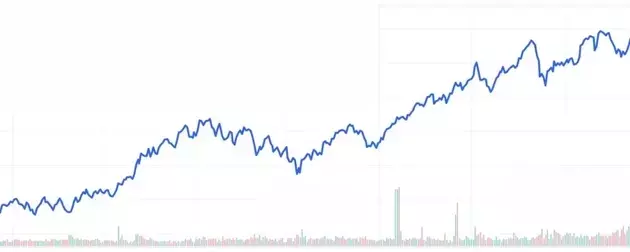
In the final quarter of 2025, the financial landscape saw a moderation of market volatility. This period was characterized by diminishing anxieties surrounding inflated valuations in artificial intelligence sectors and increasing anticipation of policy adjustments by the Federal Reserve, which together fueled a resurgence in risk assets. Amidst this environment, the Touchstone High Yield Fund demonstrated a notable outperformance against its benchmark, the ICE BofA High Yield Cash Pay Index, for the three months ending December 31, 2025.
The superior performance of the fund during this quarter was primarily attributable to expert security selection, which successfully counteracted minor challenges posed by sector allocation decisions. The fund's risk posture remained consistent and adaptive, with strategic adjustments being made based on relative value opportunities rather than broad market trends. A key strategy involves favoring high-quality, less cyclically sensitive segments of the high-yield market, particularly those issuers with BB and B ratings, which are believed to offer an optimal blend of income generation and protection against potential downturns.
The investment approach centers on achieving substantial income through strategic investments in non-investment-grade debt instruments. This involves a meticulous evaluation of investment prospects and associated risks across various industries, prioritizing those that demonstrate strong growth potential. The fund's commitment to maintaining a higher-quality bias is a cornerstone of its philosophy, providing stability while still capturing attractive yield opportunities. This disciplined approach ensures that while the fund seeks competitive returns, it also prioritizes the preservation of capital for its investors.
Looking ahead, the fund's outlook remains neutral, with a persistent focus on generating income and maintaining a flexible exposure to risk. This strategic positioning allows the fund to be prepared for various market conditions, including the potential to increase exposure to lower-rated credits if favorable valuations emerge or if economic risks escalate. The emphasis is on a proactive and analytical approach to fixed income investing, continuously seeking out undervalued opportunities and managing risks effectively to deliver consistent performance.
