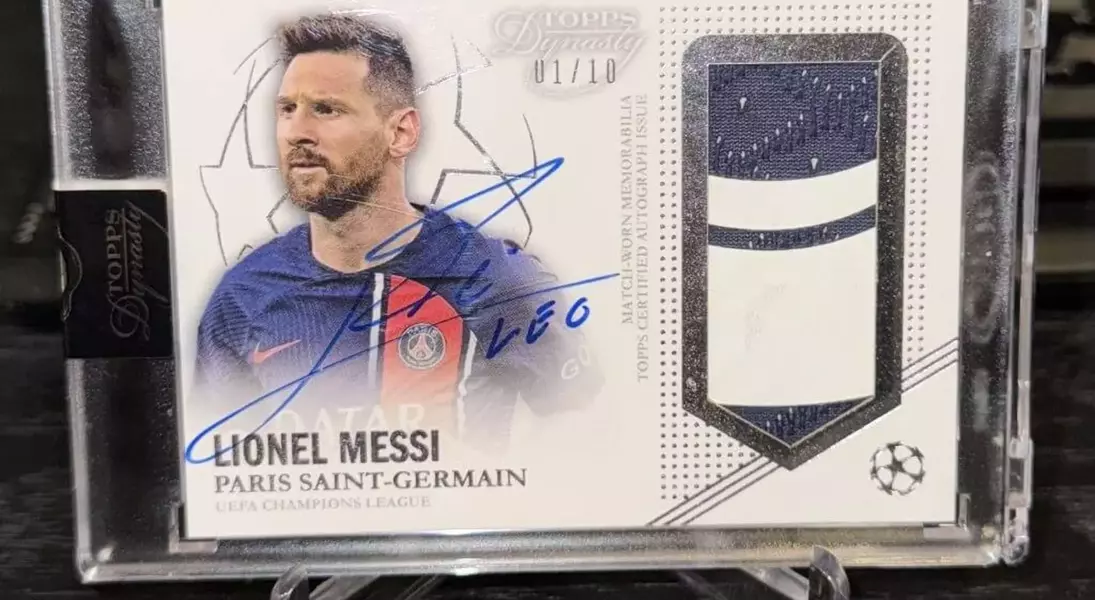
A prominent sports card manufacturer has recently reiterated its commitment to the validity of Lionel Messi's signatures featured on its products. However, in a significant move to alleviate collector concerns, the company also announced a policy to substitute any signed Messi cards that fail to receive authentication from a major sports memorabilia grading service. This proactive measure aims to address a growing predicament where numerous collectors have reported their Messi autograph cards being rejected by the grading service, leading to widespread unease within the collecting community. The company underscores its dedication to ensuring a positive experience for enthusiasts and resolving any unexpected challenges that may arise.
The issue of unauthenticated Lionel Messi autographs has been a point of contention for several months, with the Professional Sports Authenticator (PSA) frequently declining to certify signatures on cards originating from various product lines of the sports card giant. This situation prompted the company's CEO, Mike Mahan, to publicly address the matter during a recent industry convention. Mahan firmly stated that the company stands by the genuineness of every Messi autograph on their cards. He acknowledged, however, the practical implications for collectors if PSA does not grade a card, recognizing it as a shared problem that necessitates a direct solution. Consequently, the company has pledged to replace any such cards, simplifying the process for collectors to exchange unauthenticated items.
In response to inquiries regarding the authentication discrepancies, PSA's president, Ryan Hoge, indicated that the grading service often defers to manufacturers on such matters, emphasizing their collaborative relationship. This nuanced stance from PSA, which has evolved from initial suggestions of potential forgeries to a more diplomatic position of being unable to render an opinion on certain signature styles, highlights the complexity of the situation. Initially, some collectors, such as Nick Bruce, were informed their Messi autographs might be fake or signed by someone else, like Messi's brother. However, PSA has since clarified that their refusal to grade does not imply a forgery but rather an inability to confidently authenticate, offering free returns for such unprocessed items.
The challenges faced by collectors have brought this issue into sharp focus, particularly with high-value items. For instance, David Rodriguez invested significantly in a premium product only to receive a redemption card for a Messi autograph that, after a considerable wait, PSA declined to authenticate. This led to an offer from the card company for either a re-signed card, a process potentially taking years due to the nature of on-card autographs versus sticker autographs, or an alternative compensation package. Rodriguez opted for the latter, receiving other valuable autographed rookie cards, demonstrating the company's commitment to customer satisfaction even amidst these complex authentication dilemmas. This resolution indicates a shift in the company's approach, now more readily offering direct replacements for Messi autographed cards.
The card manufacturer has taken a firm stance on the veracity of Lionel Messi's signed collectibles, assuring collectors of their authenticity. Recognizing the impact of external authentication challenges, the company has implemented a clear policy to provide replacements for any Messi autograph cards that fail to be graded by the Professional Sports Authenticator. This initiative reflects the company's deep commitment to its customer base, aiming to mitigate any concerns stemming from grading issues and ensuring that the collecting experience remains positive and rewarding for all enthusiasts.
