


The landscape of film education is dynamically evolving, with top U.S. institutions constantly refining their programs to meet the demands of a rapidly changing entertainment industry. This report delves into how leading film schools are preparing the next generation of cinematic storytellers, from embracing cutting-edge technologies like virtual production and artificial intelligence to strengthening collaborative environments and leveraging powerful alumni networks.
Igniting Cinematic Dreams: Where Innovation Meets Imagination
The Enduring Value of Film Education: Nurturing Collaborative Creativity
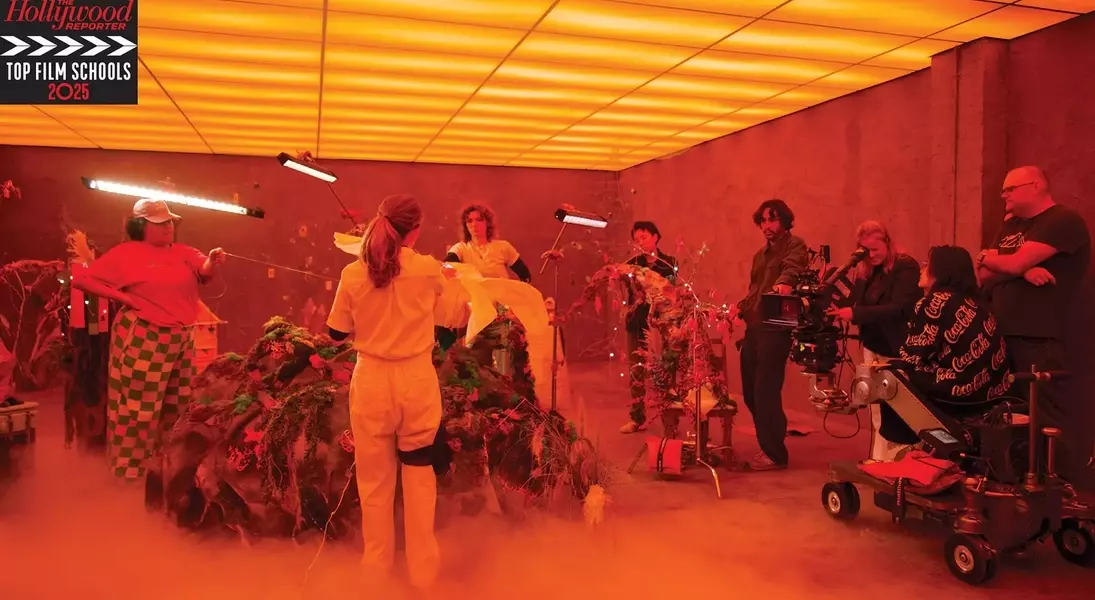
Even in an era where technology makes filmmaking more accessible, the structured environment of a film school remains invaluable. As highlighted by the Duffer brothers, creators of the hit series 'Stranger Things,' institutions like Chapman University offer a critical space for aspiring filmmakers to discover their 'first true creative community.' These schools excel at connecting students with future collaborators and establishing robust alumni networks, which are crucial for navigating the competitive world of cinema.
Adapting to a New Era: Technology and Curriculum Evolution in Film Schools
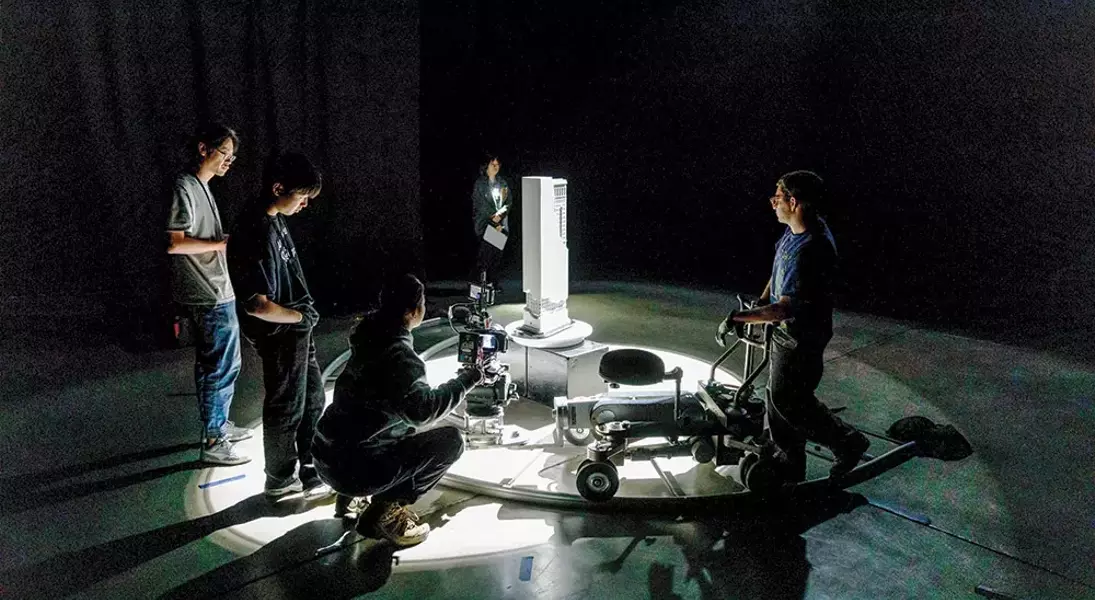
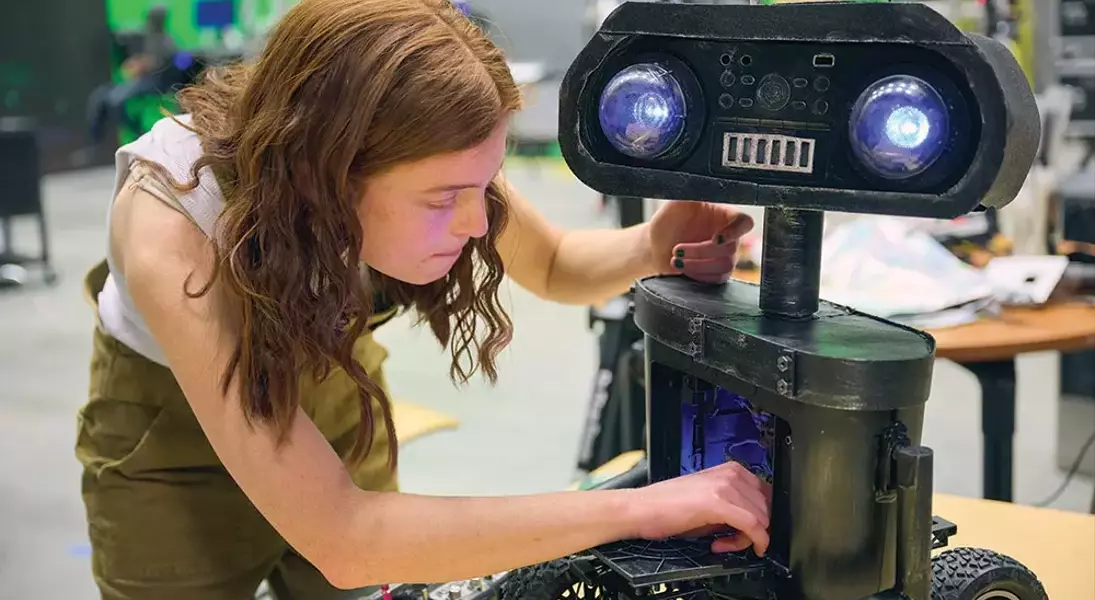
The rise of accessible filmmaking tools, such as smartphone cameras, and the advent of generative AI are transforming the industry. To keep pace, leading film schools are swiftly upgrading their infrastructure and academic offerings. This includes integrating virtual production courses, equipping facilities with LED walls and advanced camera systems for real-time virtual filmmaking, and introducing AI-focused classes like 'AI for Creative Professionals' at Syracuse University or 'Producing and Screenwriting With AI' at LMU. These changes ensure students are well-versed in the latest technological advancements shaping film production.
USC: Forging Industry Leaders with Cutting-Edge Facilities and Unrivaled Networks
Located in Los Angeles, the USC School of Cinematic Arts continues to be a premier destination for film students, despite its significant tuition. A recent $25 million gift from the Blavatnik Family Foundation underscores its commitment to innovation, establishing a sprawling 15,000-square-foot virtual production center with state-of-the-art LED panels, lighting, and soundstages. The school's enduring strength lies in its nearly century-old alumni network, which consistently produces industry heavyweights. Notable success stories include Ryan Coogler and Sev Ohanian, who met in USC's graduate program and went on to create impactful works like 'Sinners,' illustrating the profound influence of its practical, project-based curriculum.
New York University: A Hub of Artistic Excellence and Technological Advancement
New York University's film program cemented its prestige with alum Sean Baker's remarkable Oscar wins for 'Anora.' The institution is pushing boundaries with the new Martin Scorsese Virtual Production Center, offering a one-year Master of Professional Study (MPS) in virtual production. This program utilizes two expansive 3,500-square-foot virtual production stages. Furthermore, NYU has enhanced its equipment fleet with cutting-edge LED lighting, Arri Alexa 35 cameras for graduate students, and Canon C70/XF605 for documentary studies. The faculty is also continuously bolstered by industry talents like screenwriter Lara Shapiro and master classes from directors such as Jon Watts, ensuring students learn from the best.
American Film Institute: Cultivating Cinematic Visionaries through Intensive Training
The American Film Institute (AFI) remains a beacon for aspiring filmmakers, known for its conservatory-style graduate education and robust alumni presence at major film festivals like Cannes. Despite its high tuition, AFI is committed to supporting its students, having awarded nearly $2 million in scholarships last year. In a forward-thinking move, AFI has partnered with Amazon, securing a $200,000 grant to explore and integrate AI-driven tools into its curriculum. The emphasis on practical experience and mentorship, as exemplified by cinematographer Autumn Durald Arkapaw's experience with Stephen Lighthill, empowers students to achieve groundbreaking cinematic feats.
Chapman University: Pioneering Virtual Production and Career Development
Chapman University, based in Orange, California, is investing heavily in the future of filmmaking with the construction of a multimillion-dollar Innovation Hub, which will feature a second LED wall. The university's virtual production curriculum is comprehensive, covering everything from animation to live production and leveraging Unreal Engine for creating immersive virtual sets. Beyond technology, Chapman is dedicated to career advancement, expanding its career center to facilitate internships and job placements at top entertainment companies. The university fosters a supportive environment where faculty mentors like Patricia Meyer provide invaluable guidance, preparing students for the realities of the film industry.
Loyola Marymount University: Blending Creativity with Industry Savvy
Loyola Marymount University (LMU) stands out in Los Angeles's competitive film education landscape by continually updating its curriculum and prioritizing financial aid. Collaborations with Loyola Law School have led to innovative courses such as 'Business of Screenwriting,' addressing legal challenges in writing, and 'Producing and Screenwriting With AI,' exploring AI's role from development to distribution. LMU's partnership with Sony Electronics to establish the Social Impact Filmmaking Lab further provides recent graduates with opportunities for funded short films, offering practical, real-world experience that prepares them for the industry's demands.
Emerson College: Redefining Media Arts for the Modern Era
Emerson College in Boston has rebranded its Department of Visual & Media Arts into the School of Film, Television, & Media Arts, reflecting a renewed focus on new technologies and virtual production. AI is now seamlessly integrated across the curriculum, and students have access to advanced resources like an LED wall and Unreal Engine for game and virtual set design. Uniquely, Emerson also offers a minor in 'Business of Creative Enterprises,' preparing students not just for creative roles but also for executive and representation positions within the entertainment industry, thus offering a holistic approach to film education.
University of Texas at Austin: Expanding Horizons in Sports Production and Gaming
Celebrating its 60th year, the Radio Television and Film department at UT Austin is making significant strides in sports production, offering a new minor in Sports Production and Broadcasting. With four new production control rooms at the university's stadium, students gain hands-on experience by producing live broadcasts for ESPN. A substantial $5 million gift from Saber Interactive CEO Matt Karch has also enabled the launch of a gaming institute, offering courses like 'Business of Gaming: From Concept to Console.' UT Austin provides a nurturing environment where students can freely experiment and develop their craft, as noted by alum Patrick Schumacker.
Columbia University: The Ivy League Advantage in Film Education
Columbia University maintains its elite status as the sole Ivy League institution on this list, consistently producing talent that makes waves in both awards season and at the box office. The New York City-based film school continues to attract prominent faculty, including acclaimed writer-director Minhal Baig and historian Elizabeth Ramírez-Soto. Its prime location offers unparalleled access to New York's vibrant entertainment sector, providing students with a significant advantage in networking and industry exposure. The combination of rigorous academic standards and proximity to a major film hub makes Columbia an attractive option for serious film scholars.
DePaul University: Technical Prowess and Virtual Production Leadership
Situated in Chicago, DePaul University's film program, part of the College of Computing and Digital Media, is renowned for its strong technical emphasis. The university is actively expanding its virtual production curriculum with two new minors, an M.S. in Film/TV Virtual Production, and an 'AI in Film Education Conference.' DePaul's commitment to cutting-edge technology and practical application prepares students for the evolving demands of the industry. Its alumni continue to achieve significant recognition, with graduates receiving nominations at prestigious awards like the Independent Spirit Awards, underscoring the program's effectiveness.
UNC School of the Arts: Fostering Collaborative Filmmaking and Accessibility
The UNC School of the Arts in Winston-Salem, North Carolina, stands out for its affordability, a crucial factor in the increasingly expensive journey toward a Hollywood career. The school offers new courses in motion capture for actors and directors, and podcast-to-film production, while uniquely funding all student productions. This approach levels the playing field for filmmakers, encouraging collaboration and mutual reliance among students, as emphasized by alum Danny McBride. The upcoming MFA in Media Archiving and Curatorial Practice further illustrates the school's commitment to diverse aspects of film education.
UCLA: A Reimagined Focus on Film Theory and Production Innovation
UCLA's School of Theater, Film and Television is embarking on a new chapter under Dean Celine Parreñas Shimizu. While some anticipate a shift towards film theory, the school emphasizes that physical production remains a core component, evidenced by a new course in virtual production utilizing LED volume technology for cinematography and directing students. UCLA's geographical advantage in Los Angeles, combined with its status as a top public university, makes it an attractive and cost-effective choice for California residents. Its strong representation at major film festivals like Sundance highlights the continued success of its alumni.
Savannah College of Art & Design: An Expansive Creative Ecosystem
The Savannah College of Art & Design (SCAD) is a rapidly expanding institution, soon boasting over 250,000 square feet dedicated to film education. This includes two LED virtual production walls, a casting office, and an 11-acre backlot, with plans for two new soundstages by 2026. SCAD offers new M.A. programs in cinematography and editing, and ingeniously integrates its namesake film festival into the curriculum, providing students with unique educational opportunities through interactions with industry figures like Kevin Costner. This immersive approach prepares students for diverse roles within the film industry.
Columbia College Chicago: Cost-Effective Education with Industry Relevance
Columbia College Chicago offers a cost-conscious film education, providing an average of $15,810 in financial aid per student in its School of Film and Television. The institution has expanded its offerings with a new B.A. in Editing and Post-Sound, alongside courses in virtual environments and casting. Columbia is particularly recognized for developing skilled below-the-line talent, exemplified by alum Eric Frankel's Emmy nomination for set design on 'The Bear.' The school's commitment to practical skills ensures its graduates are well-prepared for diverse roles in the entertainment sector.
Florida State University: State-of-the-Art Facilities and Genre Exploration
Florida State University's film school is undergoing a significant transformation with the acquisition of a former Regal movie theater, which will be repurposed into four new cinemas, a 2,624-square-foot virtual production stage, and two soundstages. Despite these extensive upgrades, tuition costs have remained stable. A notable new initiative allows MFA students an optional third year to produce a fully funded genre film, crewed by second-year students, providing invaluable practical experience. This innovative program encourages creative exploration within a supportive environment.
Ithaca College: Embracing AI and Industry Internships
Ithaca College is at the forefront of integrating AI into its media production curriculum, offering mini-courses on AI's impact on screenwriting and plans for broader integration. The school provides state-of-the-art virtual production technology, including a range of high-end cameras. While located in upstate New York, Ithaca offers a crucial semester in Los Angeles, focusing on internships to bridge the gap between academic learning and industry practice. This program ensures students gain practical exposure and networking opportunities in a major entertainment hub.
Boston University: Investing in Traditional Filmmaking and the Creator Economy
Boston University is making a substantial $3.5 million investment to establish a new 9,400-square-foot production facility, catering to traditional directing and cinematography paths. Recognizing the growth of the creator economy, the university is also launching a joint bachelor's and master's program in 'Branded Content Production.' This innovative curriculum prepares students to create content for a diverse range of clients, equipping them with skills applicable beyond traditional film production. BU's dual focus on classic filmmaking and emerging media trends positions its graduates for diverse career opportunities.
Ringling College of Art & Design: Immersive Training for Technical Excellence
With an intimate class size averaging just 12 students, Ringling College of Art & Design offers unparalleled hands-on experience with industry-standard facilities. These include three LED walls, five soundstages, and 15 editing suites. The college now provides a virtual production certificate program that combines coursework with industry internships or advanced virtual post-production training, ensuring students gain practical expertise. Ringling's specialized focus on technical skills makes it an ideal choice for students aspiring to roles in VFX and virtual production, evidenced by alumni like Jeff Fowler, director of 'Sonic the Hedgehog.'
Wesleyan University: Nurturing Independent and Diverse Cinematic Voices
Wesleyan University, a highly selective liberal arts institution, offers a rigorous film program that focuses on history, writing-directing, and documentary production. To support emerging talent, the school will soon offer a post-baccalaureate in documentaries, serving as an intensive early-career boot camp. Additionally, Wesleyan provides career transition grants of up to $5,000 for graduating first-generation and BIPOC film majors entering the entertainment industry. This commitment to diversity and independent filmmaking nurtures a new generation of storytellers, as seen in the success of alumni like Josh Margolin and Julius Onah.
Syracuse University: Comprehensive Programs in Independent Production and New Media
Syracuse University offers diverse film programs across its College of Visual and Performing Arts (BFA and MFA) and S.I. Newhouse School of Public Communications (B.S. and M.A.). The curriculum spans independent production, animation, screenwriting, documentary, sports, and new media. New courses, such as 'AI for Creative Professionals,' 'Black Independent Cinema,' and 'Intimacy Coordination,' reflect the school's commitment to contemporary industry needs. Recent donations ensure $10,000 in annual grants for BFA and MFA student films, fostering creativity and practical experience for aspiring filmmakers.
Feirstein Graduate School of Cinema at Brooklyn College: A Public Powerhouse in New York
Founded as a public-private partnership with significant industry backing, Feirstein Graduate School of Cinema at Brooklyn College stands out as a leading public film program in New York City. Located within Steiner Studios at the Brooklyn Navy Yard, the school offers an MFA with specializations in live-action filmmaking, digital animation, and VFX. New courses in casting, intimacy coordination, and analogue cinematography reflect its comprehensive approach. With industry luminaries like Ethan Hawke and Darren Aronofsky on its advisory council, Feirstein provides students with invaluable connections and a strong foundation for their careers.
Cal State University, Northridge: Affordable Excellence in Los Angeles
Cal State University, Northridge (CSUN) offers a top-tier public film program in Los Angeles County, boasting technology and facilities comparable to institutions with significantly higher tuition costs. The Department of Cinema & Television Arts has strengthened its faculty with additions like writer-producer Talicia Raggs and introduced a fully online 'Entertainment Industry Management Graduate program.' As a Hispanic Serving Institution, CSUN also champions diversity, with a student body that is 48 percent Latino, ensuring a rich and varied learning environment for aspiring filmmakers.
Rochester Institute of Technology: Forging Tech-Savvy Film Professionals
Rochester Institute of Technology (RIT) is an excellent choice for film students with a strong technical inclination, particularly those interested in VFX and virtual production. Its B.S. degree in Motion Picture Science explores cutting-edge areas like immersive audio and imaging systems. RIT's alumni network includes founders and CEOs of prominent tech-focused entertainment firms, such as The Third Floor and Frame.io. The expansion of RIT's semester in Los Angeles program to include a games design curriculum further enhances opportunities for students seeking careers at the intersection of technology and entertainment.
Rutgers University: Accessible Education with Industry Connections
Rutgers University's Mason Gross School of the Arts offers a compelling combination of state-school tuition and convenient access to the major entertainment hubs of New York City and New Jersey. The school's highly acclaimed Documentary Film Lab, led by filmmaker Thomas Lennon, provides students with hands-on experience in nonfiction production. New courses, including 'AI and New Technologies in Filmmaking' and 'Horror Film Production,' keep the curriculum relevant and dynamic. Rutgers' strong ties to the burgeoning production operations in New Jersey offer unique opportunities for students to gain industry exposure.
Hofstra University: Comprehensive Support for Aspiring Filmmakers
Hofstra University's Lawrence Herbert School of Communication is actively integrating cutting-edge topics into its curriculum with new courses like 'Gen AI for Film and Television' and 'Queer Detective Films and Literature.' The school has upgraded its equipment with new Sony FX3 camera kits and plans to add a fourth soundstage. Hofstra is committed to supporting its film students through various scholarships and grants, including the 'Student Experience Fund,' which helps fund semesters in Los Angeles or study abroad programs in Rome. This comprehensive support ensures students have the resources to pursue their cinematic dreams.
ArtCenter College of Design: Practical Production Focus with Advertising Industry Ties
ArtCenter College of Design in Pasadena emphasizes practical production from the outset, with a minimal focus on theoretical or historical coursework. The program is renowned for cultivating top technical talent, particularly successful in the advertising industry, with students consistently winning prestigious awards at ad-focused shows. New courses include 'AI Tools in Film' and 'Shooting on Film.' Guest speakers like television director Jude Weng and cinematographer Robert Elswit provide valuable insights, ensuring students benefit from direct exposure to industry professionals. ArtCenter's distinct approach prepares students for immediate impact in production and advertising.
