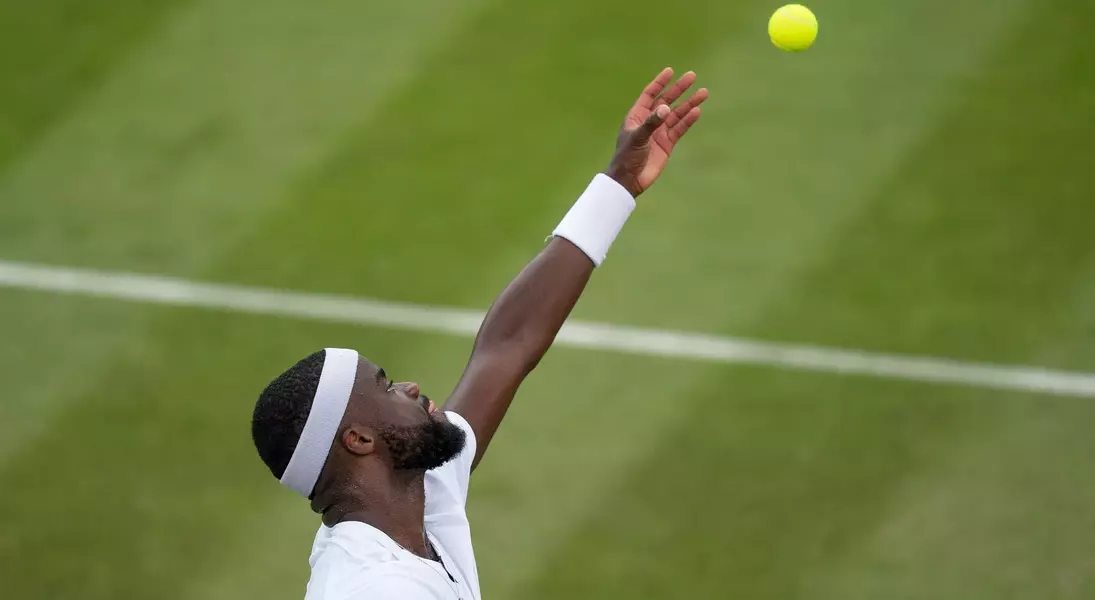
American tennis sensation Frances Tiafoe has publicly endorsed the United Kingdom's commendable efforts to democratize tennis, applauding the grassroots programs designed to dismantle the sport's entrenched perception of elitism. His powerful words illuminate the ongoing transformation within the sport, striving for wider participation and a more inclusive future.
Tiafoe Champions Inclusivity in UK Tennis, Highlights Personal Journey
On a significant day in London, marking the first anniversary of the impactful Barclays Free Park tennis scheme, Frances Tiafoe, currently ranked 12th globally, passionately articulated the imperative of eliminating the traditional obstacles that have historically marginalized many young people, particularly those from less affluent areas, from engaging with tennis. He emphasized the crucial need to foster environments where financial constraints and limited access no longer dictate a child's potential to discover and excel in the sport.
Tiafoe's own inspiring narrative serves as a poignant testament to the power of access. He openly shared how his journey into the world of tennis was an exceptional stroke of fortune. “If my father hadn't worked as a janitor at a tennis center in Maryland, I honestly believe I would never have picked up a racket,” he revealed. This personal anecdote powerfully underscores how a simple opportunity can fundamentally alter a life's trajectory, emphasizing the profound impact of initiatives like Free Park tennis.
The Free Park tennis program offers a comprehensive pathway to the sport, providing complimentary coaching, essential equipment, and unrestricted access to facilities. This holistic approach aims to open tennis to diverse demographics across the UK. While a 2024 report by the Lawn Tennis Association (LTA) indicates that approximately 3.6 million children in the UK engage in tennis at least once annually, persistent challenges such as affordability and insufficient court availability have kept participation rates lower compared to other popular sports. The program seeks to bridge this gap, ensuring that enthusiasm for tennis is not hampered by socioeconomic factors.
Looking forward, Tiafoe, a two-time US Open semi-finalist, is set to compete at the prestigious Wimbledon tournament, where he aspires to surpass his personal best of reaching the fourth round. He is slated to face Dane Elmer Moller in the opening round, with potential encounters against British talent Cameron Norrie or the seasoned Spanish player Roberto Bautista Agut in the subsequent round. He voiced his earnest desire that more aspiring young players from backgrounds similar to his own will find their way into tennis through these vital accessibility initiatives. “If such programs had existed in the US, you’d probably see three or four more players like me competing today,” he stated, highlighting his deep personal commitment to these transformative efforts.
The event also featured the insightful perspective of BBC Sport presenter Ian Wright, who vividly recalled his upbringing on a council estate in south London. He illustrated how football naturally became the dominant sport for him and his peers, largely because local tennis courts often remained deserted and lacked a welcoming atmosphere. “When I was younger, the tennis courts near my home in Brockley were consistently empty,” Wright reminisced. “I never saw anyone there – regardless of their background. Football, on the other hand, was effortless; all you needed was a ball, and everyone could play. I am certain that many of those children would have embraced tennis had they been granted access to facilities like these.”
As the sport of tennis continues its determined march towards greater inclusivity, the influential voices of figures like Tiafoe and the impactful presence of programs such as Free Park Tennis provide significant optimism. These efforts promise that tennis can shed its historical reputation as an exclusive pastime, evolving into a truly accessible and universal game for all, regardless of their starting point in life.
The narrative of tennis is progressively shifting from an exclusive domain to a sport that champions broad participation. The powerful testimonials from figures like Frances Tiafoe and Ian Wright underscore not only the historical barriers but also the immense potential for growth when equitable access is prioritized. These initiatives transcend mere sport; they are profoundly about social mobility and empowering young individuals to pursue their passions, irrespective of their background. It is a compelling reminder that talent knows no boundaries, and with the right support, the next generation of champions can emerge from anywhere. This movement towards a more inclusive tennis landscape is not just about expanding the player base, but about enriching the sport with diverse perspectives and a broader spectrum of human experience, making it truly a global game for everyone.
