Amidst shifting consumer behaviors and economic challenges, luxury brands are redefining their strategies to maintain relevance and growth. A recent report from Kearney highlights the importance of understanding diverse customer segments and adapting to new market dynamics. This article delves into the evolving landscape of the luxury industry and offers actionable insights for brands seeking to succeed in this complex environment.
Strategic Adaptation: The Key to Enduring Success in Luxury
Navigating Generational Preferences and Economic Volatility
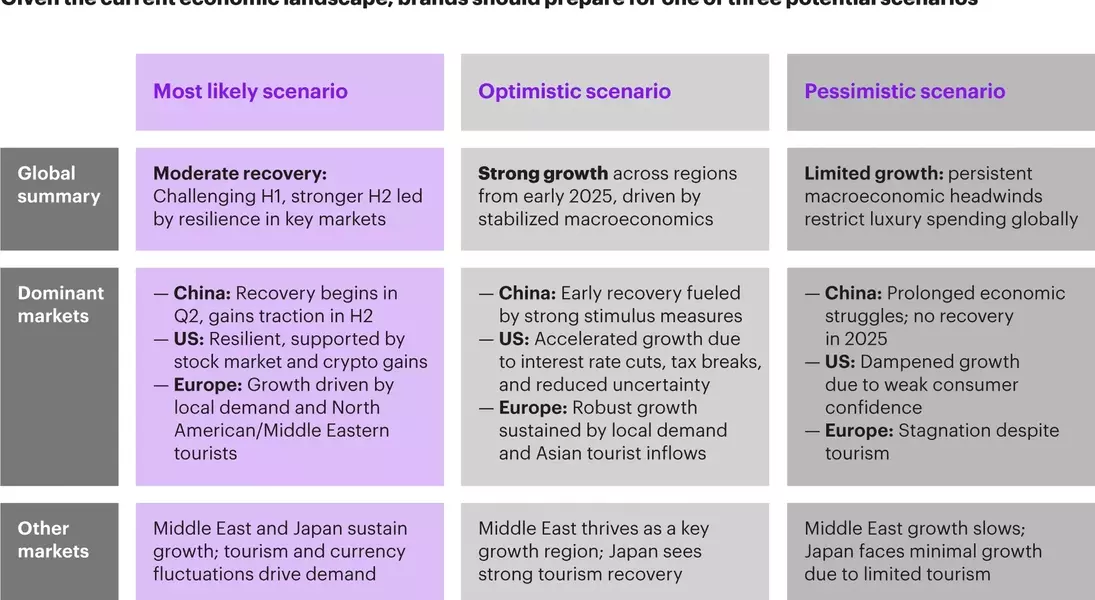
The luxury sector faces unprecedented challenges as it grapples with generational shifts and economic uncertainty. In key markets like China and the United States, consumer confidence has waned, leading to a fragmented and intricate marketplace. Baby boomers and Gen X, who control over half of global net wealth, remain pivotal to the industry's resilience. Their loyalty and consistent spending habits, particularly in categories such as watches and high-end travel, offer stability amidst volatility.Luxury brands must also contend with the growing influence of experiential luxury. As consumers increasingly prioritize meaningful experiences over material goods, sectors like high-end dining and travel have surged. Brands that can seamlessly integrate these experiences into their offerings will capture a broader audience. For instance, personalized travel packages or exclusive dining events can create lasting impressions and foster deeper connections with customers.Reinforcing Brand Heritage and Crafting Authentic Experiences
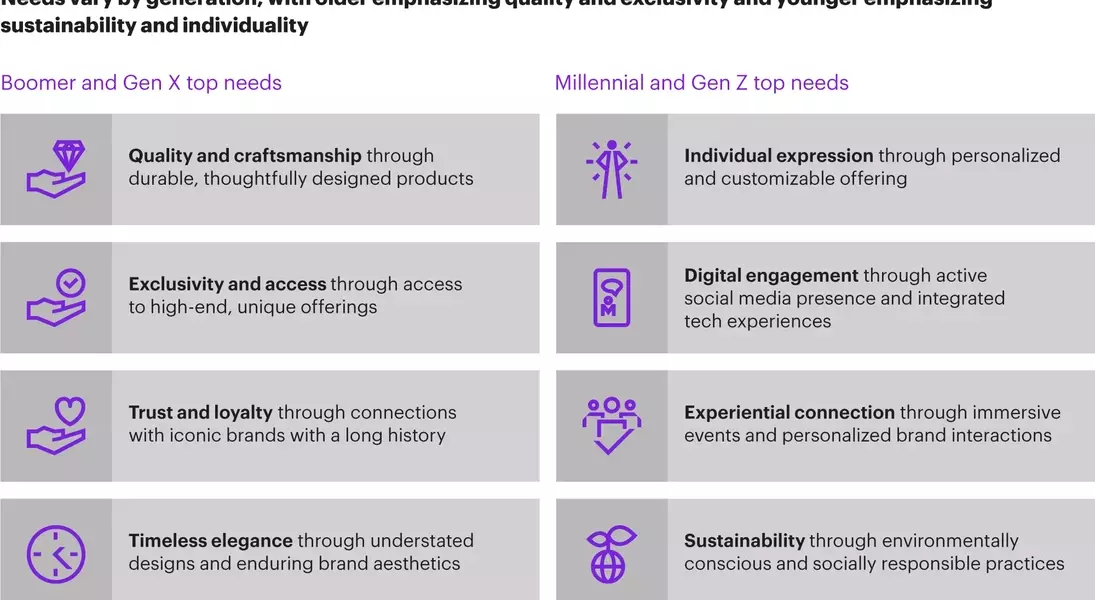
In an era where authenticity is paramount, luxury brands must emphasize their heritage and craftsmanship. Boomers and Gen X, known for their brand loyalty, value the historical significance and quality associated with established names. Brands can leverage this by reinforcing their legacy through storytelling and showcasing artisanal techniques. For example, highlighting the meticulous process behind crafting a timepiece or the origins of premium materials can enhance brand perception.Moreover, the rise of digital platforms provides opportunities for immersive storytelling. Virtual reality tours of ateliers or live-streamed events featuring artisans can bring the brand’s history to life. These initiatives not only educate consumers but also build emotional ties, driving long-term loyalty. Additionally, embracing sustainability and ethical practices can further strengthen brand equity, appealing to conscientious consumers across all generations.Optimizing Operations for Efficiency and Exclusivity
Cost pressures and operational inefficiencies pose significant hurdles for luxury brands. Rising raw material prices, labor shortages, and stringent regulations necessitate innovative solutions. Brands are turning to technology to streamline operations and reduce waste. Artificial intelligence-driven supply chain management optimizes inventory levels and minimizes environmental impact. Alternative materials, such as lab-grown textiles and plant-based leather, offer sustainable and cost-effective substitutes. These innovations not only address financial constraints but also align with consumer demands for eco-friendly products. Furthermore, streamlined product development processes enhance customization without compromising efficiency. By leveraging advanced technologies, brands can deliver bespoke items faster and more accurately, meeting the unique preferences of discerning customers.Enhancing Retail Innovation and Customer Engagement
Physical retail remains a cornerstone of the luxury shopping experience, despite the rise of e-commerce. High-spending tourists in cities like Paris and Milan continue to drive robust retail performance. Brands are investing in retail innovation to elevate in-store interactions, incorporating digital enhancements such as augmented reality and AI-powered recommendations. These tools provide personalized shopping experiences, fostering deeper connections with customers.Upskilled store associates equipped with specialized brand knowledge enhance service quality, ensuring a seamless and memorable experience. Long-term loyalty programs, including repair and recycling initiatives, reinforce customer relationships. Brands that prioritize exceptional service and engagement will cultivate a loyal clientele, driving sustained growth even in challenging times.Balancing Exclusivity and Accessibility
Striking the right balance between exclusivity and accessibility is crucial for luxury brands. While heritage products have seen significant price hikes, this trend has alienated aspirational consumers, pushing them toward alternative markets like resale platforms. Brands must refine their value propositions to appeal to a broader audience without diluting their exclusivity.Some brands are streamlining product assortments to reduce decision fatigue, focusing on core collections that resonate with high-net-worth individuals. Others emphasize exceptional craftsmanship and heritage storytelling to reinforce exclusivity. By offering accessible entry-level items alongside premium offerings, brands can cater to both aspirational shoppers and loyal patrons. This dual approach ensures that the brand remains relevant and desirable across diverse consumer segments.