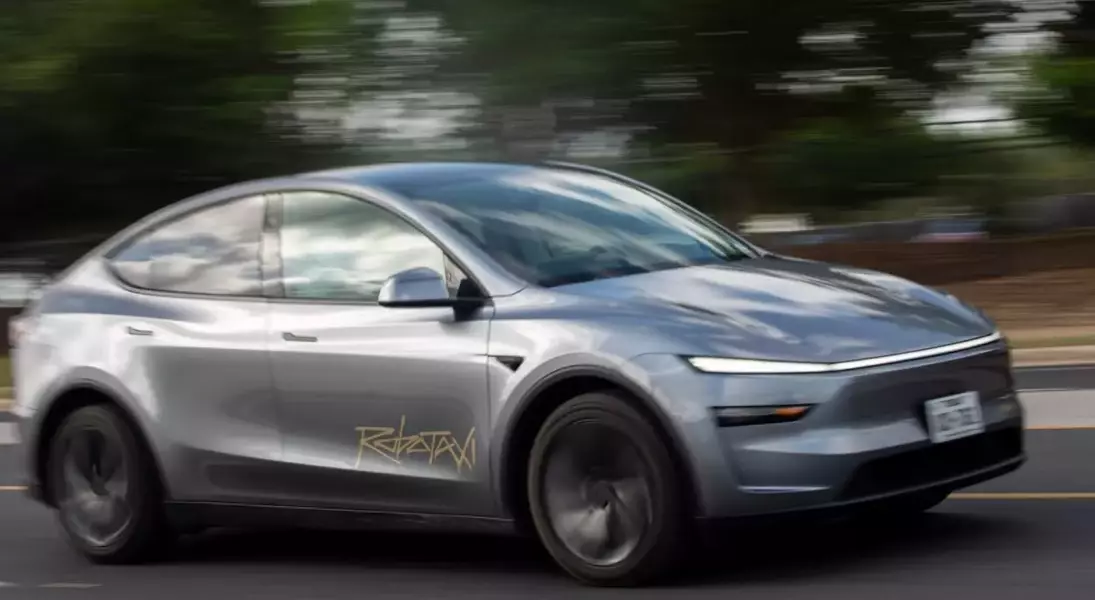
Tesla has demonstrated remarkable assertiveness in the realm of autonomous ride-sharing, particularly with its swift expansion of Robotaxi services. The company's recent moves in Austin, Texas, signify a significant acceleration in its strategy to deploy self-driving vehicles more broadly. This rapid growth contrasts with the more gradual approach taken by long-standing autonomous vehicle developers like Waymo, highlighting Tesla's bold vision and determination to lead the market.
As Tesla continues to push the boundaries of its autonomous capabilities, a competitive landscape is emerging. The expansion into a service area comparable to that of established players like Waymo indicates an intensifying race for market dominance in the autonomous taxi sector. This contest not only challenges technological limits but also shapes public perception and regulatory frameworks surrounding self-driving cars, ultimately influencing the future of urban mobility.
Rapid Expansion in Austin
Tesla's Robotaxi service, which debuted in Austin this past June, has swiftly enlarged its operational boundaries, marking its second expansion within a single week. Initially, the service was confined to a small, specific zone in South Austin, accessible only to a select group of participants. However, the company has aggressively broadened this coverage, first by extending the original area, and then by introducing a similar, albeit less autonomous, service in the San Francisco Bay Area.
The latest expansion further extends Tesla's geofenced operational area in Austin, now encompassing approximately 80 square miles. This considerable increase brings Tesla's Robotaxi coverage almost on par with Waymo's established autonomous taxi presence in the region. The accelerated pace of deployment underscores Tesla's strong belief in its Robotaxi technology, primarily utilizing its Model Y vehicles, and aligns with Elon Musk's ambitious projections for widespread Robotaxi availability across the U.S. by 2025.
Competitive Landscape and Future Ambitions
The rapid growth of Tesla's Robotaxi service signals an intensified competition in the autonomous vehicle sector. While companies like Waymo have pursued a more measured expansion over many years, Tesla is demonstrating an assertive, fast-tracked deployment strategy. This aggressive approach could reshape the timeline for widespread adoption of self-driving taxis, placing pressure on other industry players to accelerate their own development and deployment efforts.
Elon Musk's bold declaration of reaching half the U.S. population with Robotaxis by the end of 2025 sets an ambitious benchmark for the industry. This vision, combined with the ongoing expansion in key urban areas, illustrates Tesla's commitment to transforming personal transportation. As autonomous technology continues to evolve, the race between Tesla and its competitors will not only drive innovation but also influence regulatory developments and consumer acceptance, ultimately defining the trajectory of future mobility solutions.
