


The recent earnings season for major technology firms has unveiled a complex landscape, with artificial intelligence emerging as a pivotal factor in market performance. While some companies celebrated robust growth and investor confidence, others grappled with concerns over decelerating expansion and substantial AI-related expenditures. This period of financial disclosures has offered a clear glimpse into the evolving dynamics of the tech industry, where strategic AI integration is increasingly shaping corporate trajectories and market perceptions.
Tech Titans Navigate Earnings Season: Meta's AI Triumph, Microsoft's Cloud Woes, and Apple's Anticipated Results
In the bustling world of tech finance, January 29, 2026, marked a day of significant revelations. Meta Platforms, led by CEO Mark Zuckerberg, announced a stellar fourth quarter, exceeding Wall Street's financial forecasts. The company's stock soared by over 10%, reaching new year-to-date highs, as investors lauded Meta's promising outlook and its substantial commitment to artificial intelligence. Zuckerberg's confident remarks on the integration of AI across core applications like Facebook, Instagram, and WhatsApp, alongside innovative hardware such as the Meta Ray-Ban Display AI glasses, underscored the company's strategic vision. Analysts from Wedbush, Morgan Stanley, and Jefferies enthusiastically raised their price targets for Meta, citing the broad monetization potential of Meta AI and its rapidly expanding user base, which now boasts over one billion monthly active users. This surge positioned Meta as a standout performer among the 'Magnificent Seven' tech stocks.
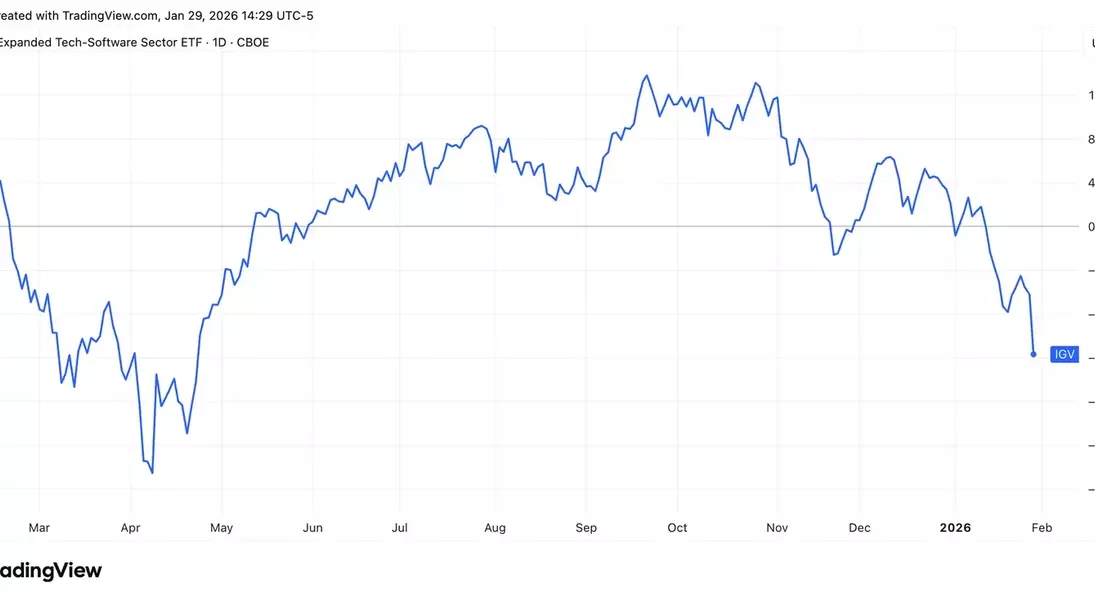
Conversely, Microsoft, under the leadership of Chairman and CEO Satya Nadella, faced a downturn despite reporting revenues and earnings that surpassed expectations. The tech giant's shares plummeted by 12% to a nine-month low, reflecting investor apprehension regarding a slight deceleration in Azure cloud growth and the company's considerable reliance on a select few major clients. CFO Amy Hood acknowledged capacity constraints affecting cloud growth and highlighted significant investments in AI infrastructure to meet escalating demand. However, these increased expenditures, coupled with a substantial portion of its backlog attributed to OpenAI, raised concerns about concentration risks and the financial viability of OpenAI's commitments. This sentiment triggered a broader sell-off in software stocks, with the tech-heavy Nasdaq Composite and S&P 500 experiencing notable declines.
Amidst these fluctuating fortunes, all eyes were on Apple as it prepared to release its quarterly figures after the market closed. Market analysts were keenly anticipating Apple's performance, projecting record revenues of $138.11 billion and earnings per share of $2.67, both representing an 11% year-over-year increase. Despite a potential memory chip shortage posing a minor risk to profit margins, analysts from JPMorgan, UBS, and Morgan Stanley remained largely bullish on Apple's stock, with an average price target that suggested a considerable upside from its current levels. The company's recent strong holiday season for iPhone sales, as indicated by CEO Tim Cook, fueled optimism for another robust financial report.
The Dual Edge of AI: Opportunity and Disruption in the Tech Sector
The recent earnings reports from tech giants like Meta, Microsoft, and the anticipation surrounding Apple's results vividly illustrate artificial intelligence's transformative, yet often unpredictable, impact on the industry. Meta's success story underscores the immense opportunities that strategic AI investment can unlock, driving engagement, monetization, and robust stock performance. Its ability to effectively integrate AI across its diverse platforms and hardware demonstrates a forward-thinking approach that resonates strongly with investors and analysts, suggesting a promising trajectory for future growth.
However, Microsoft's experience serves as a cautionary tale. While AI offers unprecedented potential, the substantial costs associated with its development and infrastructure, coupled with concerns about market concentration and the stability of key partnerships, can lead to investor skepticism. The 'vibe coding' phenomenon, where AI-generated code could potentially disrupt traditional enterprise software demand, further highlights the dual nature of AI as both an innovation engine and a disruptive force. This dynamic suggests that even companies at the forefront of AI adoption must carefully balance investment with sustainable growth and diversified revenue streams to maintain market confidence.
As the tech landscape continues to evolve, companies face the imperative of not only embracing AI but also intelligently navigating its complexities. This involves not just technological prowess but also strategic foresight in managing financial implications, market perceptions, and potential industry shifts. The coming quarters will undoubtedly reveal more about how these tech behemoths adapt to and shape the AI-driven future, offering valuable lessons for the broader market on maximizing AI's benefits while mitigating its inherent risks.
