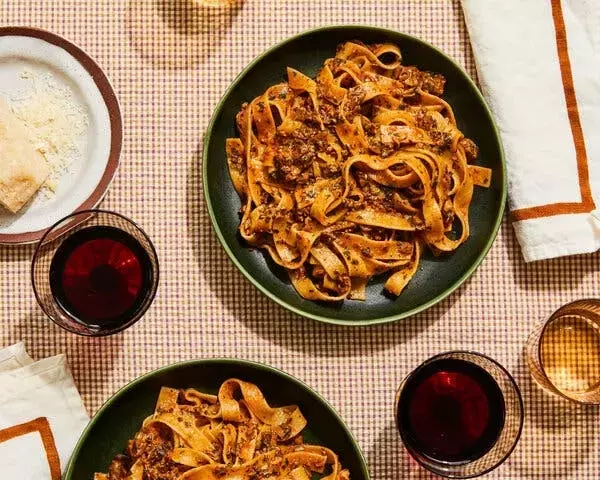
In a remote mountain village nestled in the heart of Tuscany, culinary traditions have been passed down through generations. Acone, with its sparse population and rich history dating back to the sixth century, has preserved a unique dish that captivates the senses. The village, immortalized by Dante’s fleeting reference in his "Divine Comedy," is home to a single restaurant where a particular pasta dish reigns supreme. This creation, known as penne all’Aconese, combines dried porcini mushrooms, cured pork, deep tomato paste, and a generous sprinkle of black pepper, all enveloped in a comforting cream sauce. For many, this dish evokes memories of wandering through scenic landscapes dotted with towering cypress trees.
For Ixta Belfrage, who spent her childhood in Acone, the flavors of this dish remain etched in her memory. Though she left the village at a young age, the essence of Acone never truly left her. Her culinary journey began not in formal training but through observation and intuition. During visits to her grandparents' home in Mexico, she watched as traditional dishes were prepared, absorbing techniques without formal instruction. This hands-on experience shaped her approach to cooking, leading her to embrace creativity over rigid recipes. Her philosophy—cooking should be free from constraints—guided her career from a humble start in London to collaborating with renowned chef Yotam Ottolenghi.
Belfrage’s passion for capturing the depth of flavor found in Acone inspired her to innovate. In her 2020 cookbook, she aimed to recreate the richness of meat in a vegetable lasagna using porcini mushrooms. These mushrooms, named for their resemblance to little pigs, thrive in symbiosis with certain trees, giving them a distinct earthy taste. However, the complexity of this recipe proved daunting for many. Seeking a simpler yet equally flavorful solution, Belfrage refined her approach in her subsequent cookbook, focusing on a quick ragù that retained the essence of Acone’s culinary heritage. Through this process, she demonstrated that true flavor can be achieved without sacrificing simplicity or time.
This exploration of culinary tradition and innovation highlights the power of preserving cultural heritage while embracing modern techniques. It reminds us that sometimes, the most profound experiences come from revisiting our roots and finding new ways to express them. By honoring the past and adapting to the present, we can create something both familiar and fresh, enriching our lives and those around us.
