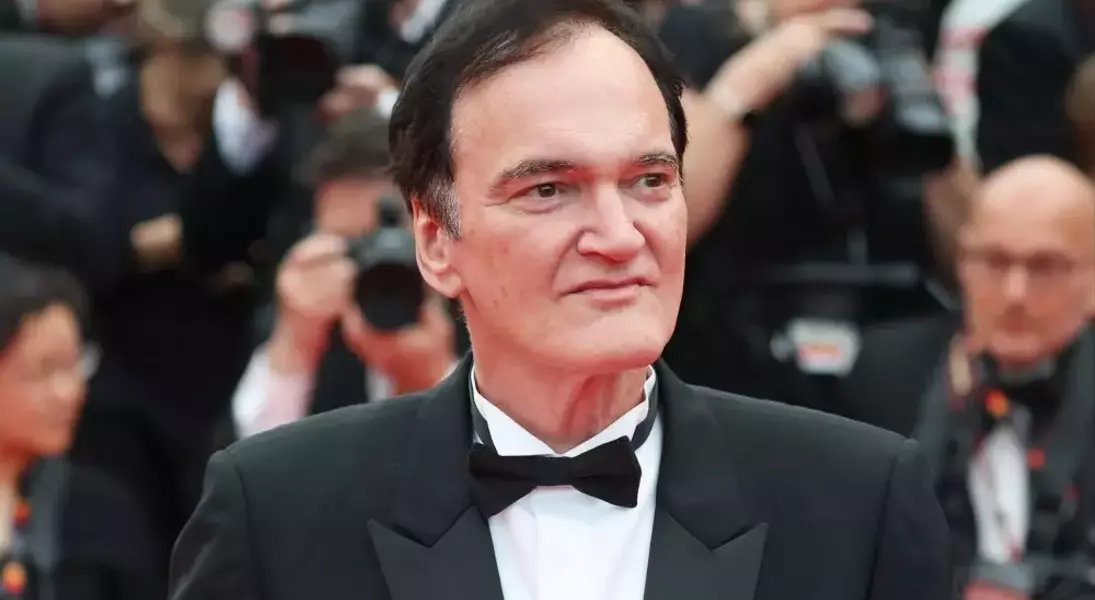
Quentin Tarantino, the renowned filmmaker, has decided against directing the anticipated sequel to his acclaimed movie, 'Once Upon a Time in Hollywood.' His decision stems from a deep-seated need to explore fresh creative avenues for his culminating cinematic work, a sentiment he articulated during a recent podcast interview. He expressed a lack of enthusiasm for revisiting familiar ground, indicating a strong desire for his final film to push boundaries and venture into unknown creative landscapes. Despite stepping back from the director's chair, Tarantino has given his full support to David Fincher, who will now helm the project, seeing Fincher's participation as a significant validation of the film's importance. Tarantino will maintain a pivotal role as writer and producer, offering his expertise and guidance throughout the production, even as he manages his time between different locations.
Tarantino's Creative Crossroads: New Horizons for His Swan Song
In a recent candid conversation on \"The Church of Tarantino\" podcast, held on August 16, 2025, cinematic maestro Quentin Tarantino unveiled his rationale for not directing \"The Adventures of Cliff Booth,\" the highly anticipated follow-up to his critically acclaimed \"Once Upon a Time in Hollywood.\" Tarantino conveyed that the prospect of his concluding directorial project being a continuation of a past narrative failed to ignite his creative spirit. He articulated a profound yearning to venture into entirely new, unexplored cinematic domains for his tenth and final film, emphasizing the necessity of embracing the unknown.
The visionary director enthusiastically endorsed David Fincher to take the reins for the Netflix-backed sequel. Tarantino lauded Fincher's exceptional talent, stating, \"I think me and David Fincher are the two best directors.\" He viewed Fincher's readiness to adapt his work as a significant acknowledgment of the depth and seriousness of his artistic contributions. While relinquishing directorial duties, Tarantino confirmed his continued involvement as both writer and producer for the project, assuring that he would be readily available to assist the production whenever required, even with his commitments in various global locations, including Israel.
During the same revealing interview, Tarantino also clarified why his long-speculated tenth film, \"The Movie Critic,\" was ultimately shelved. Echoing his sentiments regarding the \"Once Upon a Time in Hollywood\" sequel, Tarantino explained that \"The Movie Critic\" felt too intrinsically linked to his prior creative endeavors. He found that the technical challenges, such as authentically recreating 1969 Los Angeles without CGI, which were a significant driving force behind \"Once Upon a Time in Hollywood,\" were absent in \"The Movie Critic.\" The latter, he felt, lacked the \"uncharted territory\" he seeks for his final directorial masterpiece, making it too similar to his previous cinematic journey.
From a reflective standpoint, Tarantino's decision underscores a profound artistic integrity and a relentless pursuit of innovation. His choice to step away from directing a sequel, even one born from his own universe, speaks volumes about his commitment to ending his illustrious directorial career on a note of genuine novelty and creative exploration. It challenges the conventional wisdom that success breeds repetition, instead advocating for a continuous journey into the unknown. This move not only elevates Fincher’s position within the industry but also solidifies Tarantino’s legacy as an artist perpetually pushing the boundaries of his craft, always seeking that thrilling sense of discovery that comes from not knowing what he’s doing next.
