

Explore TAG Heuer's enduring legacy in motorsport with the introduction of the Monza Flyback Chronograph Carbon, a timepiece that beautifully merges a rich heritage with cutting-edge innovation. This article delves into the watch's design, its historical significance, and the advanced mechanics that make it a standout in contemporary horology.
Experience the Fusion of Heritage and Innovation: The Monza Flyback Chronograph Carbon
TAG Heuer's Deep-Rooted Connection to Motorsport and Chronography Excellence
TAG Heuer, a brand long synonymous with the thrilling world of motorsports, continues its journey by unveiling the new Monza Flyback Chronograph Carbon. From its early days as Heuer, the company's commitment to racing has been unwavering, largely thanks to its pioneering mechanical stopwatches. This racing spirit is vividly embodied in celebrated collections such as the Carrera and Monaco. As the Monza series commemorates its 50th anniversary this year, TAG Heuer reignites its racing passion with this latest creation.
A Glimpse into Heuer's Revolutionary Chronograph Innovations
The historical significance of Heuer's chronograph innovations cannot be overstated. The brand's first chronograph patent dates back to 1882, followed by the groundbreaking oscillating pinion in 1887, a mechanism still fundamental in movements like the Valjoux 7750. A century ago, in 1916, the Mikrograph emerged as the first stopwatch capable of measuring time to 1/100th of a second. In 1969, the iconic Calibre 11 automatic chronograph movement debuted in the Monaco, later finding its way into the Monza, introduced in 1976. This rich tradition of innovative chronograph manufacturing is evident in modern solutions, including the compliant mechanisms found in the Monaco Evergraph.
Evolution of the Monza's Distinctive Design
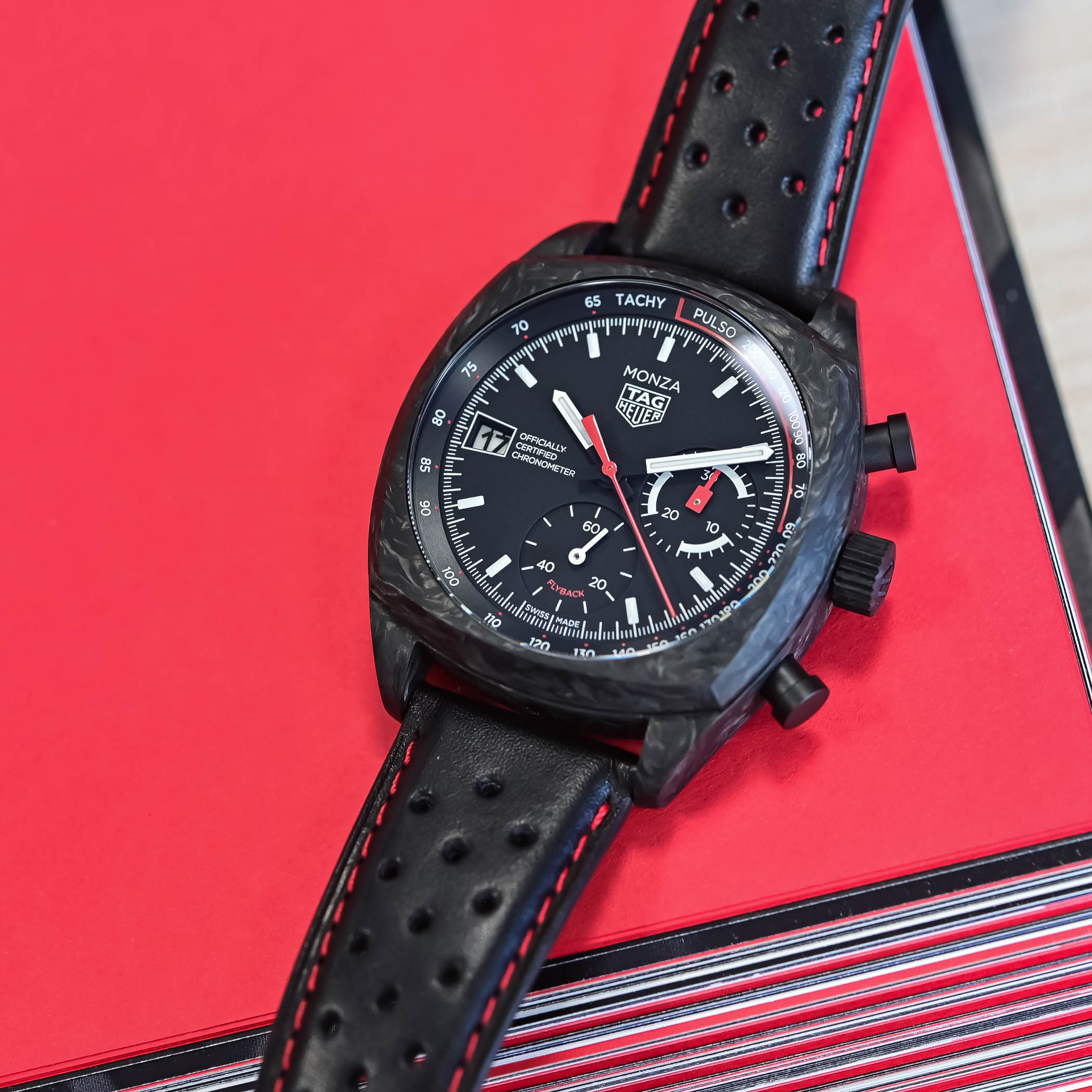
Initially, the Monza featured a barrel-shaped case, a signature style of the 1970s. However, its reintroduction in 2000 brought forth the now-familiar cushion-shaped profile. TAG Heuer has since reimagined the crown and pusher placement from an unconventional split orientation to a more traditional right-sided setup. For its 40th anniversary in 2016, the Monza was re-released with a blacked-out case and a color scheme echoing the 1976 original. This new Monza Flyback Chronograph masterfully weaves together these historical design elements, creating a contemporary, racing-inspired chronograph that aligns with the 2016 limited edition and the 2023 Monza Flyback Chronometer.
Craftsmanship and Advanced Materials: The Monza's Case Design
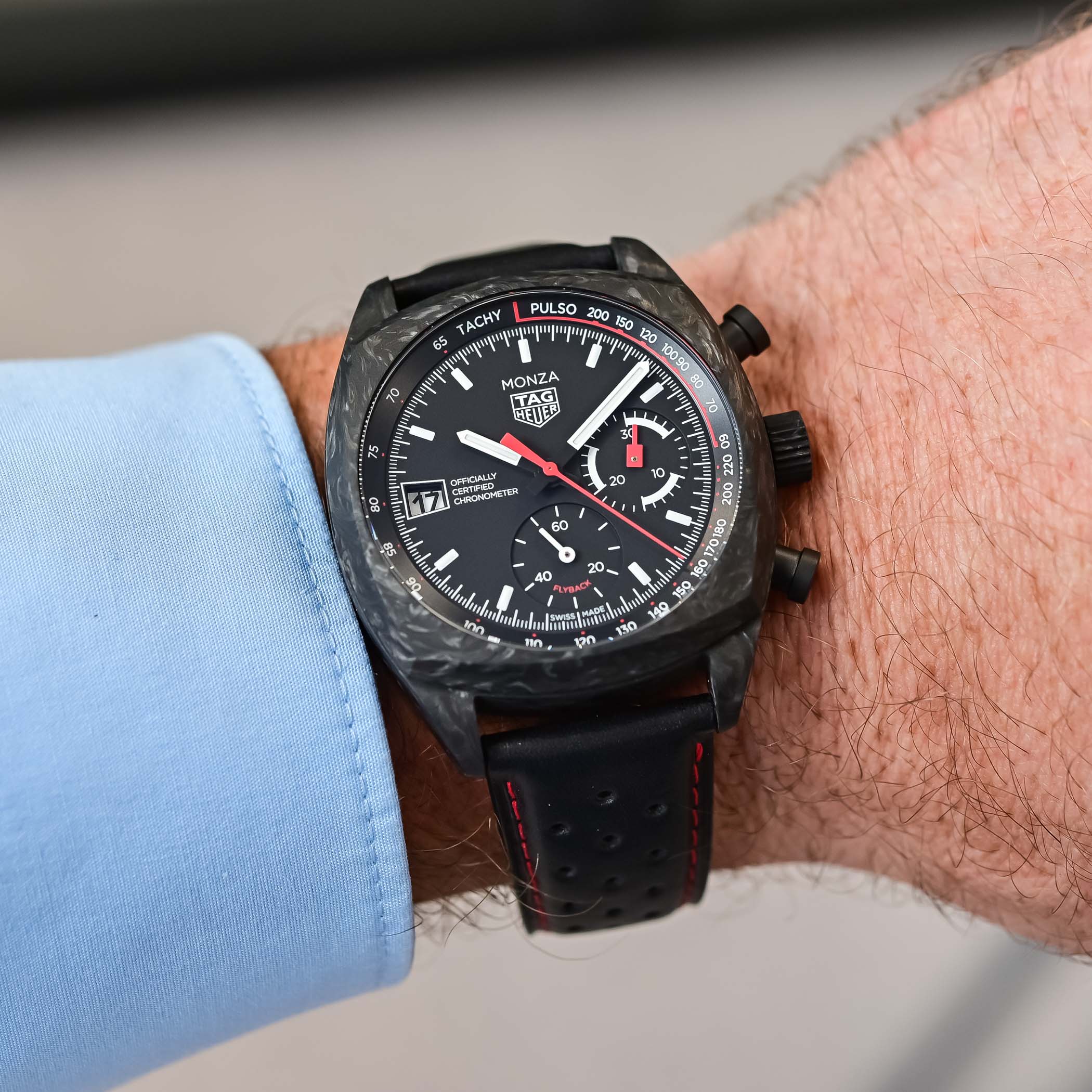
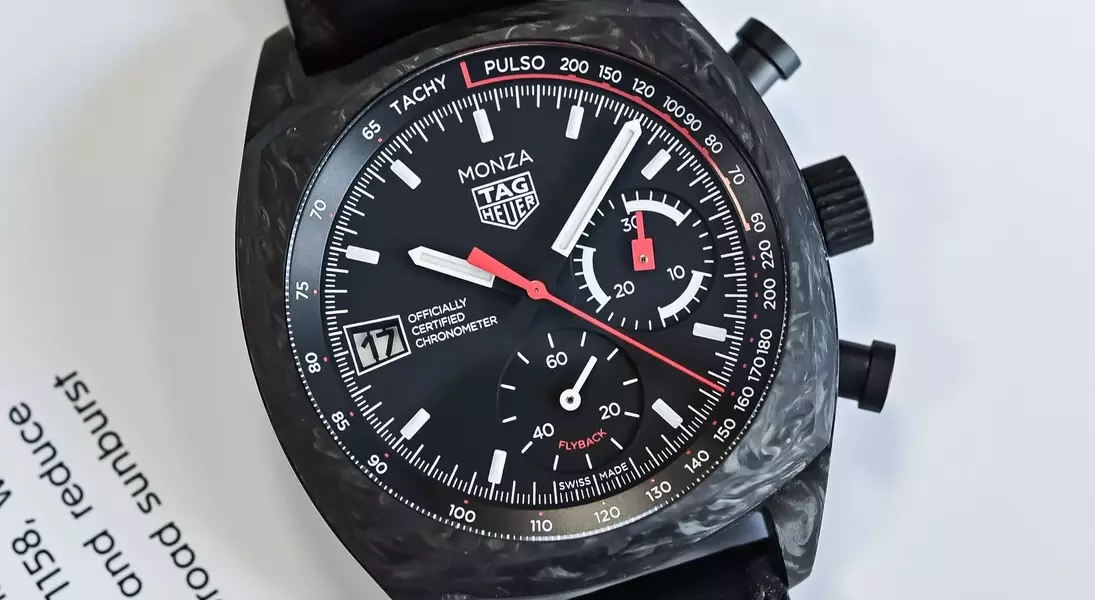
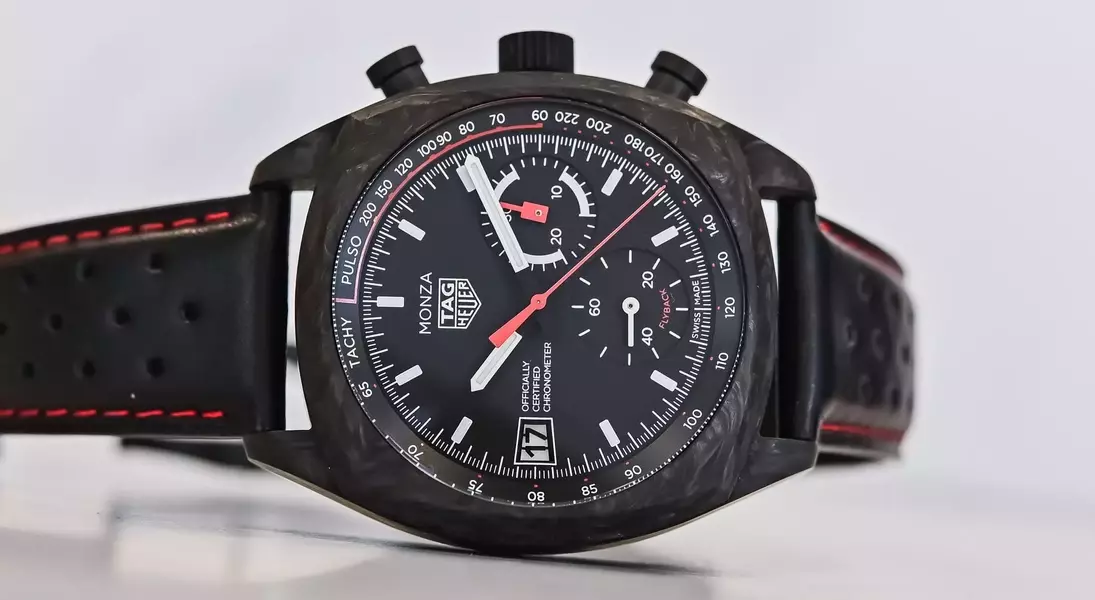
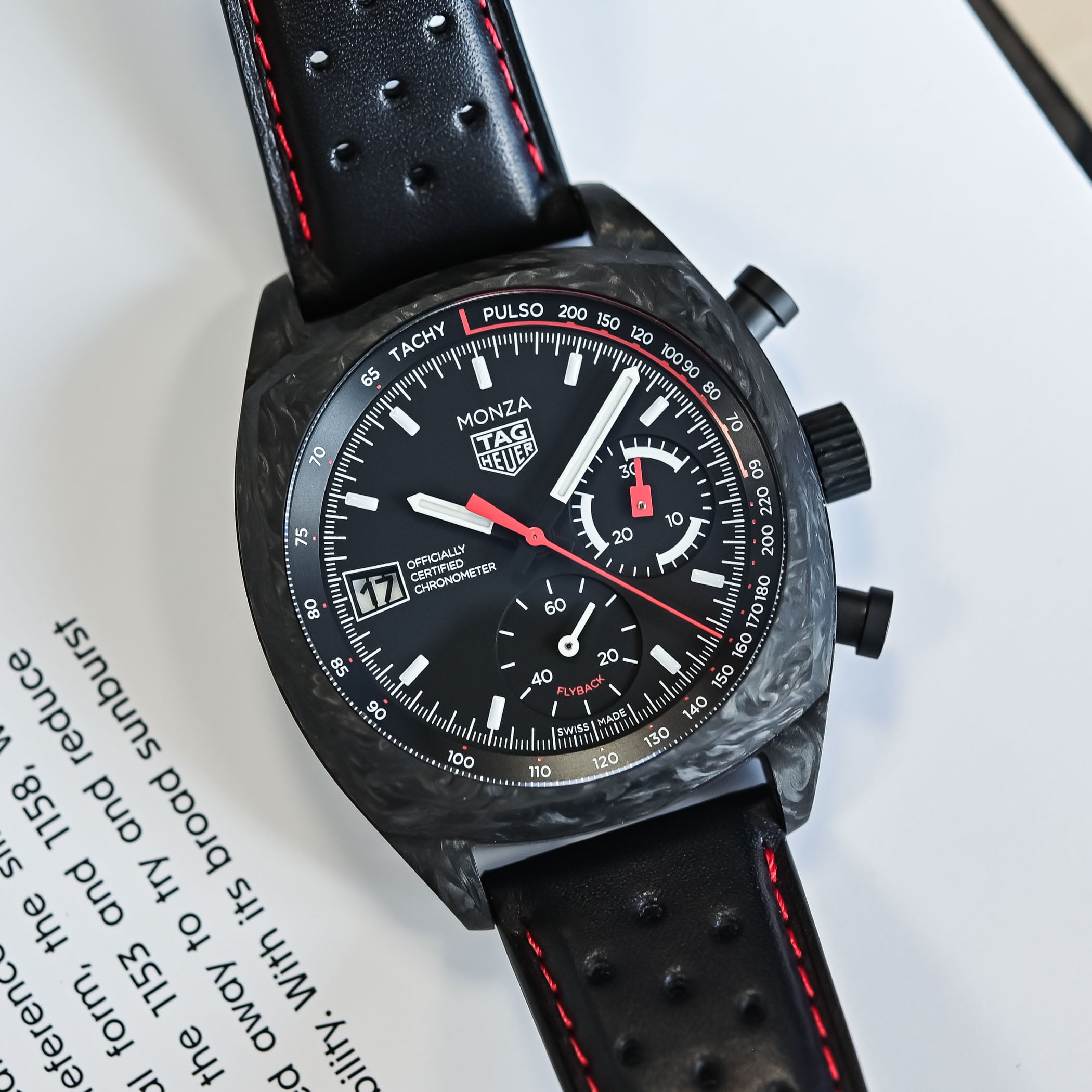
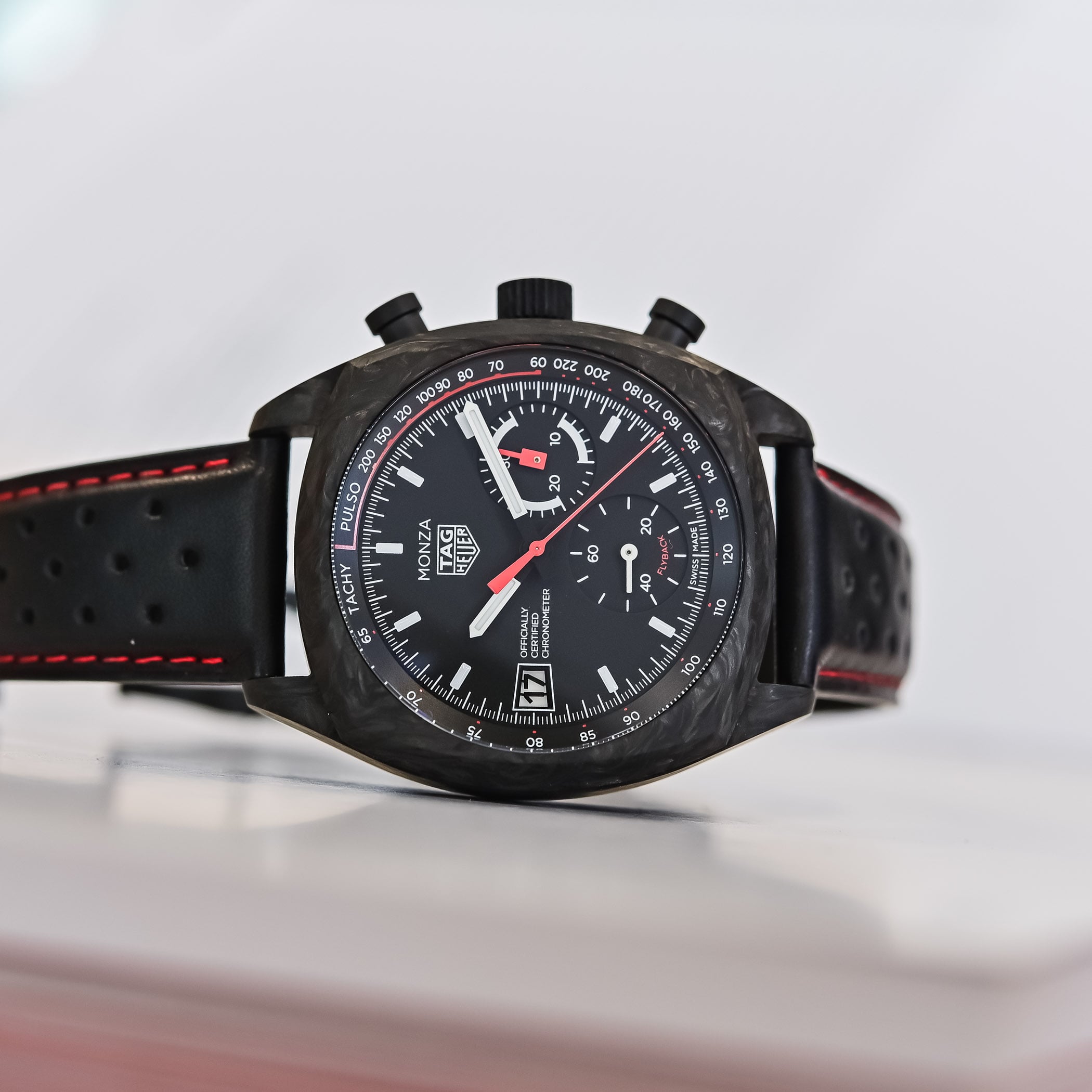
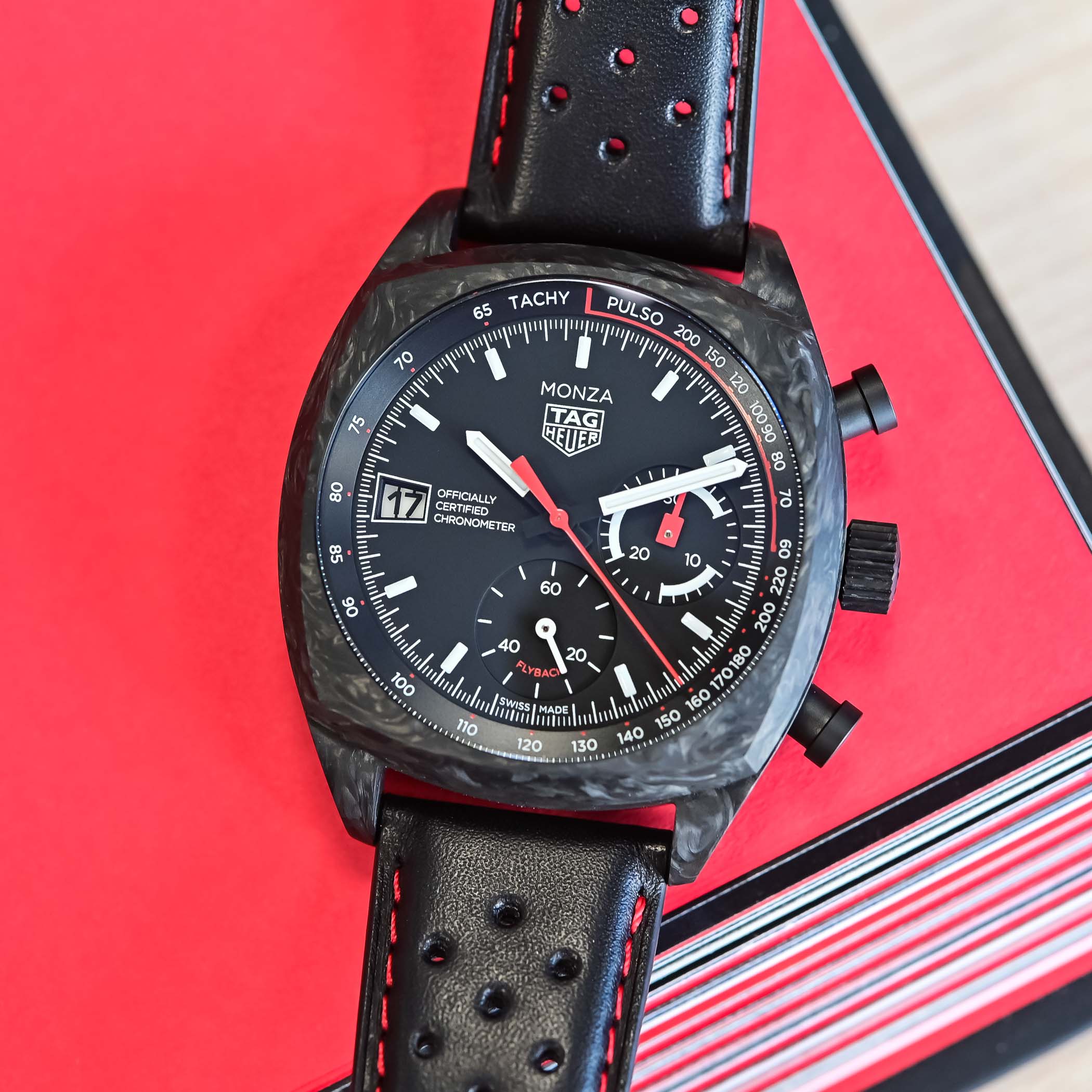
The watch's 42mm wide and 15.22mm high case is meticulously crafted from lightweight forged carbon, a material also used for the fixed bezel and crown. The caseback is made of black DLC-coated titanium, complemented by black DLC-coated steel pushers. Both sides are protected by sapphire crystals, ensuring durability, while the watch maintains a comfortable water resistance of 100 meters.
Dial Reimagined: Blending Classic Aesthetics with Modern Functionality
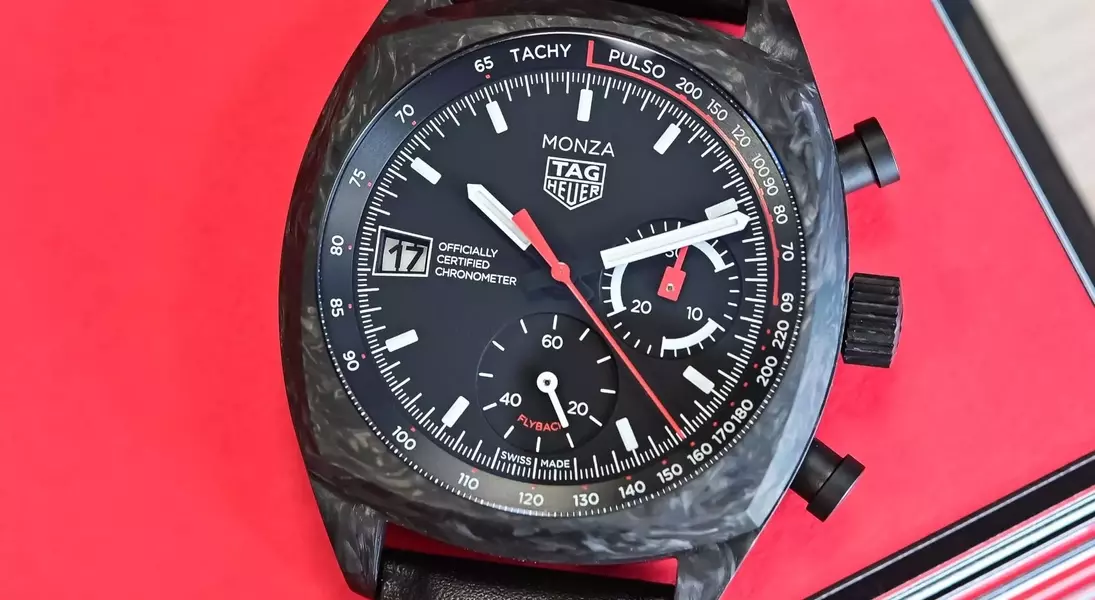
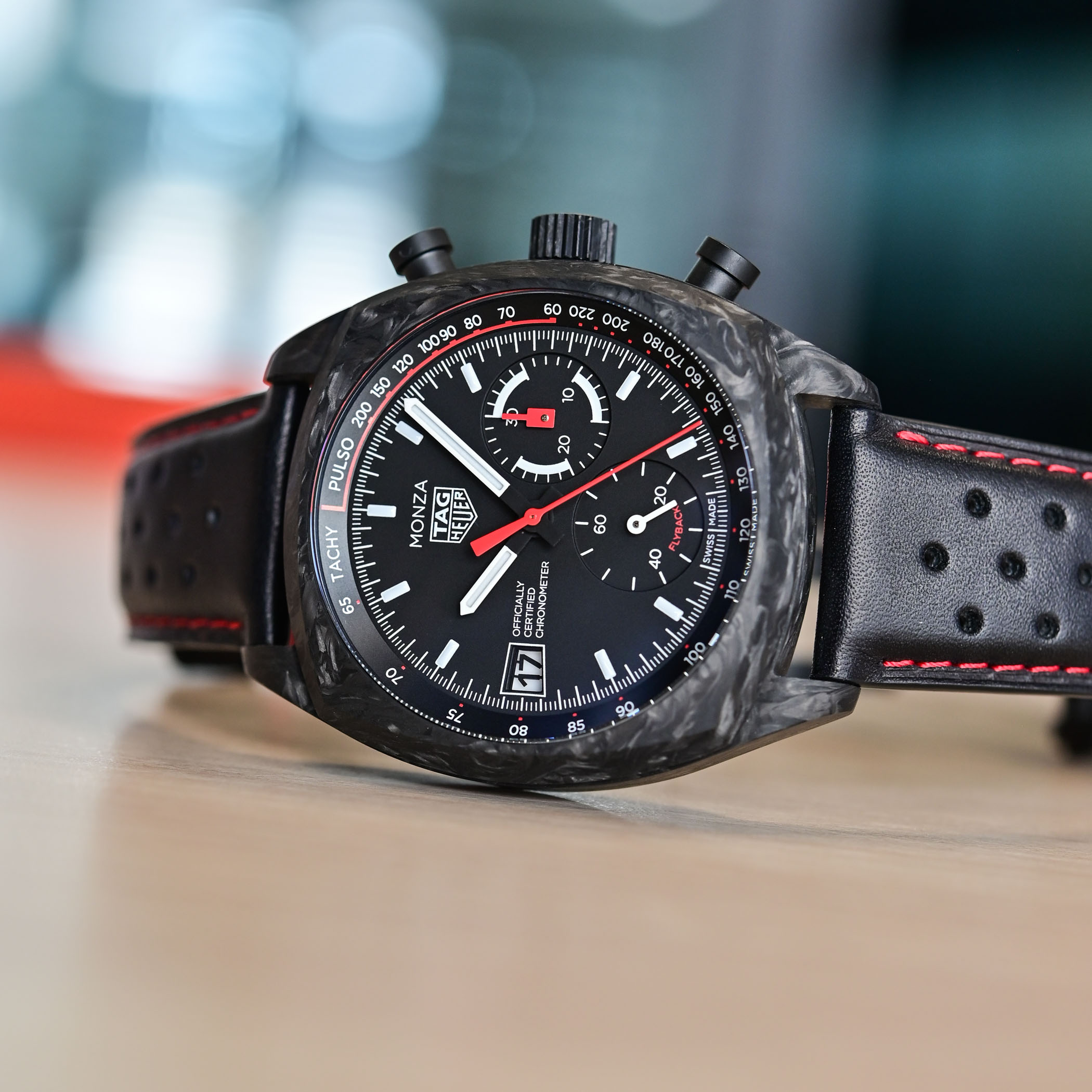
While retaining a familiar color palette, the dial of the new Monza features a subtly redesigned layout. The original Monza placed the chronograph minute counter at 3 o'clock, the date at 6 o'clock, and a running seconds subdial at 10 o'clock. The updated version keeps the 30-minute counter at 3 o'clock but repositions the small seconds and date functions. The outer flange incorporates both tachymeter and pulsometer scales. The hands and markers are a striking combination of white and red, presenting a crisper, more contemporary look while honoring the original's essence. A notable enhancement is the inverted colors on the chronograph 30-minute counter, now featuring a red hand to match the red chronograph seconds hand.
The Heart of the Watch: The TH20-12 Automatic Flyback Chronograph Movement
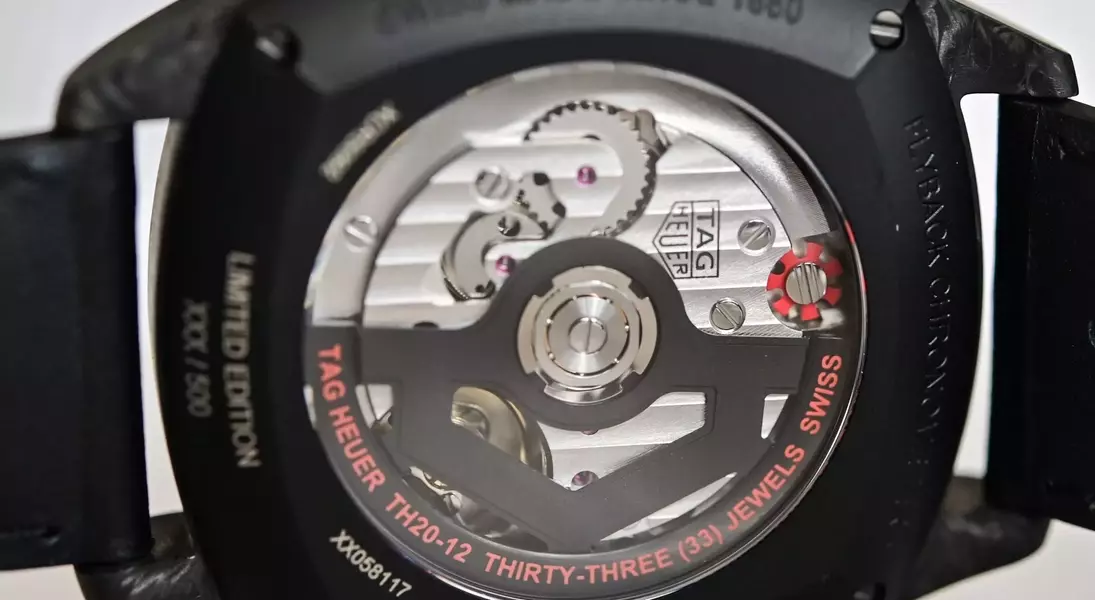
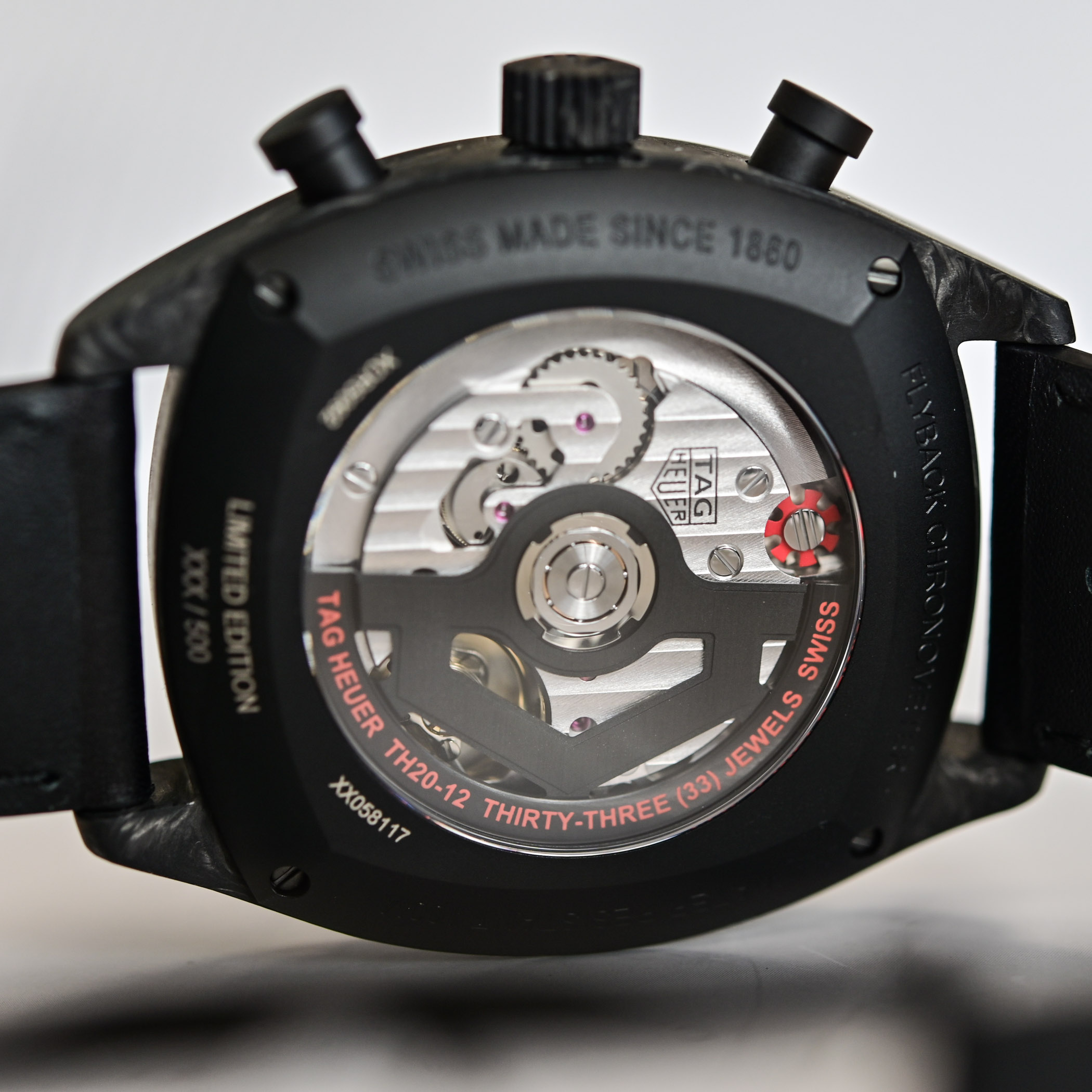
Powering this exceptional timepiece is TAG Heuer's in-house TH20-12 automatic flyback chronograph movement, a variation of the one found in the 2023 Monza Flyback Chronometer. Operating at 28,800 vibrations per hour, it boasts an impressive 80-hour power reserve, a notable feature for chronograph movements. Its modern architecture includes a column wheel and vertical clutch, ensuring smooth chronograph activation. This movement is also COSC-certified, affirming its precision. To maintain the watch's black, white, and red theme, the blackened openworked rotor is adorned with red-inked movement details, and the column-wheel is finished in red, completing the race-inspired aesthetic.
Exclusivity and Market Positioning: The Limited Edition Monza
The Monza Flyback Chronograph Carbon is presented with a black perforated calfskin leather strap, accented with red stitching, and secured by a black DLC-coated titanium folding clasp. Limited to 500 pieces, it retails for EUR 13,350. While some might question why the Monza remains a series of limited editions rather than a permanent collection, TAG Heuer's strategy is clear. With a robust portfolio of race-inspired chronographs, including the Carrera, Monaco, and Formula 1, keeping the Monza as a special edition maintains its allure and ensures collectors eagerly anticipate each new release. This approach safeguards the original Monza's spirit, preventing dilution of its legacy while integrating modern technology and materials.