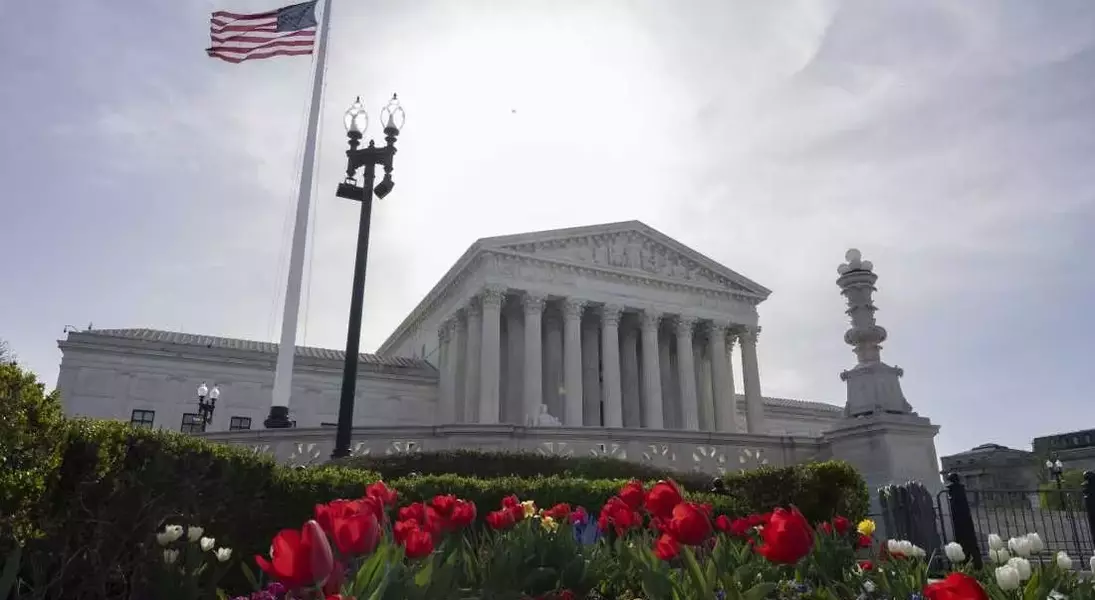
The U.S. Supreme Court's conservative faction has indicated a probable inclination towards terminating the Temporary Protected Status (TPS) program for certain migrant groups. This move, if finalized, could pave the way for the potential deportation of more than a million individuals, predominantly from nations like Haiti and Syria, who currently reside and work lawfully within the United States. This development casts a shadow over a program historically supported by both Republican and Democratic administrations, now facing an attempt at dissolution by the Trump administration.
Supreme Court Deliberates on TPS, Raising Concerns Over Judicial Oversight and Discrimination
In a significant legal proceeding on April 29, 2026, the U.S. Supreme Court heard arguments that suggested a leaning by its conservative majority towards upholding the Trump administration's efforts to curtail the Temporary Protected Status (TPS) for numerous migrants. This outcome could have profound implications for over a million individuals from countries such as Haiti and Syria, who have found refuge and legal work opportunities in the U.S. due to precarious conditions in their homelands, often stemming from conflict or natural calamities.
The TPS program, a legislative creation of 1990, has historically received endorsement across presidential administrations, irrespective of party affiliation. However, the current administration has sought its termination. During Wednesday's court session, Solicitor General D. John Sauer contended that existing statutes explicitly preclude judicial scrutiny of the administration's decisions regarding TPS. He maintained this stance even when pressed by the Court's three liberal justices, asserting that the judiciary holds no power to review the Department of Homeland Security’s (DHS) procedural determinations.
Justice Sonia Sotomayor critically questioned Sauer's interpretation, suggesting it rendered the congressional statute purposeless. Justice Elena Kagan probed the implications of a hypothetical scenario where the DHS Secretary neglected to consult with the State Department regarding conditions in affected countries, or received an irrelevant response. Justice Ketanji Brown Jackson further challenged the argument by asking about decisions made through arbitrary means, such as a Ouija board.
Sauer remained resolute, prompting Justice Sotomayor to cite past remarks by the President, including disparaging comments about Haiti and associations of immigrants with national detriment, to argue that discriminatory intent might underlie the administration's actions. In response, Sauer highlighted the absence of racial references in the then-DHS Secretary Kristi Noem’s statements. This prompted Justice Jackson, the sole Black woman on the bench, to question if the administration's position implied overlooking contextual evidence of a racial epithet.
Justice Amy Coney Barrett intervened to seek clarification on whether TPS beneficiaries could launch challenges based on racial discrimination, to which Sauer appeared to concede. Geoffrey Pipoly, representing Haitian migrants, characterized the administration's review process as a "farce," asserting that the genuine motive behind TPS termination was rooted in the President's racial animosity towards non-white immigrants and a specific disdain for Haitians. Pipoly cited alleged remarks by the Secretary describing individuals from Haiti and other non-white nations negatively, while simultaneously offering humanitarian relief to solely white South Africans.
Justice Samuel Alito then posed a series of questions regarding the racial categorization of various ethnic groups, including Syrians, Turks, Greeks, and particularly Southern Italians, which elicited laughter in the courtroom. Pipoly acknowledged the fluid nature of racial classifications over time, noting that Southern Italians were not considered white a century ago.
The day concluded with a discernible trend: despite potential disagreements on other fronts, the Trump administration largely appears to be prevailing in its immigration agenda before the Supreme Court. This was underscored by a separate 6-to-3 ruling announced on the same day, which significantly weakened the landmark Voting Rights Act, a statute once hailed as a cornerstone of American democracy.
This ongoing judicial discourse surrounding TPS underscores a pivotal moment in U.S. immigration policy, where the balance between executive authority and judicial oversight is being critically examined. The arguments presented, particularly those concerning racial bias and the scope of judicial review, highlight deep divisions within the court and the nation regarding the treatment of vulnerable migrant populations. The potential dismantling of TPS could have profound humanitarian consequences, forcing many individuals who have established lives and contributed to American society back to unstable or dangerous environments. This situation calls for a re-evaluation of the values that underpin the nation's immigration framework and the role of the judiciary in safeguarding human rights against executive overreach.
