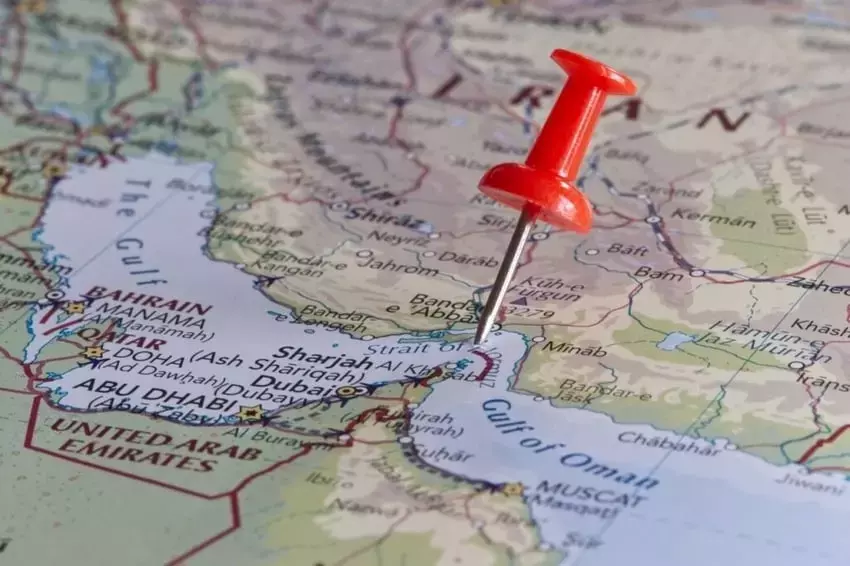
Billionaire investor Bill Ackman recently voiced concerns regarding the global economy's continued reliance on the Strait of Hormuz. His remarks follow a new agreement between the U.S. and Iran, intended to de-escalate tensions that have previously disrupted international shipping and energy flows. Ackman argues that such concentrated dependencies pose significant strategic risks, underscoring the urgent need for a diversified global supply chain to bolster long-term stability and security.
Ackman's statement, shared via a social media post, stressed the inherent instability created when the world's economic arteries are bottlenecked through a single, geopolitically sensitive chokepoint. He articulated that this exposure is not conducive to enduring peace and security, drawing attention to the fragility of global trade routes and energy supplies. The recent conflict in the region had already caused a sharp increase in oil prices, prompting renewed examination of the world's critical reliance on this narrow maritime passage.
The Strait of Hormuz, a vital conduit connecting the Persian Gulf to broader international shipping lanes, is recognized as one of the planet's most crucial energy chokepoints. A substantial portion of global oil consumption and a significant share of liquefied natural gas exports traverse this waterway, making its undisturbed operation essential for global energy markets. Under the recent provisional agreement, Iran has consented to allow commercial vessels to navigate the strait without charge for a 60-day period, with expectations for normal traffic to resume within 30 days after the completion of mine clearance operations. This development has already led to a decline in crude oil prices, reflecting the market's relief over improved shipping conditions and reduced supply anxieties.
Ackman further contextualized the strategic importance of mitigating dependence on the Strait of Hormuz by comparing it to efforts made by the United States to reduce similar vulnerabilities in other critical sectors. He cited the semiconductor manufacturing industry, heavily concentrated in Taiwan, and the pharmaceutical supply chains, largely centered in China, as analogous examples. Washington has, for instance, invested billions through legislative initiatives like the CHIPS and Science Act to enhance domestic semiconductor production and lessen reliance on overseas suppliers. Similarly, there has been a concerted push to diversify pharmaceutical supply chains, driven by concerns over the dependence on China for essential active pharmaceutical ingredients and other vital medical components. Ackman contended that addressing the risks associated with the Strait of Hormuz holds equivalent strategic significance to these existing national security and economic initiatives.
In essence, Ackman's commentary serves as a stark reminder of the interconnectedness of global economies and the inherent risks associated with over-reliance on singular geographic or manufacturing hubs. The Strait of Hormuz, much like the semiconductor and pharmaceutical industries, represents a critical nexus where geopolitical stability directly impacts economic prosperity. Diversification and strategic independence are presented as paramount for navigating an increasingly complex global landscape and safeguarding against future disruptions.
