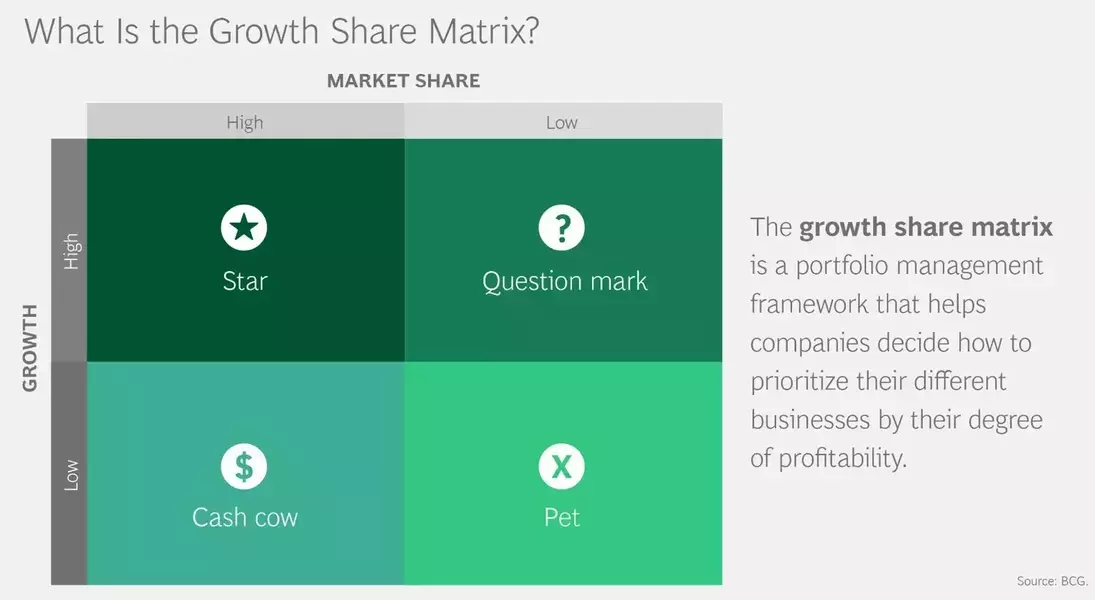
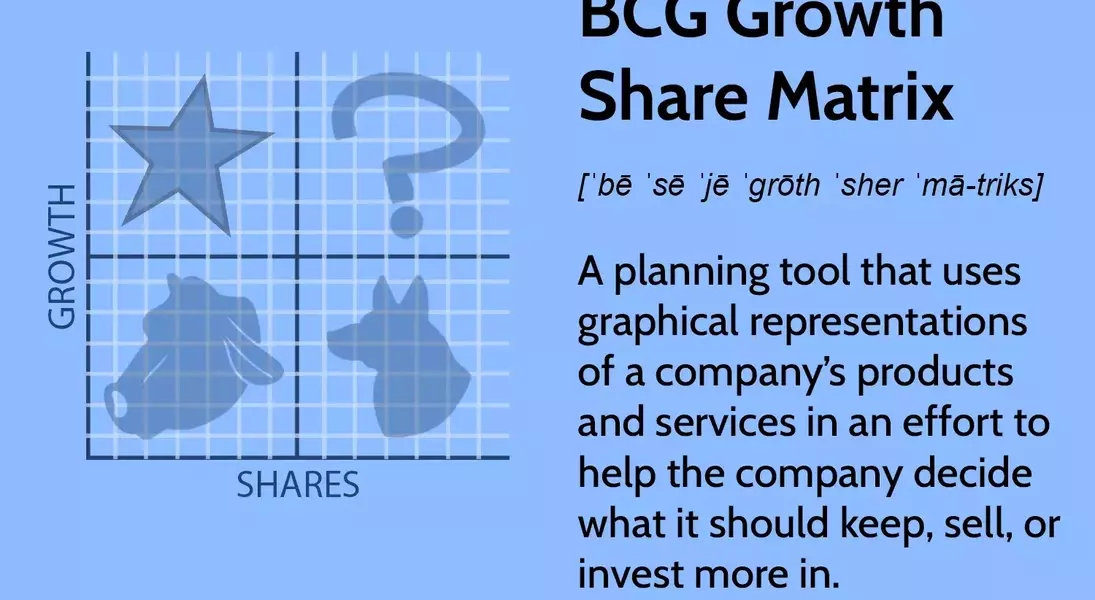
The Boston Consulting Group's (BCG) Growth Share Matrix is a crucial analytical instrument designed to assist organizations in evaluating their diverse product lines and strategic business units. This framework plots a company's offerings across a two-by-two grid, classifying them into four strategic categories based on their market growth rate and relative market share, thereby guiding decisions on investment, retention, or divestment.
Developed in 1970 by the Boston Consulting Group, this matrix serves as a foundational model for corporate strategy. It graphically represents where a company's products stand within the competitive landscape, with the Y-axis indicating the market growth rate and the X-axis representing the relative market share. This visual tool helps management prioritize resource allocation to maximize profitability and sustainable growth.
Within the BCG matrix, products are sorted into four distinct groups, each demanding a specific strategic approach. These categories include "Stars," "Cash Cows," "Question Marks," and "Dogs." Understanding the unique characteristics of each quadrant is essential for effective portfolio management.
Products deemed "Dogs" occupy the bottom-right quadrant, characterized by both low market share and low market growth rates. These products typically generate minimal cash flow and can tie up valuable resources, making them candidates for divestment or liquidation. Conversely, "Cash Cows," located in the bottom-left quadrant, are products with high market share but low growth rates. These are stable and profitable units that generate more cash than they consume, often operating in mature markets. The cash generated by these products can be used to fund other parts of the business, particularly "Stars" and promising "Question Marks."
"Stars" are found in the top-left quadrant, signifying high market share in high-growth markets. These products require significant investment to maintain their leading position and growth trajectory. While they consume substantial cash, they are also major contributors to revenue and have the potential to evolve into "Cash Cows" as market growth stabilizes. Finally, "Question Marks," situated in the top-right quadrant, represent products in high-growth markets but with low market share. These are often new or innovative offerings with uncertain futures. They require careful analysis and strategic investment to determine if they can become "Stars" or if they should be discontinued to avoid further resource drain.
Despite its widespread use and utility, the BCG matrix has certain limitations. It simplifies complex business environments by focusing solely on market growth and market share, potentially overlooking other critical factors such as brand strength, competitive landscape, or market disruptors. It also assumes that all business units operate independently, which may not always be the case, as some "Dogs" might indirectly support other product lines. Therefore, while a powerful strategic tool, it should be used in conjunction with other analytical methods for a comprehensive business assessment.
The BCG Growth Share Matrix provides a clear framework for companies to evaluate their product and service portfolios. By categorizing offerings into Stars, Cash Cows, Question Marks, and Dogs, businesses can make informed decisions about resource allocation, focusing on high-potential areas and divesting from underperforming ones. This strategic approach, while having its limitations, remains a valuable tool for enhancing business competitiveness and overall profitability.
