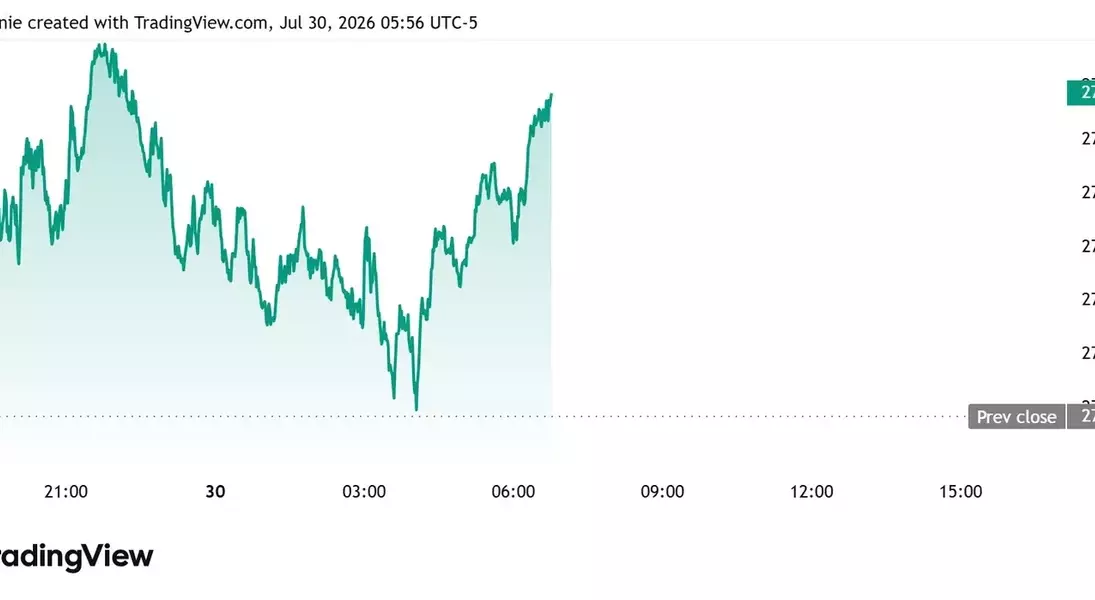




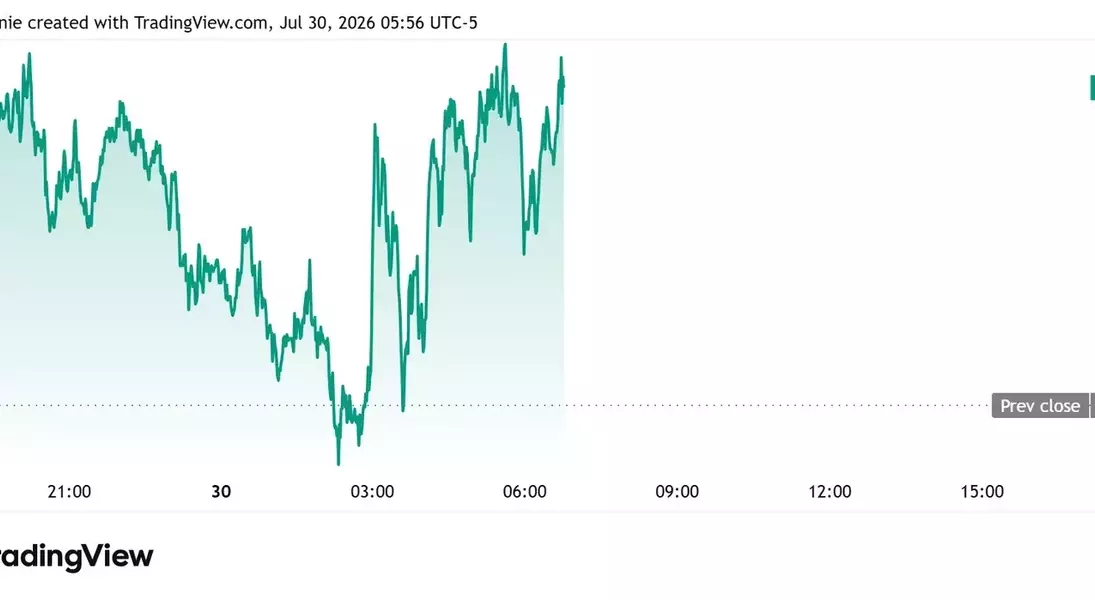
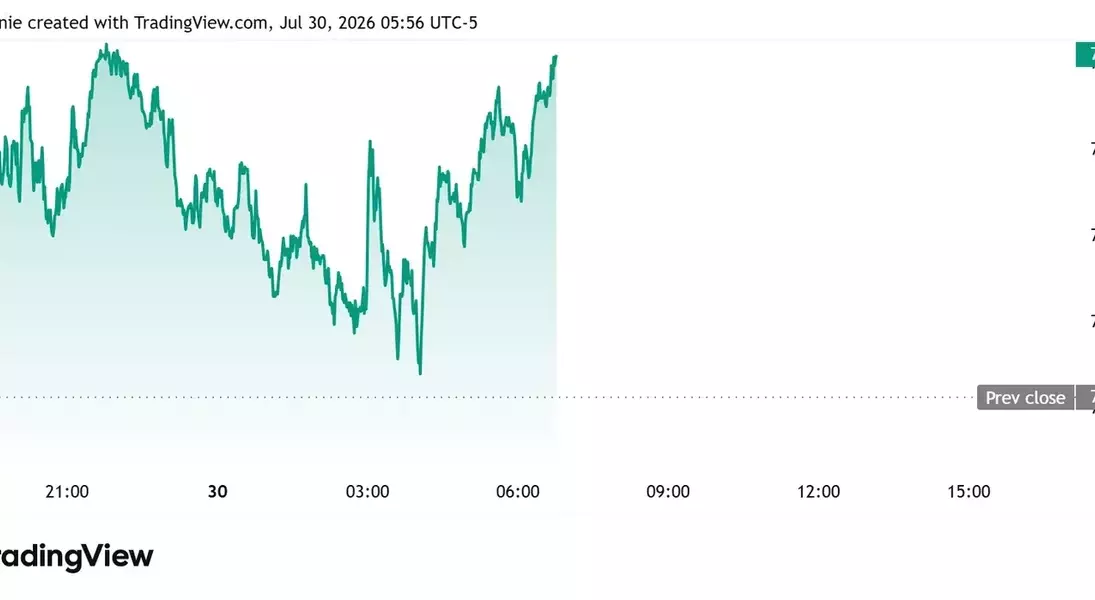
Today, major stock indexes are experiencing a significant resurgence, a day after a sharp decline triggered by the Federal Reserve's decision to keep interest rates unchanged. Investors are actively analyzing a blend of corporate earnings, including divergent performances from technology behemoths Microsoft and Meta Platforms, and crucial inflation figures. The financial community is now turning its attention to the impending earnings releases from Apple and Amazon, two more titans of the "Magnificent Seven" group, which are expected to further influence market trends.
Market Dynamics: Tech Earnings, Inflation, and Federal Reserve Policy
On a recent Thursday, major stock markets, including the Nasdaq Composite, S&P 500, and Dow Jones Industrial Average, saw considerable gains, recovering from a steep sell-off. This rebound follows the Federal Reserve's decision to maintain interest rates, a move that initially sent markets spiraling, with the Dow experiencing its largest single-day drop in 15 months on Wednesday, shedding over 1,150 points. This decision came despite Fed Chair Kevin Warsh's firm commitment to bring inflation down to the 2% target. Market sentiment, as reflected by the CME Group's FedWatch tool, shows a reduced probability of a rate hike at the September meeting, down to 57% from 82% a week prior.
Adding to the market's complex landscape, the monthly Personal Consumption Expenditures (PCE) inflation data released before the bell met economists' expectations. The Fed's preferred inflation gauge indicated a 3.7% year-over-year increase in prices for June, a decrease from 4.1% in May. Core PCE, excluding volatile food and energy prices, also showed a slight decline to 3.3% from 3.4%, although still above the Fed's 2% target. Concurrently, second-quarter GDP growth registered 1.5%, falling short of both expectations (1.85%) and the first-quarter's 2.1%. The 10-year Treasury yield, a critical indicator for consumer loan rates, dropped to 4.67% from 4.68%.
Jamie Cox, Managing Partner for Harris Financial Group, noted that the inflation data confirms underlying trends, suggesting that without the energy sector's influence, inflation would be lower. He endorsed the Fed's decision to hold rates steady, citing these figures.
Corporate earnings reports also played a pivotal role in shaping market movements. After Wednesday's close, Microsoft and Meta Platforms released highly anticipated results. Microsoft's earnings surpassed analysts' predictions, leading to a substantial 15% surge in its shares, making it a top performer on the Dow. In contrast, Meta Platforms reported lower-than-expected profits due to increased costs, primarily from significant investments in AI infrastructure, causing its shares to fall by nearly 10%.
Goldman Sachs analysts interpreted Meta's results as indicative of strong AI application within its core business but cautioned that the returns were not as robust as anticipated. JPMorgan analysts echoed this sentiment, emphasizing the need for greater clarity on Meta's product pipeline and future spending plans. Meanwhile, Microsoft's strong performance was highlighted by its Intelligent Cloud revenue, which exceeded estimates by approximately $1 billion, driven by a 43% increase in its Azure segment and other cloud services. JPMorgan and Citi analysts praised Microsoft's ability to balance revenue growth with profit margin management, calling its report a "solid rebuttal to the bear case."
Other notable corporate announcements included Starbucks, which saw a 1.5% increase in shares, and Mastercard, which rose 3%. Anheuser-Busch InBev, despite reporting strong second-quarter results that beat expectations with adjusted earnings of $1.21 per share and revenue of $16.66 billion, saw its shares decline by 3%. This downturn was attributed to investor disappointment over the company's decision to maintain its full-year EBITDA growth outlook, as well as potential profit-taking after a 33% year-to-date gain.
In the broader market, the Roundhill Memory ETF and iShares Semiconductor ETF experienced significant jumps, 8.5% and 5.5% respectively, recovering from losses a day prior. Oil prices, after an earlier surge, dipped on Thursday as traders reacted to U.S. retaliatory strikes against Iran. West Texas Intermediate futures fell 1.2% to $83.45 a barrel, and Brent crude futures declined 1.5% to $89.35. Bitcoin traded around $64,800, up from overnight lows, while the U.S. dollar index dropped 0.2% to 100.70. Gold futures saw a notable increase of 2.4% to $4,135 an ounce.
The current market environment, characterized by fluctuating tech stock performances, evolving inflation data, and Federal Reserve policy, presents both challenges and opportunities for investors. The mixed signals from corporate earnings, particularly within the influential tech sector, underscore the importance of discerning fundamental strength from speculative swings. The Fed's cautious stance on interest rates, coupled with moderating inflation, suggests a delicate balancing act for monetary policy. Investors should remain vigilant, carefully assessing individual company fundamentals and macroeconomic indicators to navigate this dynamic landscape. The divergence between Microsoft's success and Meta's struggles highlights that even within the "Magnificent Seven," performance is not uniform, demanding a nuanced approach to investment decisions.
