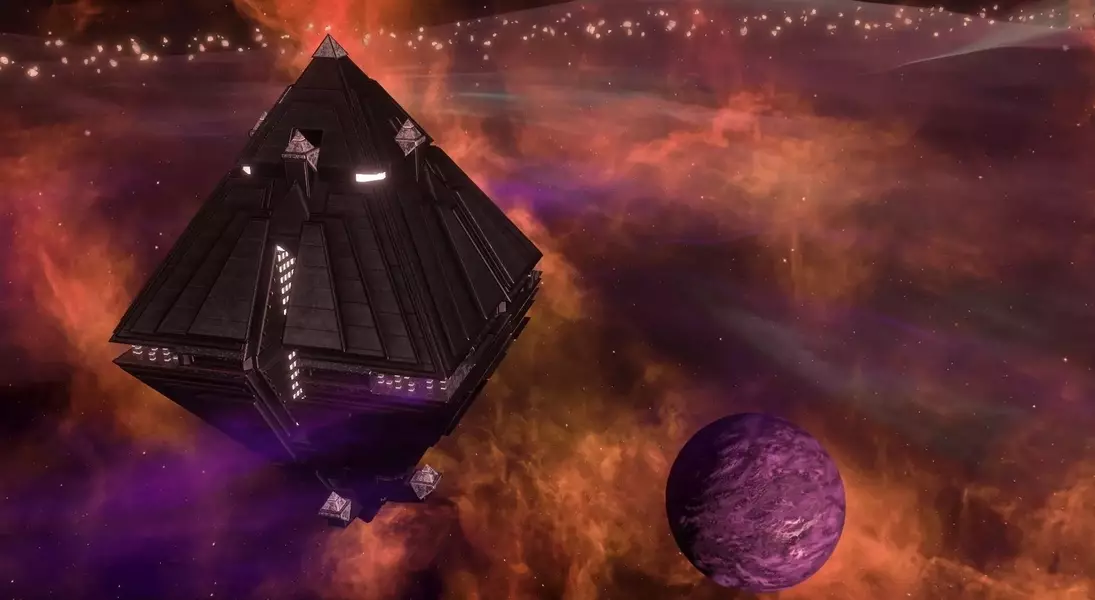

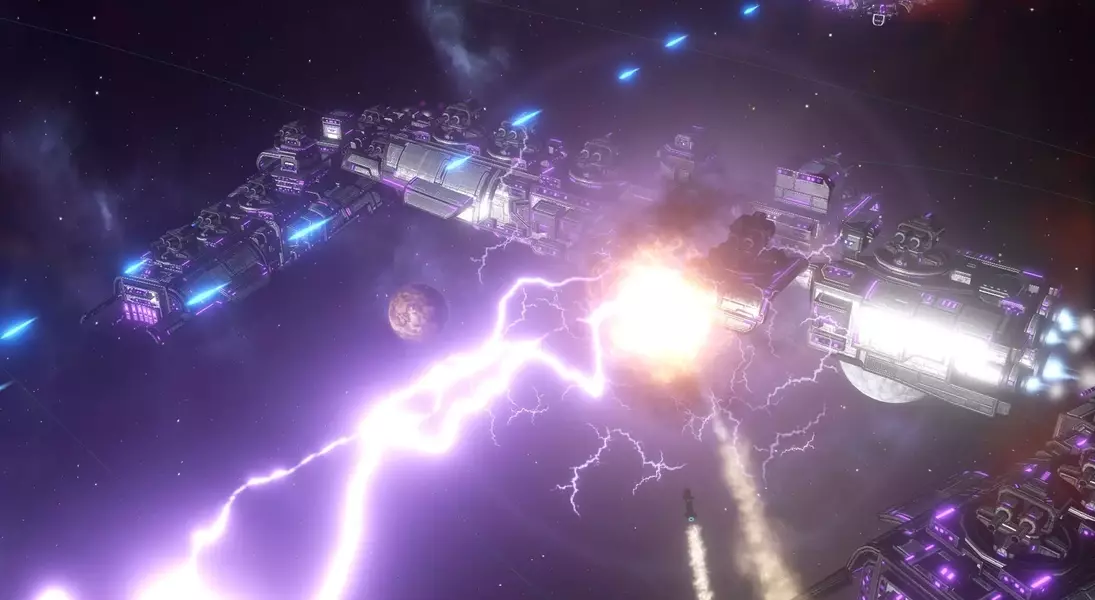

Since its debut in 2016, Stellaris has evolved into a cornerstone of the grand strategy genre, defying expectations with a continuous stream of content and major revisions. This article delves into the journey of Stellaris, examining its development philosophy, the impact of its numerous expansions and free updates, and the ongoing commitment of its creators to maintain a fresh and engaging experience for its dedicated player base. From its initial concept to its current iteration, Stellaris stands as a testament to sustained development and community engagement in the gaming world.
A Decade of Stellar Evolution: The Unfolding Legacy of Paradox's Grand Strategy Gem
The Enduring Journey of Stellaris: A Decade of Innovation
Initially launched in 2016, Stellaris, Paradox's acclaimed space grand strategy title, recently marked its tenth year. What began as a fresh entry in the genre has flourished through numerous expansions, accumulating a collection of over 30 DLCs. Even with sales, acquiring all its content can be a significant investment, reflecting its vast scope and continuous development. The announcement of 'Season 10' with new scenarios and nomadic features underscores Paradox's ongoing dedication to the game's expansion.
Pioneering a New Strategy Model: The Genesis of Endless Expansion
Paradox's approach of funding prolonged game lifespans through DLCs and extensive free patches proved highly successful with titles like Crusader Kings 2 (2012) and Europa Universalis 4 (2013). However, when Stellaris was first conceived, the idea of a grand strategy game receiving a decade of ongoing content was still an emerging concept. Henrik Fåhraeus, the original game director and now Paradox's chief creative officer, noted that the potential for this model became evident during Stellaris's development, solidifying it as a guiding principle for the game's future.
The Ever-Changing Galaxy: Stellaris as the 'Spaceship of Theseus'
Beyond its extensive paid content, Stellaris has seen 41 significant free patches and countless minor updates throughout its existence. Key updates, like versions 2.0, 3.0, and 4.0, have profoundly reshaped the game, making the initial 1.0 version almost unrecognizable compared to the current 4.3. This constant transformation led current game director Stephen Murray to humorously liken Stellaris to the philosophical 'Spaceship of Theseus' paradox, highlighting its continuous evolution.
The Core Identity: Exploration and Player Agency in an Infinite Universe
With Stellaris undergoing so many changes, one might wonder what fundamental elements remain constant. Henrik Fåhraeus emphasizes that the game's essence lies in the thrill of exploring the unknown, offering players unique experiences in every playthrough. He notes its distinction from other 4X games, attributing its depth to a strong emphasis on exploration and the dynamic events encountered while traversing the galaxy. Stephen Murray adds that Stellaris is ultimately about player fantasies, offering a rich toolkit to create diverse empires, from Star Trek's Borg to Starcraft's Zerg. This commitment to variety ensures that the game always presents new opportunities and challenges.
A Director's Vision: Steering the Narrative Course of Stellaris
Stephen Murray reflects on his tenure as game director, highlighting a shift towards more narrative-driven and RPG-centric content. Expansions like Overlord and First Contact exemplify this direction, catering to his personal passion for RPGs, stemming from his background in games like Dungeons & Dragons Online. Murray's focus has been on enriching the game's storytelling and character development, believing that these elements deepen the player's connection to the sprawling galactic sagas.
The Future Horizon: Longevity and the Challenge of Complexity
Considering the remarkable longevity of games like Warcraft 3 and Age of Empires 2, both directors pondered whether Stellaris could achieve a similar enduring presence. Fåhraeus confidently states that the game still has considerable potential. Murray echoes this sentiment, believing that many stories remain untold and new fantasies can still be explored, albeit with caution to avoid repetition. However, both acknowledge the growing complexity of the game, a common challenge for Paradox's live-service titles. Fåhraeus admits that Stellaris, once Paradox's most accessible grand strategy game, has become significantly more intricate, suggesting that at some point, a sequel or a comprehensive UI overhaul might be necessary to manage its vast content.
