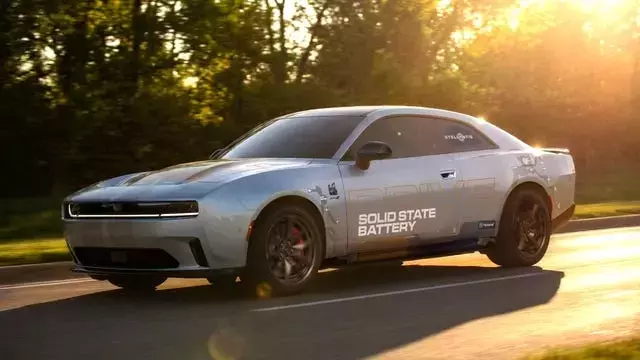
Stellantis has begun live road trials of an innovative solid-state battery system, developed in collaboration with Factorial, by integrating it into a Dodge Charger Daytona test vehicle. This significant step marks the transition of advanced battery technology from concept to practical application, promising substantial improvements in electric vehicle performance. The Factorial Electrolyte System Technology (FEST) battery offers a high energy density of 375 watt-hours per kilogram, remarkably fast charging capabilities, and consistent operation across diverse environmental conditions, signaling a promising future for electric mobility.
For an extended period, the automotive industry has discussed the transformative potential of solid-state batteries. These next-generation power sources are anticipated to deliver enhanced energy storage capacity and significantly reduced charging times compared to current lithium-ion batteries. Despite considerable anticipation, these advanced battery types have yet to appear in consumer-ready vehicles within the United States. However, recent developments suggest this is on the verge of changing.
Stellantis recently confirmed the deployment of a Dodge Charger Daytona outfitted with a Factorial-produced solid-state battery for real-world evaluation. This initiative marks a crucial phase in the battery's development, moving it closer to commercial viability. The collaboration between Stellantis and Factorial was initially announced last autumn, with plans to initiate a test fleet of solid-state-equipped Charger Daytonas by 2026. The current announcement confirms that this testing program is now underway, aligning with observations made during Stellantis Investor Day, where a Charger Daytona featuring similar liveries was spotted.
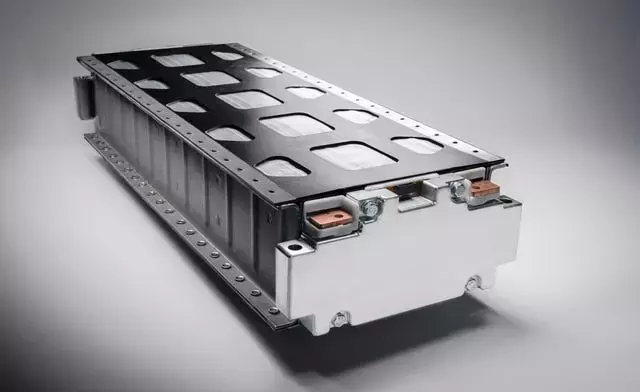
The prototype Charger Daytona is equipped with Factorial's FEST battery, representing the inaugural instance of solid-state cells being integrated into a Stellantis vehicle. In 2025, Factorial and Stellantis showcased the battery's capabilities, highlighting an energy density of 375 watt-hours per kilogram, a rapid 15% to 90% recharge time of merely 18 minutes, and robust performance in temperatures ranging from -22 to 113 degrees Fahrenheit. Stellantis engineers adapted the existing battery pack with a new mechanical architecture to accommodate the FEST cells, simultaneously redesigning control systems and the pack structure to optimize performance without compromising safety or durability. While the exact duration of the testing program and the timeline for solid-state batteries to appear in production vehicles remain undisclosed, with many manufacturers targeting a 2030 rollout, the initiation of Stellantis's testing efforts is an encouraging indicator of progress toward this groundbreaking technology.
The commencement of Stellantis's extensive road testing program for solid-state batteries in the Dodge Charger Daytona prototype signifies a critical milestone in electric vehicle innovation. This collaboration with Factorial underscores a commitment to advancing battery technology, aiming to enhance energy density, accelerate charging speeds, and improve overall performance in future electric models. While the journey to mass production is still ongoing, these real-world tests are vital for refining and validating the technology, bringing the promise of revolutionary EV capabilities closer to reality.
