
This groundbreaking agreement between Spain and Colombia represents a pivotal moment for their respective film industries. The newly ratified co-production treaty promises to unlock unprecedented opportunities for creative collaboration, enabling filmmakers from both nations to pool their unique financial, technical, and artistic strengths. This initiative is set to significantly enhance the global presence and cultural richness of their audiovisual productions, fostering a vibrant exchange of narratives and expertise.
Details of the Collaborative Cinematic Venture
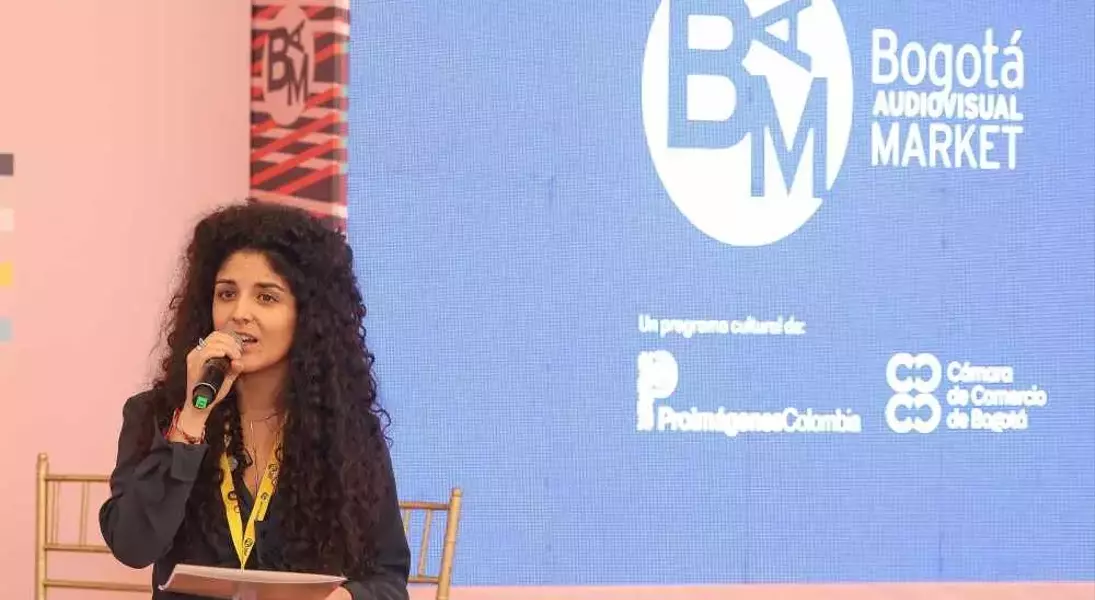
On a significant day, July 15, during the bustling Bogota Audiovisual Market (BAM), an historic co-production treaty was formally unveiled by the nations of Spain and Colombia. This landmark accord signifies a powerful commitment to collaborative filmmaking, uniting two territories celebrated for their compelling location incentives and burgeoning cinematic talent.
Diana Díaz, a key figure from Colombia's Ministry of Culture, specifically the director of audiovisual, film, and interactive media, highlighted the monumental nature of this bilateral agreement. She emphasized that while both countries have previously engaged in joint ventures under the broader Ibero-American co-production agreement, this specific pact between Spain and Colombia is a pioneering step, designed to cultivate more direct and intensified creative synergies. Díaz articulated that this treaty will serve as a strategic conduit, allowing producers from both sides to intertwine their financial backing, technical prowess, and artistic visions, thereby enriching their collective cultural portfolios and broadening the international appeal of their works.
During the opening remarks, both Yannai Kadamani, Colombia's esteemed Minister of Culture, and Ignasi Camos, the dynamic director general of the Spanish film institute ICAA, underscored the profound importance of this new alliance. Minister Kadamani eloquently expressed that the agreement transcends mere historical reflection, instead serving as a forward-looking blueprint for developing more equitable, reciprocal, and collaborative approaches to audiovisual creation. She passionately spoke of film as a medium capable of narrating shared heritage while simultaneously envisioning and shaping a collective future. Kadamani further elaborated on the deep-rooted Hispanic legacy that unites the two countries, now set to engage in a richer dialogue with the diverse Latin American, Indigenous, and Afro-descendant cultural currents, conceptualizing this fusion as a powerful form of cultural intermingling, or 'mestizaje.'
Camos, from the ICAA, echoed these sentiments, pointing to recent successful co-productions, such as the acclaimed “Memories of My Father” by Oscar-winning director Fernando Trueba, and “Rains Over Babel,” a film by Gala del Sol that premiered at the Sundance and Malaga Film Festivals. These projects stand as testaments to the fruitful collaborations already taking place. He reiterated Spain’s strategic commitment to bolstering Colombia's audiovisual sector, recognizing its current period of remarkable creative vitality and its growing international recognition.
Further insights emerged from a subsequent panel discussion, featuring Diana Díaz, joined by Colombian producer Natalia Agudelo Campillo of Madlove Group, ICAA’s Camilo Vazquez, and Spanish producer Miguel Molina of Jaibo Films. Molina shared an exciting ongoing co-production: the 3D animated feature “Desechable,” helmed by Colombian director Carlos Gomez Salamanca. He proudly noted that this deeply Colombian story, guided by a Colombian filmmaker, has garnered substantial support from Spanish institutions, including public television and the Valencian Institute of Culture, alongside European MEDIA funding. This unwavering support was primarily attributed to the inherent strength and resonance of the narrative itself, rather than external factors.
Camilo Vázquez, ICAA’s deputy director of promotion and international relations, emphasized the transformative impact of the treaty: once a Spanish-Colombian co-production is formally sanctioned, it attains national film status in both countries. This dual recognition unlocks eligibility for a wide array of support mechanisms available in both Colombia and Spain, effectively allowing these collaborative projects to operate on “home ground.” Vázquez concluded by expressing profound excitement for the immense potential that this integrated creative space holds for future endeavors.
A Horizon of Shared Narratives and Collective Growth
This newly signed co-production treaty between Spain and Colombia represents more than just a diplomatic agreement; it symbolizes a conscious decision to weave together the rich cultural tapestries of both nations through the powerful medium of film. For emerging and established filmmakers alike, this accord opens a fertile ground for imaginative storytelling, shared resources, and expanded global reach. It reminds us that art knows no borders, and that by embracing our shared histories and diverse perspectives, we can create compelling narratives that resonate universally. This collaboration is a testament to the idea that collective effort, fueled by mutual respect and a passion for artistic expression, can lead to truly remarkable achievements, inspiring a new generation of creators to explore the boundless possibilities of international cooperation in cinema.
