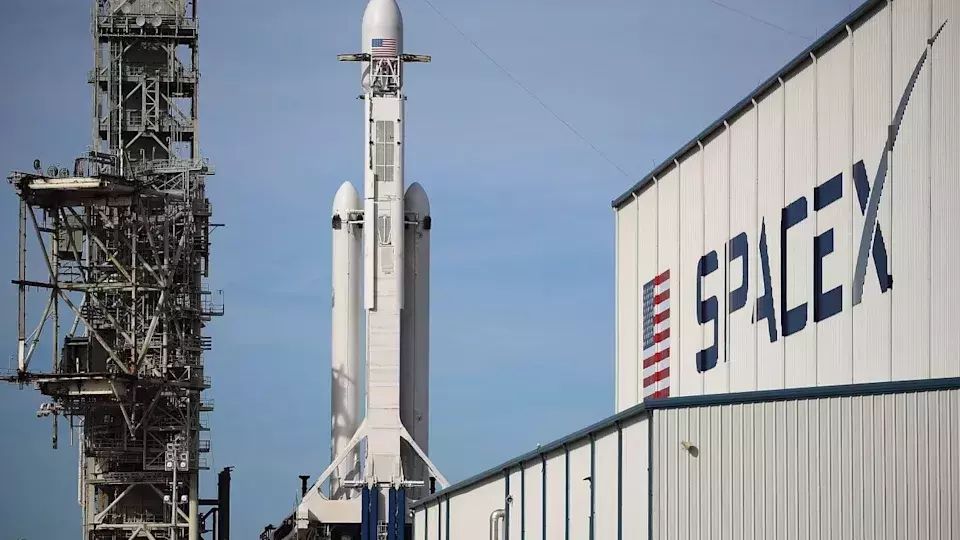
Shares of SpaceX experienced a significant 12% drop, reaching $110 in early trading on Wednesday, extending a downward trend that has seen the stock decline by over 30% since its June initial public offering. This decline occurred despite the company reporting strong revenue figures in its first public earnings report on August 4, which were largely overshadowed by substantial capital spending on artificial intelligence and an upcoming share lockup expiration.
SpaceX's second-quarter 2026 revenue surged to $7.81 billion, marking a 92% year-over-year increase and surpassing the consensus estimate of $6.82 billion. This growth was fueled by a 247% jump in AI revenue, a 67% rise in Starlink revenue, and a 29% increase in launch revenue. The company also reported an adjusted EBITDA of $3.54 billion and a reduced net loss of $541 million. However, these positive results were overshadowed by a dramatic increase in AI capital expenditure, which doubled from $7.7 billion in Q1 2026 to $15.8 billion in Q2, contributing to a total Q2 capital expenditure of $18.37 billion. This surge in spending has raised concerns about free cash flow, even though SpaceX boasts a cash reserve of $93.52 billion and a backlog of $47.5 billion, with Starlink remaining its only profitable segment. Additionally, SpaceX announced NVIDIA as its exclusive AI-chip supplier and revealed the Starmind AI-1 payload, designed to bring datacenter-class computing to orbit using NVIDIA's advanced GPUs and CPUs, a move founder Elon Musk sees as crucial for growth.
The market's reaction has been mixed, reflecting a division among Wall Street analysts regarding SpaceX's financial outlook. While some analysts, like Bank of America's Ronald Epstein and JPMorgan, maintain optimistic ratings, citing strong market positioning, extreme vertical integration, and aggressive revenue projections for AI and Starlink, others, such as Piper Sandler, express caution. Piper Sandler highlighted the impending lockup expiration, which could increase tradable shares by over 140%, and significant revisions in projected capital expenditures, alongside the cancellable nature of AI cloud contracts. The lockup expiration, scheduled for August 6, 2026, is expected to introduce considerable selling pressure, making it a critical event for investors to monitor. This situation has led to a cautious options market, with a put/call ratio of 0.87, indicating investor apprehension. Meanwhile, other space sector stocks like Rocket Lab, AST SpaceMobile, and Virgin Galactic have experienced only minor declines, suggesting that the current sell-off is specific to SpaceX rather than a broader industry trend, with traders viewing the drop as a tactical correction rather than a terminal decline.
Looking ahead, the market will closely observe how SpaceX's stock navigates the upcoming lockup expiration and the future trajectory of its free cash flow. The company's ability to monetize its AI investments and the profitability of Starlink will be key factors in determining its long-term success. Investors should proceed with prudence, potentially maintaining moderate position sizes until there is greater clarity on these financial dynamics, particularly given the substantial capital allocation towards AI and the evolving market landscape.
