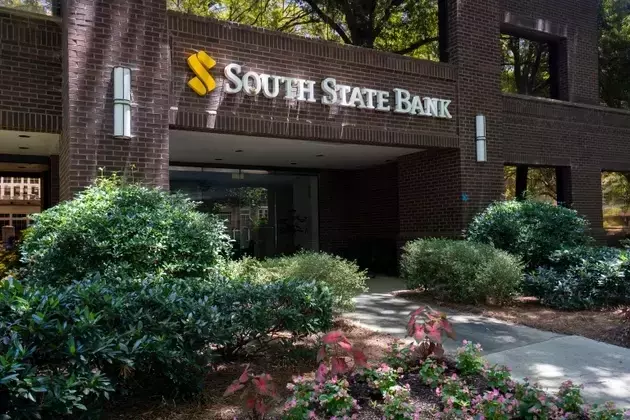
SouthState Bank Corporation stands as a prominent regional bank, showcasing robust financial health through impressive returns on tangible common equity (ROTCE) and consistent growth in net interest income (NII). The institution's diligent balance sheet management further reinforces its stability, making it an attractive entity in the banking sector. Despite these inherent strengths, the bank navigates a landscape marked by variable credit quality, recently underscored by a substantial loss from a commercial loan, indicating potential vulnerabilities amid broader economic shifts. The bank's business model is well-regarded for its resilience, suggesting a continued trajectory of solid performance in the face of ongoing economic fluctuations.
However, the current market dynamics present a complex picture for potential investors. An assessment of SouthState Bank's valuation reveals it trades at a modest premium when considering its price-to-tangible book value, yet it simultaneously offers a discount based on its price-to-earnings ratio. This mixed valuation profile suggests a limited upside potential, estimated at around 8% towards its fair value. This scenario is particularly influenced by an array of macroeconomic challenges, including persistent geopolitical instabilities, the unpredictable movements of the yield curve, and growing concerns about stagflation. These external pressures contribute to a climate of uncertainty, advising caution for investors contemplating new positions in SSB.
In light of these considerations, while SouthState Bank's foundational strengths and efficient operational strategies are commendable, the prevailing macroeconomic uncertainties and the modest projected upside warrant a prudent approach. Investors should carefully weigh the bank's solid operational performance against the broader market risks and its current valuation. Strategic financial planning emphasizes a balanced perspective, acknowledging achievements while cautiously evaluating future prospects in an evolving economic environment. Therefore, maintaining vigilance and possibly deferring new investments until clearer market signals emerge would be a wise decision.
