
In the initial quarter of 2026, the Sound Shore Fund's Investor and Institutional Classes experienced slight decreases in value, specifically 3.45% and 3.43% respectively. This performance was in contrast to the Russell 1000 Value Index, which gained 2.10%, but it surpassed the S&P 500 Index, which declined by 4.33%. Over a three-year period, the Fund's annualized returns were strong, with SSHFX achieving 17.45% and SSHVX 17.68%, outperforming the Russell Value's 14.31% but slightly behind the S&P 500's 18.32%. The Fund maintains a long-term perspective, noting its 35-year annualized returns of 10.43% for SSHFX and 10.69% for SSHVX, both of which were favorable compared to the Russell Value's 10.05% and the S&P 500's 10.65%.
Following a robust conclusion to 2025, U.S. equity markets faced their most challenging opening quarter since 2022. Geopolitical events, such as the Iran conflict, a rise in oil prices, and the disruptive potential of artificial intelligence (AI), were prominent factors. These events led to a significant shift away from high-growth technology and AI-focused companies, while the energy sector saw a boost from commodity price increases. The market's fluctuating sentiment in recent years, influenced by a dynamic economic landscape and a surge of capital pursuing short-term trading, has created both challenges and opportunities. The Fund views this volatility as a chance to identify undervalued assets, adhering to a disciplined investment strategy that prioritizes strong valuations and the fundamental health of businesses.
A significant theme impacting market performance this quarter was the discussion surrounding AI's potential influence on information technology systems and software. This concern led to a downturn in several of the Fund's technology investments, including Qualcomm, Check Point, and Kyndryl. The Fund's strategy involves carefully assessing market signals to distinguish them from transient noise, particularly during periods of high volatility when companies within the same sector may react similarly regardless of individual strengths. This approach helps in identifying companies that are effectively adapting to changing market conditions. Qualcomm, for instance, despite short-term worries about the mobile phone market due to memory price surges, is actively diversifying into new sectors like automotive, IoT, and data centers, leveraging its AI capabilities.
Beyond the tech sector, rising oil prices generated widespread market concern. Companies such as Disney and Southwest Airlines saw a reversal of previous gains, as fears of prolonged conflict affected consumer discretionary spending and travel-related stocks. Despite these headwinds, both companies are considered to have robust balance sheets and are benefiting from ongoing multi-year restructuring efforts that are enhancing their earnings and capital returns. The energy sector, however, performed exceptionally well during this period, with holdings like Coterra Energy, EQT, and BP experiencing significant gains, driven by increasing oil and gas prices. The Fund focuses on sustainable businesses with strong balance sheets and low-cost reserves, attributes deemed crucial in today's unpredictable market.
A positive performer in the technology space was Marvell Technology, a Fund holding. The company's expertise in designing flexible and efficient custom chips is seen as a key competitive advantage, poised to drive market share growth in the coming years. The Fund acquired Marvell's stock when it was trading at a valuation of 10 times its projected long-term earnings, recognizing its robust networking and optical business, which forms the backbone of AI infrastructure, and its custom silicon division that develops tailored chips for hyperscalers like Amazon and Google. This segment is expected to significantly boost the company's earnings over the next three years.
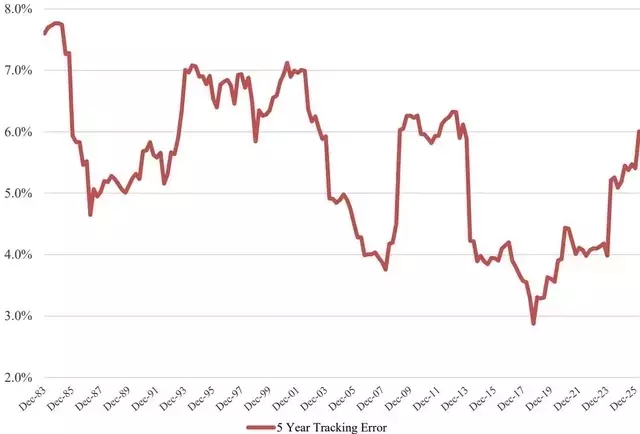
The Fund's perspective on managing technological change and volatility has been consistent, especially when comparing recent periods to the low-interest rate environment of 2015-2019. During that earlier period, stock correlations were high, and the Fund's returns more closely mirrored the Russell Value Index. The concept of 'tracking error,' which measures a manager's deviation from a benchmark, increased sharply in the last five years due to higher interest rates, increased market volatility, and sector swings. This rise in tracking error is seen as a positive development, indicating the Fund's enhanced ability to differentiate its portfolio through active stock selection and capitalize on market opportunities. As famously noted by Charlie Munger, the willingness to diverge from the index is crucial for long-term value creation. The first quarter of 2026 served as another illustration of a market regime where volatility, driven by narratives and amplified by trend-following strategies, creates fertile ground for a disciplined investment approach. The Fund's portfolio is strategically positioned to leverage emerging trends and generate long-term value for its investors, with an attractive valuation compared to broader market indices.
