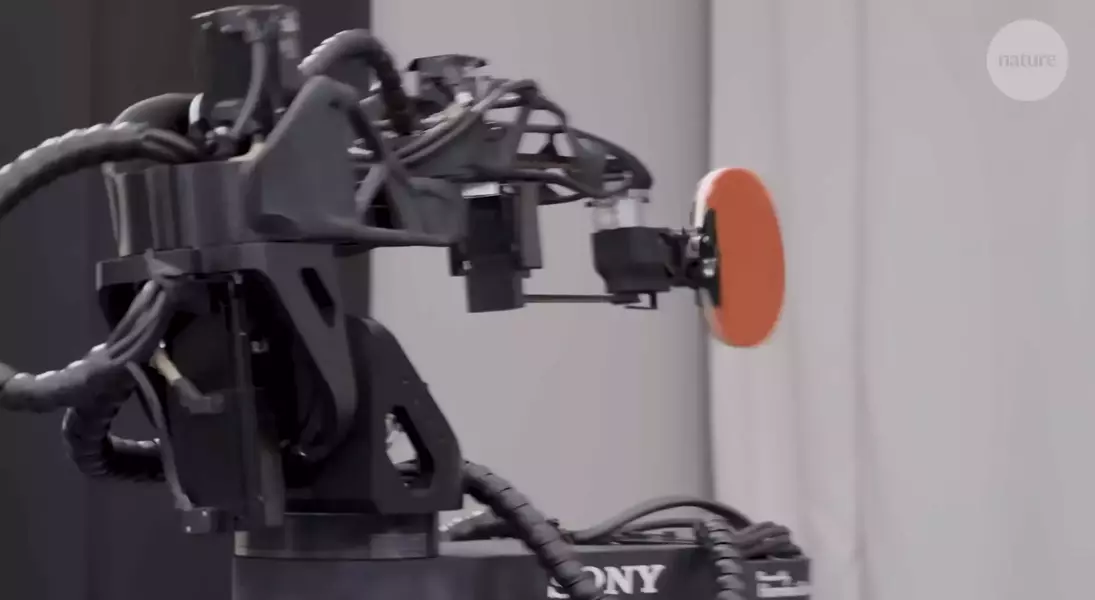
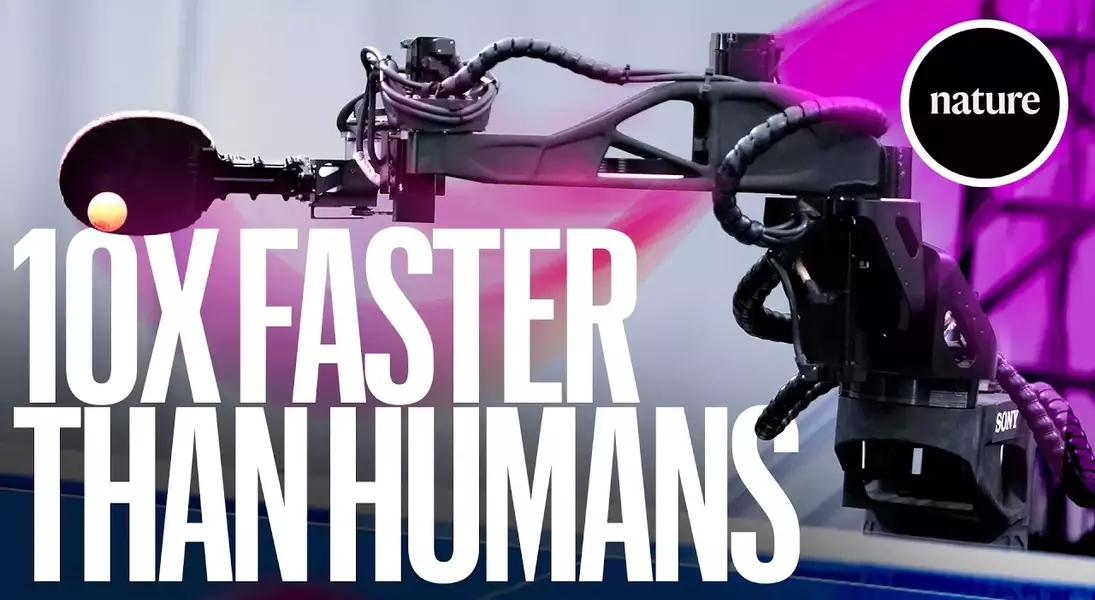
In a groundbreaking development, Sony has unveiled an advanced AI-driven robotic arm, dubbed Ace, which has achieved a remarkable feat: it can now compete against and occasionally surpass the skills of expert human table tennis players. This represents a significant leap forward in the field of robotics, demonstrating that machines are evolving beyond repetitive tasks to master complex, dynamic physical activities previously thought to be exclusive to human capabilities. The robot's ability to learn and adapt with increasing speed is a testament to the sophistication of its artificial intelligence and sensory systems.
This innovation challenges conventional perceptions of robotic limitations, moving away from the notion of clumsy, slow-moving automatons. Instead, Ace showcases fluid, confident movements and rapid reaction times, indicating a turning point in the design and application of modern robotics. The implications extend beyond sports, suggesting a future where robots can operate effectively in diverse, unpredictable real-world scenarios, closely mirroring human-like dexterity and decision-making.
The Ascent of Robotic Prowess in Dynamic Sports
Sony's introduction of Ace, an AI-powered table tennis robot, signals a monumental shift in the capabilities of modern robotics. Unlike previous robotic attempts in sports, which often appeared awkward or limited, Ace employs a sophisticated mirror-based camera system to track incoming balls with unparalleled precision. This real-time visual processing, combined with advanced reinforcement learning, allows the robot to continuously refine its strategies and movements. The result is a machine that not only reacts with astonishing speed but also anticipates and adapts to the nuances of gameplay, a critical element in competitive sports. This development isn't just about raw speed; it's about intelligent, adaptive speed, enabling Ace to engage in rallies with expert human players, challenging them with a level of skill that blurs the line between human and artificial performance. This achievement is particularly noteworthy because it transcends mere programmed movements, showcasing a robot's capacity for genuine, evolving expertise in a complex, unpredictable physical environment.
Michael Spranger, president of Sony AI, emphasizes that Ace's significance lies not in its ability to outperform humans through brute force or overwhelming speed—a task easily accomplished by purpose-built machines—but in its capacity to compete on a level playing field, mirroring human tactics and decision-making. This approach marks a departure from designing 'superhuman' robots that simply dominate by sheer mechanical advantage. Instead, Ace is engineered to interact within the established parameters of human sport, focusing on intelligent play, strategic adaptability, and refined motor control. This human-centric design philosophy has enabled Ace to achieve what Sony describes as the first instance of a robot reaching expert-level play in a commonly practiced competitive sport in the physical world. The fluidity and confidence of its movements, a stark contrast to the typically rigid or jerky motions of older robots, are indicative of breakthroughs in robotic motion control and AI integration, paving the way for robots that can navigate and excel in dynamic, unstructured settings with an unprecedented degree of sophistication and agility.
Pioneering Adaptive Robotics Beyond the Factory Floor
The success of Sony's Ace robot arm in mastering table tennis represents a pivotal advancement in robotics, particularly in its ability to operate effectively in dynamic and unpredictable environments. Michael Spranger highlights that while industrial robots can achieve high speeds, they typically execute pre-programmed, repetitive trajectories in controlled factory settings. Ace, however, demonstrates a new paradigm: robots that are highly adaptive and competitive in scenarios where conditions constantly change. This adaptability is crucial for real-world applications where environments are rarely static. The integration of AI and reinforcement learning allows Ace to learn from its interactions, continually improving its response to unforeseen variations in ball trajectory, spin, and speed. This ongoing learning process is what makes Ace a significant step forward, proving that robots can acquire and refine complex motor skills necessary for interacting with the physical world in a highly responsive and intelligent manner. The footage of Ace in action underscores this capability, showing fluid and precise movements that were once considered the exclusive domain of human athletes.
This technological breakthrough has profound implications beyond the realm of sports. The ability of a robot to react swiftly and intelligently in an uncertain environment paves the way for advanced robotics in various sectors, from intricate manufacturing processes to personalized assistance. The development of robots capable of human-level expert play in a competitive physical sport fundamentally alters perceptions of robotic potential, moving away from basic automation towards more nuanced and interactive roles. Spranger’s vision of robots that compete fairly with humans, emphasizing AI and tactical decision-making rather than overwhelming physical superiority, opens doors to collaborative human-robot interactions. This approach could lead to robots that are not just tools but partners, capable of understanding and responding to complex human actions and intentions. The sophistication exhibited by Ace suggests that the future of robotics involves machines that are increasingly capable of learning, adapting, and performing with human-like dexterity and intelligence in a diverse range of challenging, real-world contexts, signaling a new era for AI-driven automation.
