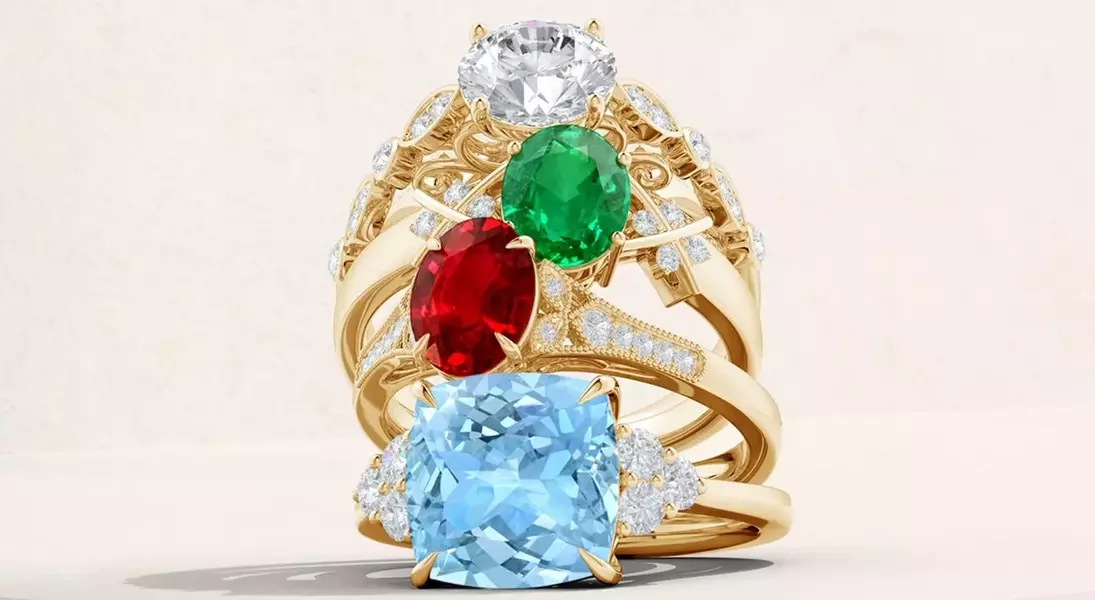
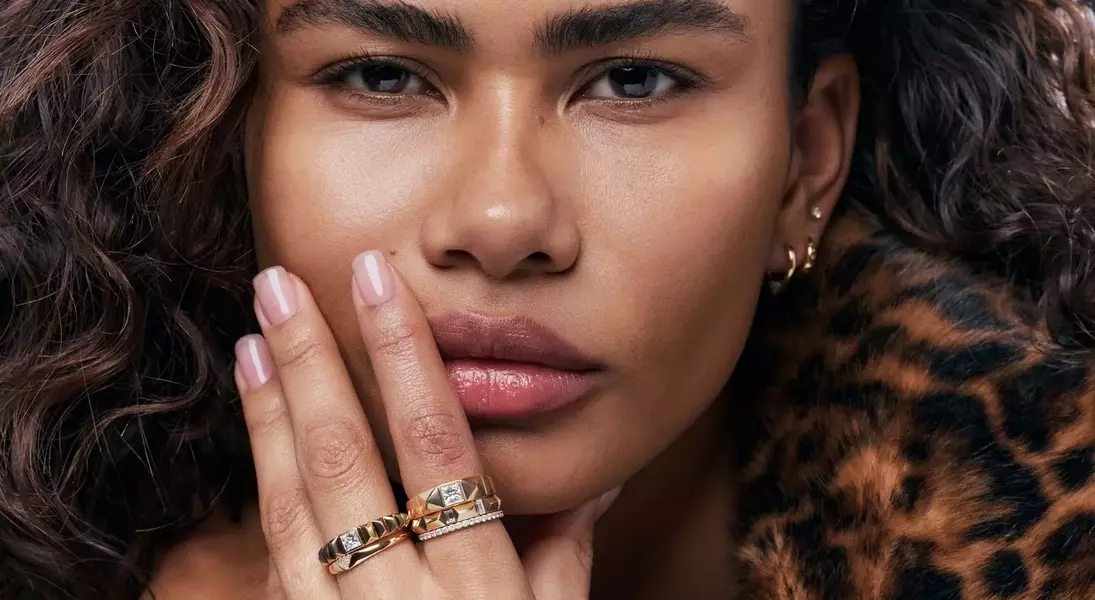
The global jewelry market is currently navigating a period of unprecedented change, largely due to the dramatic increase in gold prices. This surge, fueled by widespread economic uncertainty, has compelled many demi-fine jewelry brands to rethink their strategies, adjust their product offerings, and implement innovative financial mechanisms to maintain affordability and customer loyalty. The landscape is shifting, with a growing emphasis on more accessible gold options and a keen eye on market stability, echoing past economic turbulences that reshaped the industry.
The Golden Upheaval in the Jewelry Market
In a significant development, the market value of gold witnessed a staggering ascent, surpassing the $3,000 per ounce mark in March 2025, and then soaring past $5,000 per ounce by January 2026. This represents a monumental 162% increase over five years, a direct consequence of global economic turbulence. Investors, viewing gold as a safe haven during periods of high inflation and a weakening US dollar, have flocked to the precious metal, thereby driving up its cost. While high-end luxury jewelry brands have largely absorbed these increases with minimal impact on their affluent clientele, the demi-fine sector, which bridges fashion and luxury, is experiencing a profound transformation in consumer purchasing patterns.
Ankur Daga, co-founder and CEO of Angara, a prominent jewelry brand, highlighted the discretionary nature of jewelry purchases, stating that it's often the first sector to feel the pinch when consumers face financial strain. Angara, which typically adjusts its prices bi-annually, is now contemplating quarterly increases to keep pace with gold's volatility. Daga observed a clear divergence in consumer behavior: while luxury buyers remain steadfast, mid-tier customers are either opting for lower-karat items (such as 10-karat gold) or exploring other precious metals. This presents a critical decision for brands: maintain price points by reducing gold purity or raise prices and risk alienating a significant portion of their customer base.
The current market dynamics have fostered the emergence of a new category within demi-fine jewelry: 10-karat gold. Brands that once exclusively offered 14-karat pieces are now integrating 10-karat options into their collections. Ten-karat gold, containing 41.7% pure gold compared to 14-karat's 58.3%, offers a more affordable entry point without sacrificing the allure of solid gold. David Benayoun, co-founder and CEO of Ana Luisa, a brand specializing in affordable jewelry, noted that 10-karat gold possesses similar durability to 14-karat options, and customer reception has been overwhelmingly positive. Since its introduction in March 2023, Ana Luisa's solid gold category has seen a threefold increase in sales, demonstrating the viability and popularity of this lower-karat alternative.
Following this trend, Mejuri, another leading affordable luxury jewelry brand, has also embraced 10-karat gold. Previously offering only 14-karat items and 18-karat vermeil, Mejuri announced a price adjustment to customers on March 9th. Noura Sakkijha, the brand's CEO and co-founder, emphasized that this shift, which included a over 20% increase on some bestselling items, ensures the brand's commitment to quality while introducing more approachable 10-karat options alongside their traditional 14-karat offerings.
Despite the cost advantages of 10-karat gold, brands still grapple with the metal's price unpredictability. Benayoun of Ana Luisa described the challenge of mitigating volatility, noting that traditional industry techniques are proving insufficient. Ana Luisa now employs gold locks, paying upfront deposits to stabilize jewelry costs over a defined period, thereby reducing price fluctuations for consumers.
Conversely, some brands are committed to preserving higher karatages in their solid gold lines. Monica Vinader, under the leadership of CEO Sebastian Picardo, is diligently seeking operational efficiencies, such as standardizing components like clasps across product categories to achieve economies of scale. Picardo's team meticulously analyzes price elasticity and market indicators, utilizing financial instruments like forward contracts to hedge against gold price increases, ensuring cost certainty for their globally distributed products.
Angara, with its made-to-order model, purchases gold daily. Despite a more than 100% year-on-year increase in 18-karat yellow gold sales by February 2026, the brand experienced a significant margin hit from December 2025 to February 2026. This has prompted Angara to consider more frequent price adjustments and explore designs that incorporate less gold, focusing instead on gemstones to manage costs effectively.
The current market conditions bear striking similarities to the 2008 Great Recession, which profoundly reshaped the jewelry sector by paving the way for brands like Pandora, known for their use of more affordable materials such as silver. Monica Vinader, a brand born out of that period, continues to prioritize affordability and value, aligning its strategy with the enduring lesson of providing accessible luxury.
Indeed, a renewed shift towards alternative metals is evident. Taylor and Mackinley Hill, co-founders of Stone Fruit, report a growing demand for silver pieces, mixed metals, and vermeil. They observe that silver allows for more audacious designs at a lower price point, coinciding with a broader stylistic shift towards bolder, sculptural jewelry. Angara's Daga also anticipates growth in mixed metals, particularly silver with gold accents, an area where the brand has begun to experiment successfully.
As gold prices remain difficult to forecast, Bart Melek, managing director and global head of commodity strategy at TD Securities, cautions that the precious metal's recent meteoric rise has been anomalous. Factors such as President Trump's tariffs and potential interest rate adjustments by the Federal Reserve, coupled with ongoing geopolitical instability, all contribute to this uncertainty. Melek emphasizes that the complex interplay of these elements makes future gold price movements incredibly challenging to predict.
In the face of this formidable challenge, jewelers must adopt multifaceted approaches. They are tasked with the delicate balancing act of maintaining cost stability while innovating their product lines—whether by doubling down on higher karats, expanding into lower-karat options, or designing pieces that reduce gold weight without compromising quality. As Benayoun aptly puts it, in this climate, "every gram counts."
The jewelry industry stands at a critical juncture, navigating the tempestuous seas of economic volatility and evolving consumer preferences. This period of upheaval, while challenging, also presents an opportunity for innovation and adaptation. Brands that can strategically pivot, offering both value and quality, are likely to emerge stronger, having redefined the essence of luxury in an era where every gram of gold, and every dollar spent, holds greater significance. The lessons learned from past recessions and the ongoing commitment to creative solutions will undoubtedly shape the future of adornment.
