The U.S. is currently grappling with a sharp increase in gasoline prices, a trend largely driven by global oil market dynamics influenced by geopolitical tensions, notably the conflict in Iran. This surge has led to a significant jump in costs at the pump for American consumers, impacting household budgets nationwide.
Navigating the Surge: Understanding the Rise in Fuel Costs
The Escalation of Gasoline Prices: A Recent Overview
Gasoline prices across the nation have experienced a notable upward trend, climbing by 90 cents since the beginning of March. This escalation is directly linked to the rising price of crude oil, a consequence of the ongoing conflict in Iran. The ripple effect of these geopolitical events is evident at fuel stations, where consumers are facing higher costs.
Impact on Households: The Financial Strain of Increased Fuel Costs
The daily increase in the national average for regular gasoline, which recently saw a 4-cent jump to $3.88 per gallon, underscores a concerning pattern. Prior to this recent spike, the national average had remained below the $3 mark for an extended period, a stability not seen since 2021. This sudden escalation in fuel expenses places a considerable burden on household finances, as gasoline is a frequently purchased commodity.
Regional Disparities in Fuel Expenses: A State-by-State Analysis
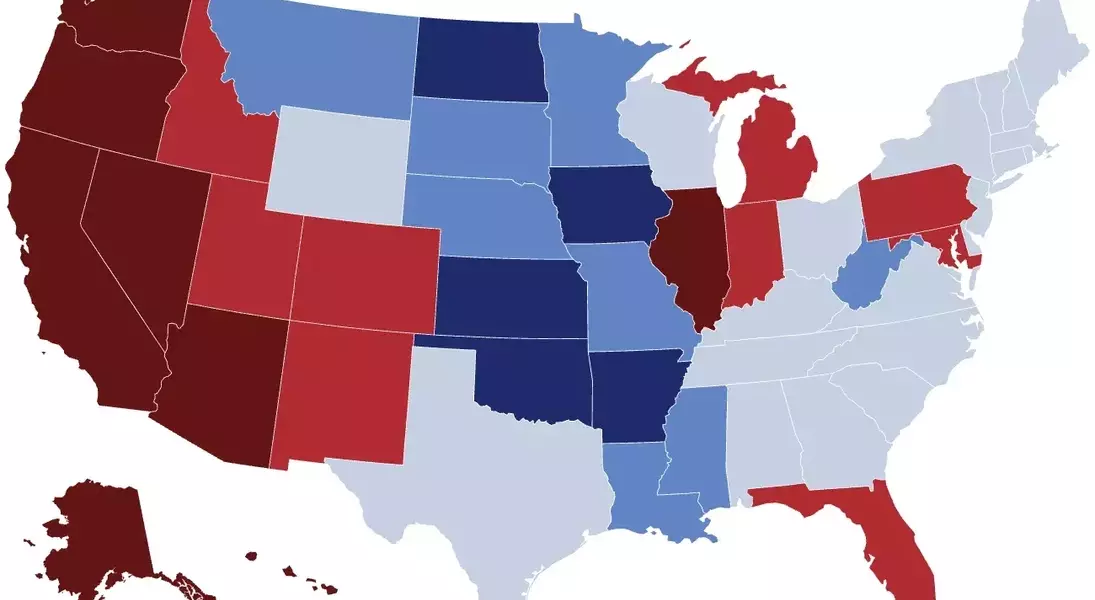
While the overall trend points to a nationwide increase, the cost of gasoline varies significantly from state to state. Currently, Oklahoma boasts the lowest average price at $3.24 per gallon, with Kansas, Iowa, Arkansas, and North Dakota also among the most affordable. However, the landscape shifts dramatically in other regions. California leads with the highest average at $5.62 per gallon, followed by Washington and Hawaii, all exceeding the $5 mark. Additionally, Nevada, Oregon, Arizona, Alaska, and Illinois are seeing prices above $4 per gallon. This creates a wide price gap of $2.38 between the cheapest and most expensive states.
Factors Influencing State-Level Price Differences: Taxes, Infrastructure, and Regulations
The considerable variation in gas prices across states is not arbitrary; it stems from a combination of structural factors. Fuel taxes play a significant role, with federal and state levies accounting for a substantial portion of the price per gallon. States with higher taxes directly reflect these costs at the pump. Geographic location and infrastructure are also crucial; proximity to refineries and pipeline networks can reduce transportation costs, benefiting certain regions. Conversely, more isolated markets often face higher prices due to supply chain challenges. Environmental regulations, such as California's requirement for a specialized, cleaner-burning gasoline blend, further contribute to price disparities. These inherent cost differences are magnified during periods of sharp oil price increases, ensuring that even when crude prices decline, the underlying factors continue to maintain a wide gap in state-level gasoline costs.
