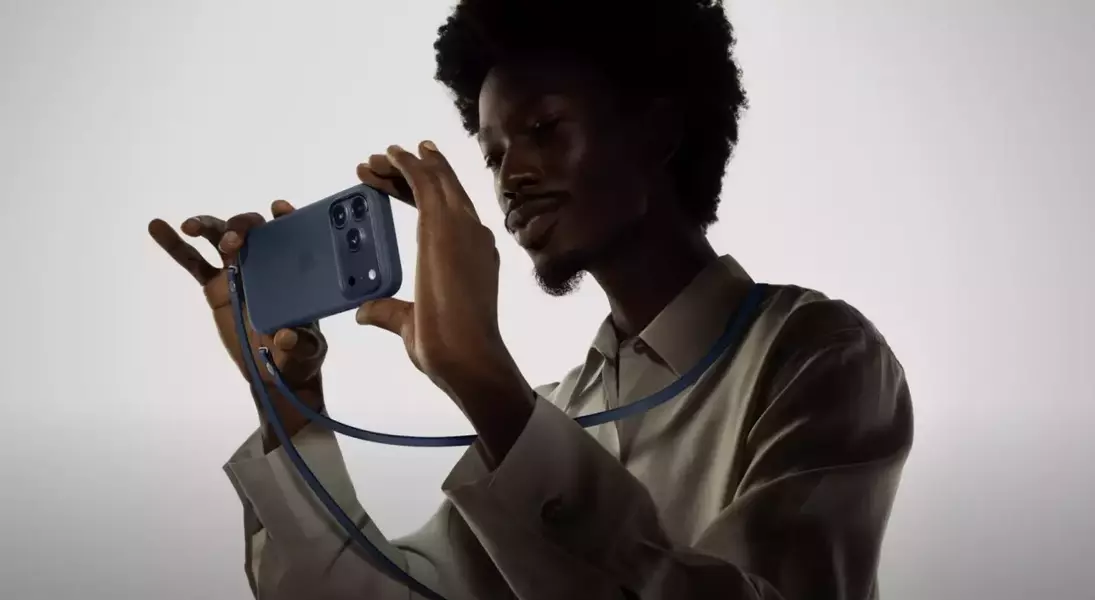
In the highly competitive world of smartphones, the camera system stands out as a pivotal feature, significantly influencing consumer choices. Apple's recently unveiled iPhone 17 lineup, encompassing the standard, Plus, Air, and Pro variants, has garnered considerable attention for its enhanced photographic capabilities. Given the immense volume of photos captured daily by smartphones – billions globally, including selfies – the camera's performance is often a primary concern for users. This article undertakes a detailed examination of the photographic hardware integrated into the new iPhone 17 series and contrasts it with the renowned camera prowess of the Google Pixel 10 series, widely regarded as a leading Android contender.
A closer look at the iPhone 17's camera specifications reveals distinct configurations across its models. The iPhone 17 and 17 Plus share a similar setup, featuring Apple's innovative Dual Fusion system with dual 48MP sensors, comprising a main shooter and an ultrawide lens, complemented by an 18MP Center Stage front camera. These models offer optical zoom options and intelligently crop photos to 24MP by default, with an option to scale up to 48MP. A notable characteristic is the inclusion of multiple focal lengths for both rear cameras, effectively simulating the presence of four different lenses. The iPhone 17 Air, designed with a single main camera, mirrors the primary shooter of the iPhone 17. The Pro and Pro Max models elevate the camera experience with three 48MP sensors for main, ultrawide, and telephoto functions, along with the same 18MP Center Stage selfie camera. These Pro models further expand versatility with a broader range of focal lengths, offering an array of photographic perspectives. In contrast, the Google Pixel 10 series, including the standard, Pro, and Fold models, adopts a more straightforward approach to its camera hardware. The Pixel 10 and Pixel 10 Pro Fold are equipped with a 48MP main sensor, a 13MP ultrawide, a 10.8MP telephoto with 5x optical zoom, and a 10.5MP selfie camera. While simpler in lens count, Google compensates with exceptional software and post-processing algorithms. The Pixel 10 Pro steps up with a 48MP ultrawide and telephoto lens, alongside a 42MP wide-angle selfie camera, boasting advanced features like a high-res mode and Pro Res Zoom for impressive magnification.
Determining which smartphone possesses superior camera hardware is a nuanced task, largely due to the significant role of post-processing in modern mobile photography. Both Apple and Google integrate a multitude of sophisticated photo modes and AI-driven enhancements to optimize image quality. Features such as Apple's Center Stage, which keeps subjects centered in selfies, and Google's Camera Coach, which offers AI-guided photography tips, exemplify their commitment to user experience. Both brands also excel in low-light performance with dedicated night modes. On paper, the base iPhone 17 might offer a higher megapixel count and larger apertures, while the Pixel 10 provides more physical lenses and superior telephoto range. For the Pro variants, the hardware specifications are closely matched, with Apple leveraging focal length manipulation to mimic multiple lenses and Google emphasizing its powerful Pro Res Zoom. Ultimately, neither choice is inherently flawed. The true real-world performance of the iPhone 17's camera system will become clearer upon its full release, but the Pixel 10 series has already established itself as a benchmark for smartphone photography. This intense competition drives innovation, ensuring that consumers benefit from increasingly capable and versatile mobile imaging technologies.
The continuous advancements in smartphone camera technology highlight a profound commitment to empowering individuals to capture and share their perspectives with unparalleled clarity and creativity. In an age where visual storytelling is paramount, these technological leaps provide not just tools, but platforms for self-expression, memory preservation, and connection. The dedication to pushing the boundaries of mobile photography underscores a belief in the power of imagery to enrich lives, fostering a world where every moment can be celebrated and shared with vivid detail and vibrant authenticity, encouraging a positive and expressive global community.
