
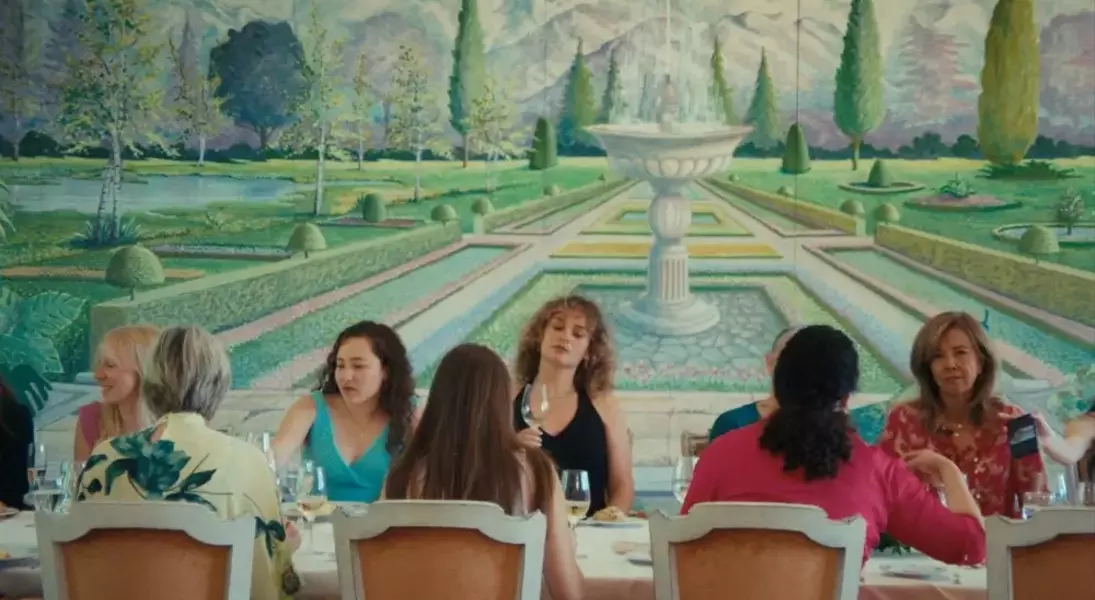
Mateo Ybarra's latest cinematic endeavor, "Small Talk," a unique blend of documentary and fiction, is set to make its global debut at the prestigious Locarno Film Festival. This thought-provoking feature invites audiences into the intriguing world of Switzerland's last remaining etiquette school dedicated to women. The film centers on Charlie, a character portrayed by Hélène Bares, as she embarks on a six-week intensive program. Her aspiration is to master the intricacies of elegance and social grace, believing these skills will unlock opportunities within the elite luxury sector. However, the narrative transcends a mere instructional guide, evolving into a deeper examination of entrenched gender roles, societal hierarchies, and the concept of female empowerment. Through its innovative hybrid format, "Small Talk" skillfully intertwines the authentic experiences of real-life students with Charlie's fictional journey, creating a compelling dialogue about conformity, aspiration, and the ongoing quest for self-identity within a world shaped by patriarchal norms.
The film distinguishes itself by blurring the lines between reality and narrative, presenting an immersive experience that entertains while simultaneously prompting critical reflection. It poses fundamental questions about performance within high society and the authenticity of self when navigating rigid social structures. Ybarra's directorial approach, born from a fascination with Switzerland's lesser-explored institutions, challenges viewers to consider how individuals negotiate and potentially transform established systems, rather than simply succumbing to them. This nuanced portrayal highlights the slow yet persistent nature of social change, revealing the conscious choices individuals make within existing frameworks. The genuine engagement of the actual students, who embraced the filmmaking process with remarkable sincerity, further enriches the film, providing an unscripted vitality that enhances its core themes.
The Art of Blending Reality and Fiction
Mateo Ybarra's "Small Talk" masterfully navigates the delicate boundary between a documentary and a fictional narrative, compelling its audience to question the very nature of performance in high society. The film’s strength lies in its ability to immerse viewers in Charlie's emotional journey while simultaneously presenting an ethnographic study of a unique institution. Actress Hélène Bares, cast as Charlie, genuinely enrolled in the six-week intensive course at the Swiss etiquette school, experiencing its curriculum alongside other students. This foundational decision grounds the film in authenticity, as the real students, instructors, and class dynamics are all organically captured. This innovative approach allows the film to resonate deeply with entertainment value, offering a rare blend of narrative engagement and insightful social commentary, leaving the audience with profound questions about the world and their place within it.
The director's intent was to explore the paradoxes inherent in an institution rooted in traditional gender roles yet evolving in a contemporary context. By having Hélène Bares participate as a bona fide student, the film authentically portrays the rigorous curriculum and the profound impact it has on its participants. This hybrid methodology extends to depicting the real interactions and dynamics among the diverse group of women, showcasing their varying motivations for attending the school. The film captures their individual and collective transformations, illustrating how the pursuit of social mobility and personal refinement unfolds within a structured environment. The interplay between scripted moments and unscripted realities creates a compelling tapestry, highlighting the fine line between aspiration and assimilation, and questioning how one maintains personal identity amidst the pressures of conforming to external expectations.
Navigating Etiquette, Gender, and Empowerment
"Small Talk" profoundly explores the historical context of the etiquette school, which has operated for over seven decades, representing a once-flourishing tradition now distilled to its last Swiss iteration. While the school's primary six-week summer program is exclusively for women, reflecting historical gender norms, it has actively sought student input on potentially integrating male students, consistently receiving a preference for a female-only environment. Ybarra's film confronts this tradition through a feminist lens, acknowledging the school's origins in educating women for roles as wives, mothers, and hostesses—roles now widely considered outdated. Yet, it recontextualizes the institution as a protected space for women to acquire tools for navigating a patriarchal society. This dual perspective highlights the tension between historical expectations and contemporary empowerment, prompting reflection on how individuals find agency within existing systems rather than being mere victims of them, and acknowledging that social evolution often lags behind political ideals.
The film delves into Charlie's dramatic evolution, demonstrating how her experiences within the school shape her understanding of herself and her aspirations. The uncertainty of her journey throughout the filming process allowed for an organic narrative development, reflecting the unpredictable nature of personal growth. The story is meticulously constructed around her decision to invest in this program, driven by a desire for social and professional advancement. This journey reveals the significant social expectations and pressures exerted by the high-stakes world she aims to enter, raising critical questions about preserving one's identity. Furthermore, the genuine students' extraordinary willingness to be filmed added an unexpected layer of depth. Their inherent ability to navigate complex social expectations, honed over a lifetime, translated into a remarkable ease before the camera. Their sincerity and unscripted contributions were vital, transforming them from subjects into essential presences that imbued the film with an authentic truth and vitality that no script could have fully captured, underscoring the power of reality as narrative material.
