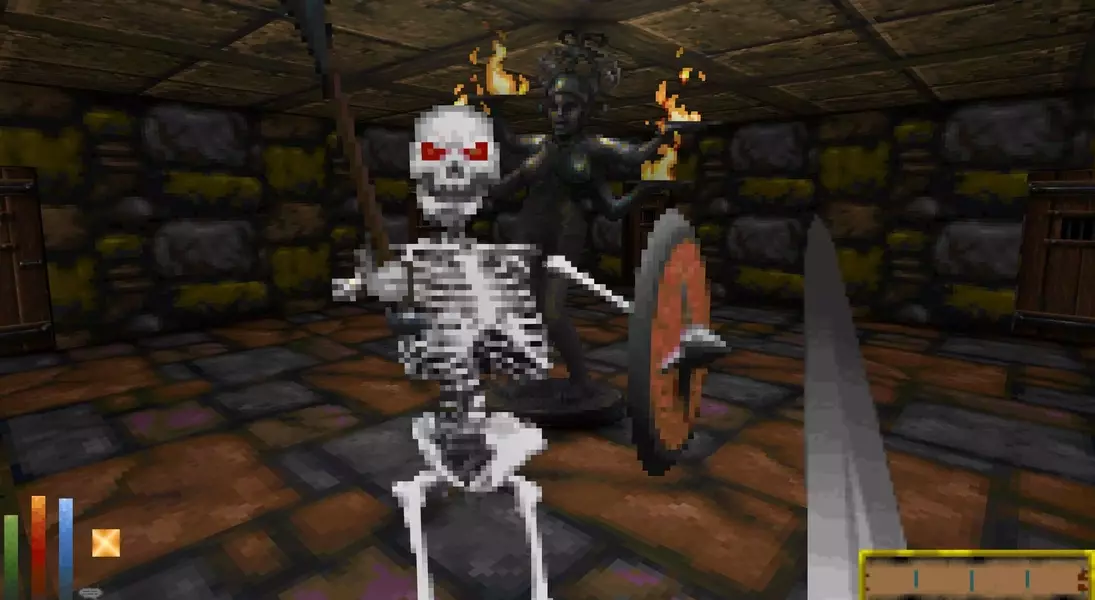
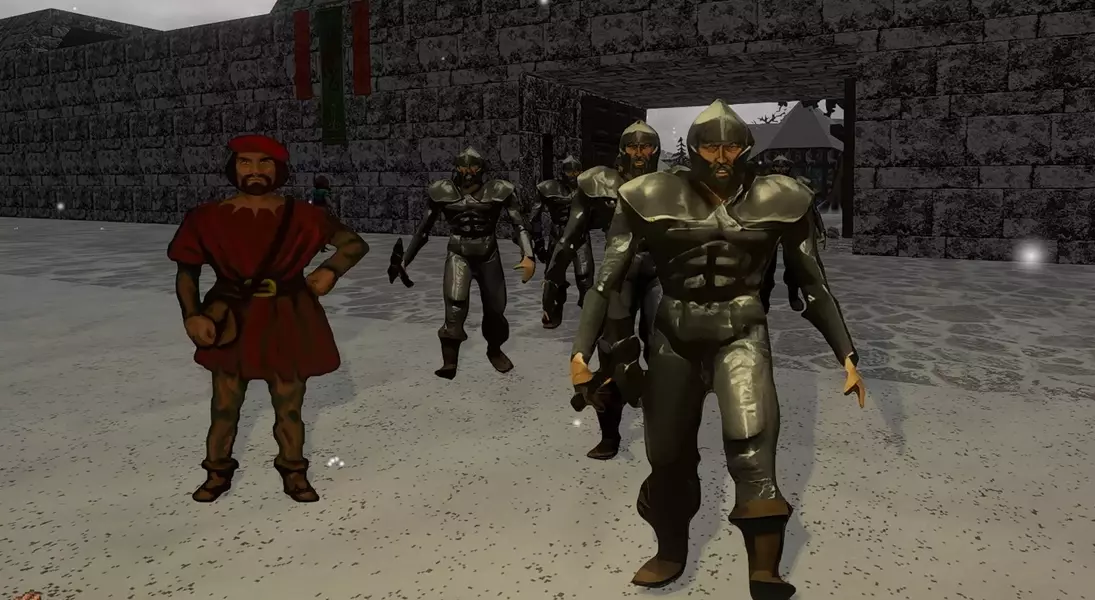
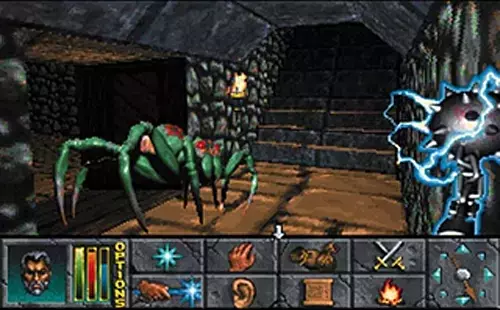
Skyrim's lead designer, Bruce Nesmith, has recently caused a stir among fans by revealing his biggest narrative regret in The Elder Scrolls saga: the concept of the 'Dragon Break,' particularly as it was implemented in Daggerfall. This unique lore device, introduced to ingeniously resolve the branching storylines of the second game, allowed Bethesda to embrace all possible outcomes by suggesting that a temporal anomaly caused them to occur concurrently. While Nesmith views this as a problematic aspect of the series' history, many enthusiasts celebrate it as a stroke of genius that added unparalleled depth and mysticism to the Elder Scrolls universe. His remarks have reignited discussions about the balance between narrative consistency and creative freedom within game design.
The debate surrounding the 'Dragon Break' touches upon the core appeal of the Elder Scrolls' rich mythology. Nesmith's critique centers on the perceived narrative complexities and potential inconsistencies introduced by allowing multiple realities to coexist without clear resolution. However, for a significant portion of the fanbase, this very ambiguity is what makes the lore so compelling. It provides a fertile ground for speculation, fan theories, and a sense of a world far grander and more mysterious than typical fantasy settings. This divide highlights the perpetual challenge for creators in managing an expansive narrative, balancing the need for coherence with the desire for imaginative storytelling that captivates and endures.
The "Dragon Break" Dilemma: A Designer's Regret
Bruce Nesmith, the lead designer behind the immensely popular title Skyrim, recently stirred up the Elder Scrolls community by vocalizing his primary lore-related reservation concerning the series' history. His stated regret centers on the "time splitting thing" that originated in the Daggerfall era, a narrative device colloquially known as the Dragon Break. This concept, often summarized as a period where "time got hell of screwy," was Bethesda's innovative approach to reconciling Daggerfall's numerous potential endings within the overarching Elder Scrolls narrative. By asserting that all these divergent outcomes occurred simultaneously, the developers sought to seamlessly integrate the player's choices into future installments. Nesmith, however, believes this decision led to unresolved lore issues, suggesting that the intricate intertwining of various possibilities might have been handled with greater clarity and a more definitive resolution to maintain narrative integrity. This sentiment highlights a design philosophy that prioritizes explicit narrative pathways over ambiguous, multi-faceted timelines.
The Dragon Break, particularly the event known as The Warp In The West at the conclusion of Daggerfall, was a creative solution to a complex problem posed by the game's non-linear progression and multiple faction-dependent endings. The central conflict revolved around which of the five major factions would ultimately gain control of Numidium, the formidable Dwemer-built brass god. Rather than selecting a single canonical outcome, Bethesda embraced the temporal distortion, allowing every faction to achieve its objective, thereby validating each player's unique experience. This approach, while perhaps challenging for strict lore continuity, offered an imaginative way to honor player agency within the game's expansive world. Nesmith's perspective underscores the tension between maintaining a cohesive, singular narrative and accommodating the vast possibilities inherent in open-world RPGs, a tension that has long been a hallmark of the Elder Scrolls series' development and its rich, often convoluted, lore.
The Enduring Appeal of Elder Scrolls Lore and Daedric Realms
Despite his reservations regarding the Dragon Break, Bruce Nesmith readily acknowledges that the deep and intricate lore is a cornerstone of The Elder Scrolls' enduring appeal. He praises the series for its rich mythological tapestry, which has consistently drawn players into its fantastical world. The ability to delve into obscure historical events, complex political landscapes, and the motivations of divine and demonic entities contributes significantly to the franchise's unique identity. This depth of storytelling, Nesmith contends, is what truly makes an Elder Scrolls game feel authentic and immersive. The series' willingness to embrace elements of both science fiction and fantasy, while acknowledged as a potential risk, has also contributed to its distinctive flavor, creating a universe that defies easy categorization and constantly surprises its audience with its creative fusion of genres. This philosophical approach to world-building ensures that the lore remains a vibrant and evolving component of the player experience.
Looking ahead, Nesmith expresses a strong desire to further explore the Daedric Lords and their associated realms, viewing these powerful entities and their dimensions as central to the very essence of The Elder Scrolls. He believes that delving deeper into the intricate machinations, diverse personalities, and often contradictory moralities of these Daedric Princes offers a wealth of untapped narrative potential. Such an exploration could introduce novel gameplay mechanics, expand upon existing lore, and provide players with even more compelling and challenging adventures. This focus on the Daedric aspect of the universe suggests a direction that would embrace the series' darker, more mysterious elements, allowing for the creation of new stories that continue to push the boundaries of fantasy RPGs. Nesmith's vision suggests a future where the Elder Scrolls continues to build upon its strongest foundations, captivating players with its unparalleled depth and imaginative scope, perhaps even with a few more unexpected temporal disruptions along the way.
