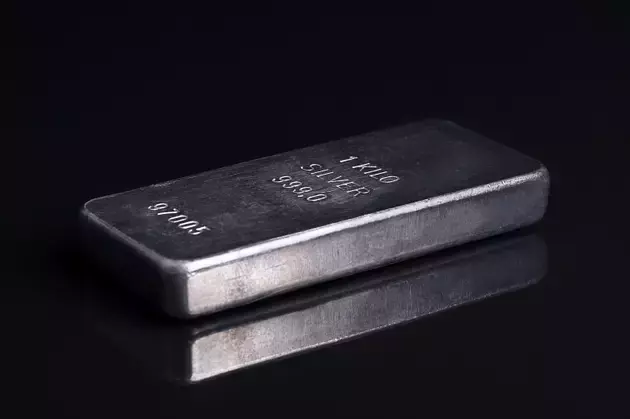
Silver's market behavior is intricately linked to investor sentiment and the flow of bullion, a dynamic often overshadowing traditional industrial supply and demand metrics. A historical review indicates that periods of supply shortages have not reliably led to increased silver prices. Instead, significant price shifts and prolonged periods of stability tend to correlate more directly with investment interest rather than imbalances in the physical market. This understanding has recently led to a reassessment of personal investment strategies and physical silver holdings, highlighting the critical role of these broader market dynamics.
Investor Sentiment: The Primary Driver of Silver Prices
The valuation of silver is predominantly shaped by the mood and actions of investors, along with the movement of capital within the bullion market, rather than being a direct reflection of its industrial supply and demand fundamentals. This insight challenges conventional economic wisdom, which often posits that commodity prices are primarily determined by the balance between production and consumption. However, for silver, the story is more complex, with psychological factors and speculative flows holding considerable sway. Historical data offers compelling evidence against the direct correlation between supply deficits and price appreciation. Over various periods, instances of sustained supply shortages in the industrial sector have frequently occurred without a corresponding surge in silver prices. This disconnect suggests that industrial usage, while important for baseline demand, does not dictate the commodity's speculative value in the same way that investor confidence and large-scale capital movements do.
This means that investors looking to understand or predict silver's trajectory must delve beyond mere production and consumption figures. They need to analyze broader market sentiment, track investor inflows and outflows from silver-backed exchange-traded funds (ETFs), and consider macroeconomic factors that influence the overall appetite for safe-haven assets. When confidence is high or inflation concerns loom, investor demand for silver as a store of value or a hedge can quickly outstrip any industrial demand, leading to rapid price increases. Conversely, periods of investor apathy or shifts towards other asset classes can see prices stagnate, even if industrial demand remains robust or supply dwindles. This nuanced understanding reveals that silver's market is highly sensitive to the collective psyche of its investors, making it a unique commodity where sentiment often triumphs over fundamental supply and demand equations.
Re-evaluating Silver's Investment Proposition Amidst Market Dynamics
Given the significant influence of investor sentiment and capital flows on silver prices, a thorough reevaluation of its investment appeal becomes essential. The conventional focus on industrial supply-demand imbalances, though seemingly logical, often fails to predict silver's actual market performance. This disconnect highlights the speculative nature of silver, where its value can detach from its utilitarian applications. Such dynamics suggest that investment decisions should prioritize an understanding of market psychology, liquidity trends, and broader economic narratives that sway investor behavior, rather than solely relying on industrial data. Personal investment portfolios, especially those holding physical silver or related financial instruments, require continuous adjustment based on these overarching market forces.
The current market environment, marked by recent trading decisions and existing physical holdings, underscores the necessity for this revised perspective. For instance, exiting a call option on a silver ETF, influenced by a reweighing argument, exemplifies how quickly market sentiment can shift and impact individual investment outcomes. This scenario reinforces the idea that silver's market is not a static entity governed by predictable fundamentals, but a dynamic arena where perceptions and collective actions play a dominant role. Therefore, a comprehensive investment strategy for silver must integrate rigorous analysis of investor positioning, market narratives, and geopolitical factors, acknowledging that these elements often drive price movements more powerfully than industrial consumption rates. Adopting this holistic view allows for more informed decision-making and a better understanding of silver's intrinsic value as both a commodity and an investment asset.
