
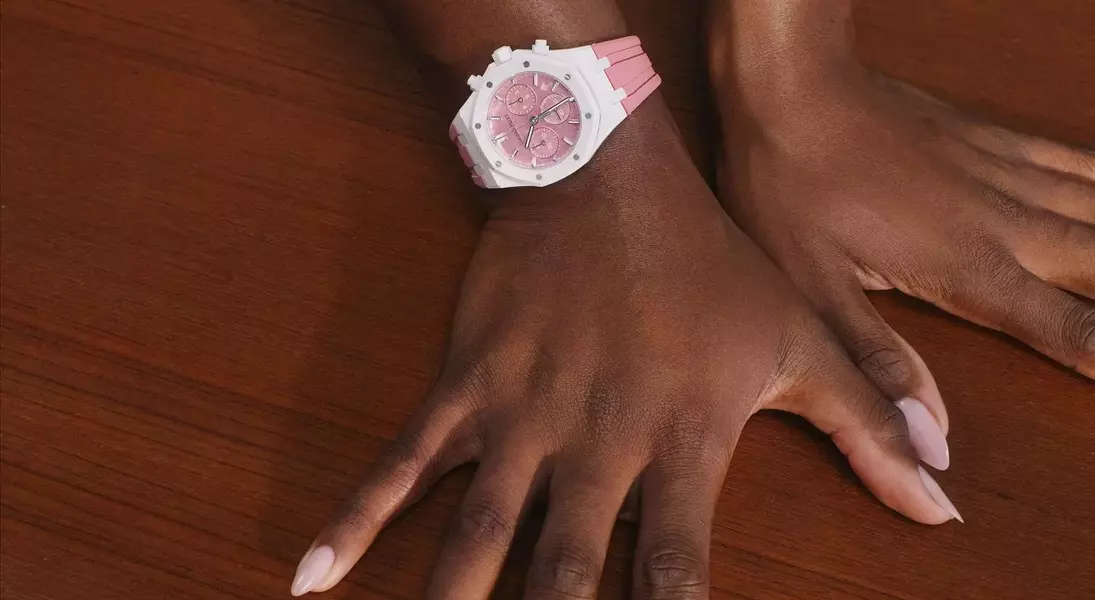
Audemars Piguet, the renowned luxury watch manufacturer, has forged a unique collaboration with tennis legend Serena Williams, culminating in the creation of her very own timepiece. This partnership, which began in 2014, signifies a growing trend where the worlds of elite sports and high-end luxury converge. The newly launched 38mm Royal Oak Selfwinding Chronograph is meticulously engineered for athletic performance, featuring precise elapsed-time functionalities. It also incorporates elegant, feminine elements such as mother-of-pearl accents, delicate pink touches, and ceramic components. This initiative reflects Audemars Piguet's strategy of engaging with influential cultural figures to expand its reach and introduce its 150-year-old brand to a fresh, diverse customer base.
Details of the Audemars Piguet x Serena Williams Collaboration
Audemars Piguet's CEO, Ilaria Resta, emphasized that their collaborations are driven by a desire for mutual learning and innovation, rather than mere transactional engagement. Resta expressed particular satisfaction in partnering with a woman for this project, noting that previous sports watch collaborations predominantly featured men. This move aligns with the brand's strategic vision to attract a more varied demographic of customers and partners. While the watch is designed with women in mind, Resta asserts it transcends traditional gendered watch categories, expecting it to appeal to both men and women. She believes the distinction between men's and women's watches is diminishing, as even designs conceived for women are often embraced by men.
Resta, who assumed her role in January 2024, brings a wealth of experience from her previous positions at DSM-Firmenich and Procter & Gamble. The Royal Oak series itself boasts a rich heritage, originating in 1972 with its groundbreaking elevated stainless steel sport watch. Industry estimates place Audemars Piguet's annual sales at approximately $3.4 billion. Resta detailed her vision for the watch industry and underscored the profound significance of the collaboration with Serena Williams. She highlighted the immense potential for growth within their female customer segment. The brand's approach to collaborations is characterized by an open-minded, organic process, moving away from rigid product briefs to foster "creative audacity." This fluid methodology prioritizes cultivating meaningful relationships with artists and athletes who bring unique perspectives, even if it extends the development timeline significantly. The goal is to wait for truly exceptional ideas to materialize, regardless of the time investment.
Discussing a prior collaboration with Swatch, Resta explained that its purpose was to re-engage the public with mechanical watches. Despite the luxury sector's success, she observed an "existential crisis" in the broader mechanical watch market, where analog time-telling is becoming less common. By partnering with Swatch, a company instrumental in popularizing watches in the 70s and 80s, Audemars Piguet aimed to ignite interest and educate a wider audience about the beauty and intricate craftsmanship of mechanical movements. The Swatch collaboration generated nearly 20 billion impressions, significantly boosting Audemars Piguet's brand recognition and contributing to record sales. Resta sees collaborations as vital for innovation and maintaining cultural relevance in an industry where mechanical watches are not a functional necessity. This approach has also led to a younger demographic engaging with watch collecting, shifting the retail experience from mere transactions to educational engagement.
This collaboration exemplifies the evolving landscape where sports increasingly influence fashion and luxury. Athletes like Serena Williams are no longer just performers; they are powerful cultural influencers, embodying resilience and aspirational lifestyles. This blending of categories reflects a contemporary trend where identity, performance, and style are intertwined, driving new and dynamic partnerships across industries.
The collaboration between Serena Williams and Audemars Piguet offers a compelling insight into the evolving luxury market. It demonstrates a strategic shift towards more inclusive marketing and product development, acknowledging the powerful influence of female figures in sports and culture. The emphasis on "creative audacity" and organic partnerships suggests a refreshing departure from traditional, rigid corporate strategies, fostering genuine innovation. This move not only broadens Audemars Piguet's customer base but also redefines the perception of luxury watches, making them more accessible and relevant to a younger, more diverse audience. It's a testament to how established brands can adapt and thrive by embracing contemporary cultural dynamics and championing diversity.
