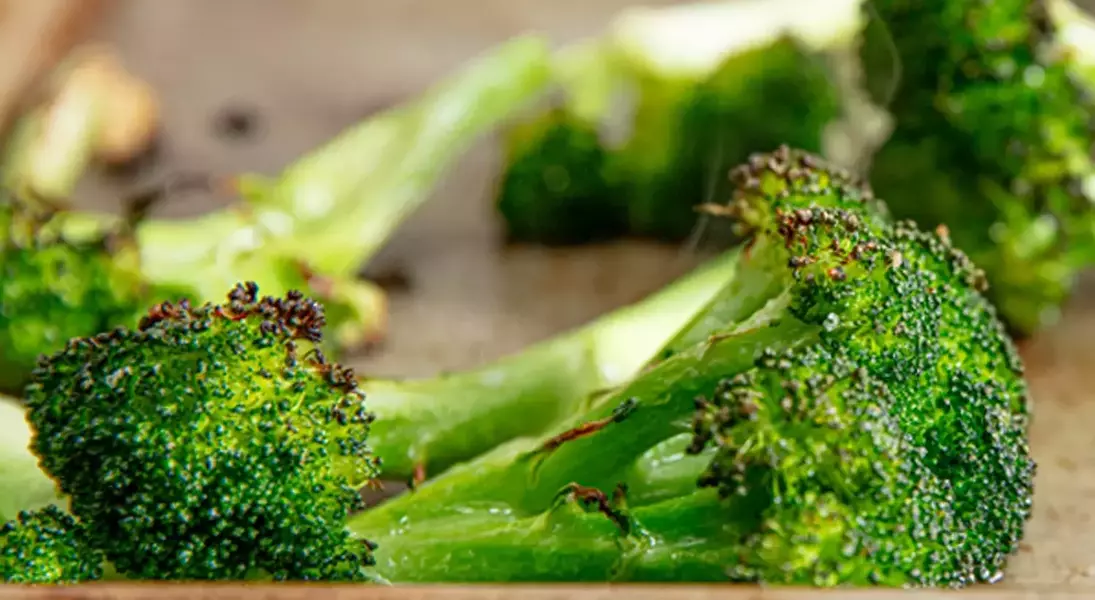
Tired of dry, leathery roasted broccoli? This article introduces a game-changing method to achieve perfectly tender and flavorful florets every time. The secret lies in a clever combination of high-heat roasting followed by a strategic steaming step, ensuring your broccoli is beautifully browned on the outside and wonderfully soft on the inside. Forget the frustration of inconsistent textures; this technique tackles the broccoli's inherent structural challenges head-on, delivering a superior culinary experience. You'll learn why traditional roasting often falls short and how to harness the power of steam and precise temperature control to elevate your roasted vegetable game.
Mastering the Art of Roasted Broccoli: A Culinary Breakthrough
In March 2024, a new culinary revelation emerged concerning the preparation of roasted broccoli, offering a simple yet profoundly effective solution to a common kitchen dilemma. Food enthusiasts and home cooks frequently encounter the problem of broccoli turning dry and tough when roasted. This issue stems from the vegetable's unique, tree-like geometry, which prevents uniform heat distribution and often leads to over-charred florets and undercooked stalks.
The breakthrough technique, developed through extensive experimentation, involves a two-stage cooking process. Initially, broccoli florets are roasted at a high temperature to achieve a desirable browning and develop rich flavors, leveraging the Maillard reaction. However, instead of simply continuing to roast until tender, the pan is removed from the oven after the initial browning phase. Crucially, the broccoli is then immediately covered tightly with foil to trap steam, allowing it to rest for approximately 10 minutes. For an even better result, the covered tray can be placed back into the turned-off oven for a mere five minutes, utilizing residual heat. This steaming period harnesses the 'latent heat of vaporization,' a powerful physical phenomenon where stored energy in steam is released upon condensation, effectively softening the broccoli's stalks without overcooking the delicate florets.
This innovative approach directly addresses the challenges posed by broccoli's botanical structure—an immature flower with tender buds and thick stalks. Unlike root vegetables that offer flat surfaces for even contact with a sheet pan, broccoli's intricate form makes uniform roasting difficult. Prior attempts to pre-steam or microwave broccoli before roasting proved less effective, as they often inhibited flavor development and slowed down the browning process. The new method prioritizes flavor enhancement through initial roasting, then perfects tenderness through controlled steaming.
Beyond this steaming trick, the research also reaffirmed other critical factors for optimal roasted broccoli. High heat for a short duration is paramount, as lower temperatures over longer periods lead to dehydration and a leathery texture. Experiments conducted at various oven temperatures (350°F, 425°F, and 500°F) and durations (10, 20, and 30 minutes) consistently demonstrated that higher heat settings yield sweeter, more flavorful results, avoiding the unpleasant sulfurous notes that can develop otherwise. Furthermore, it was strongly advised against using the convection setting in ovens or air fryers for broccoli. While convection is beneficial for many vegetables by concentrating flavors, the constant circulation of hot air rapidly strips broccoli of its moisture, exacerbating the problem of dryness and leathery texture due to its open, fanned-out structure.
This comprehensive understanding of broccoli's unique characteristics and the precise application of heat and moisture ensures a consistently delicious outcome, making perfectly roasted, tender, and browned broccoli achievable for any home cook.
The journey to culinary excellence often involves questioning conventional wisdom and embracing innovative approaches. The refined method for roasting broccoli serves as a powerful reminder that a deeper understanding of food science can transform everyday cooking into an art form. It teaches us the delicate balance between dry heat for flavor and moist heat for texture, a principle applicable far beyond the humble broccoli floret. This insight encourages us to be more observant, experiment more freely, and perhaps, most importantly, to approach our ingredients with a newfound respect for their unique properties. Ultimately, it’s about making delicious food more accessible and enjoyable for everyone, one perfectly cooked vegetable at a time.
