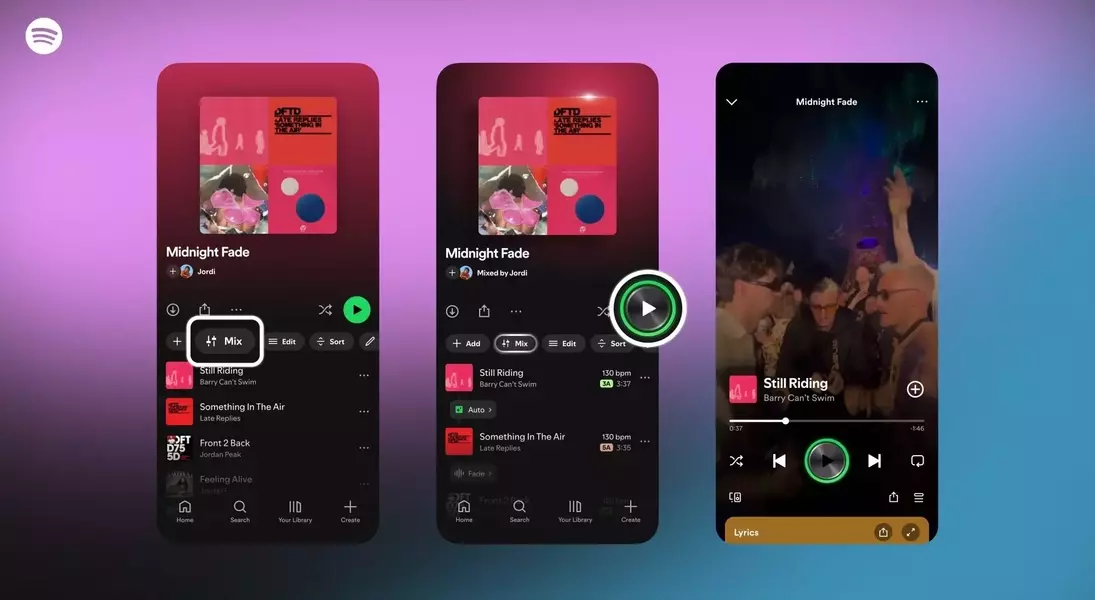

Spotify has recently introduced a groundbreaking feature for its Premium subscribers, allowing them to personalize the transitions between tracks within their playlists. This innovative addition empowers users to curate a listening experience that rivals a professional DJ's setup, marking a significant stride in enhancing user control over their audio environment. The update aims to transform passive listening into an active, creative process, providing tools that cater to both casual listeners and audiophiles seeking meticulous control over their music flow.
The new functionality, currently in beta for Premium members, brings a 'Mix' button to the playlist toolbar. This intuitive control offers several options for creating seamless audio transitions. For those who prefer simplicity, an 'Auto' setting handles the mixing automatically. More adventurous users can select from predefined styles such as 'Fade' or 'Rise' to apply specific transition effects. For the truly dedicated, Spotify provides advanced controls including volume adjustments, equalization (EQ), and various effects, all visualized with waveform data and beat information. Tapping the 'Mix' option dynamically displays Beats Per Minute (BPM) and musical keys, enabling precise and harmonious transitions between diverse tracks.
This enhancement is part of a broader strategy by Spotify to grant its users more autonomy over their listening journeys. In recent months, the streaming giant has rolled out several features designed to put more power in the hands of its subscribers. These include the ability to tailor genre preferences for 'Discover Weekly' playlists and greater customization options for queues, such as shuffle and sleep timer functions. Furthermore, Spotify's AI-powered DJ, a popular algorithmic recommendation tool, has been updated to accept song requests, further bridging the gap between automated suggestions and user preferences.
The introduction of these user-centric features comes at a time when Spotify's algorithmic recommendations have elicited varied responses from its global user base. While many appreciate the convenience of an app that intelligently selects music based on their tastes, some have expressed frustration, feeling that the algorithms can be restrictive or even hinder the discovery of new artists organically. By offering more direct control over aspects like song transitions, Spotify appears to be proactively addressing these concerns, aiming to alleviate any sense of algorithmic overreach and foster a more personalized and engaging platform experience.
As these new transition capabilities become available to Premium users, they will have the opportunity to experiment and master the art of seamless playlist curation. This development underscores Spotify's commitment to continuous innovation, focusing on features that elevate the user experience beyond simple music playback to a more interactive and creative endeavor. Ultimately, by providing tools that allow for a finely tuned audio flow, Spotify reinforces its position as a leading music streaming service that truly values its listeners' preferences and creative input.
