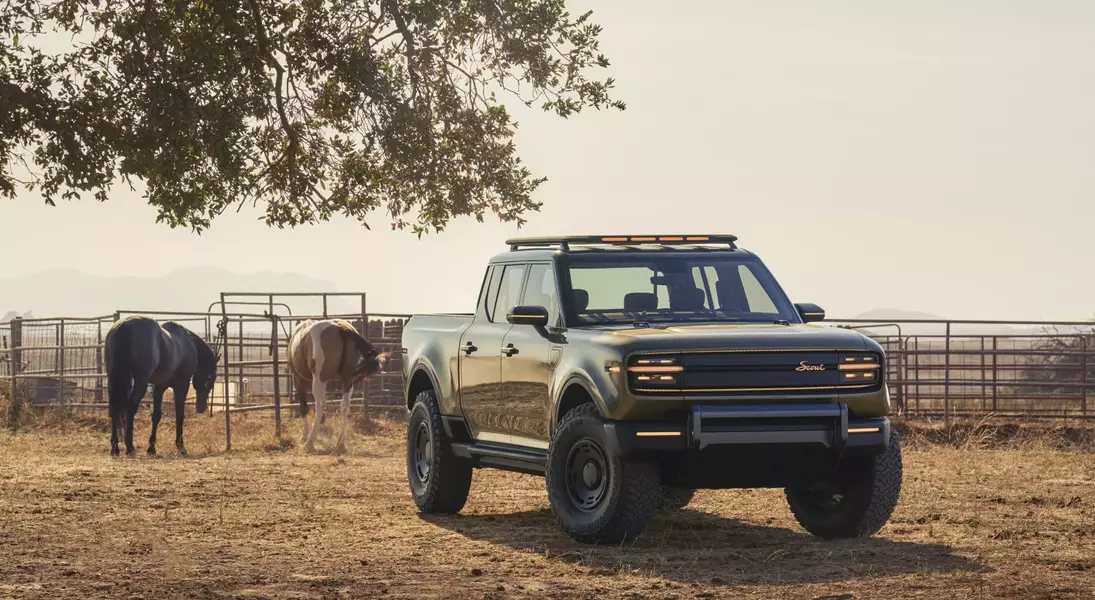
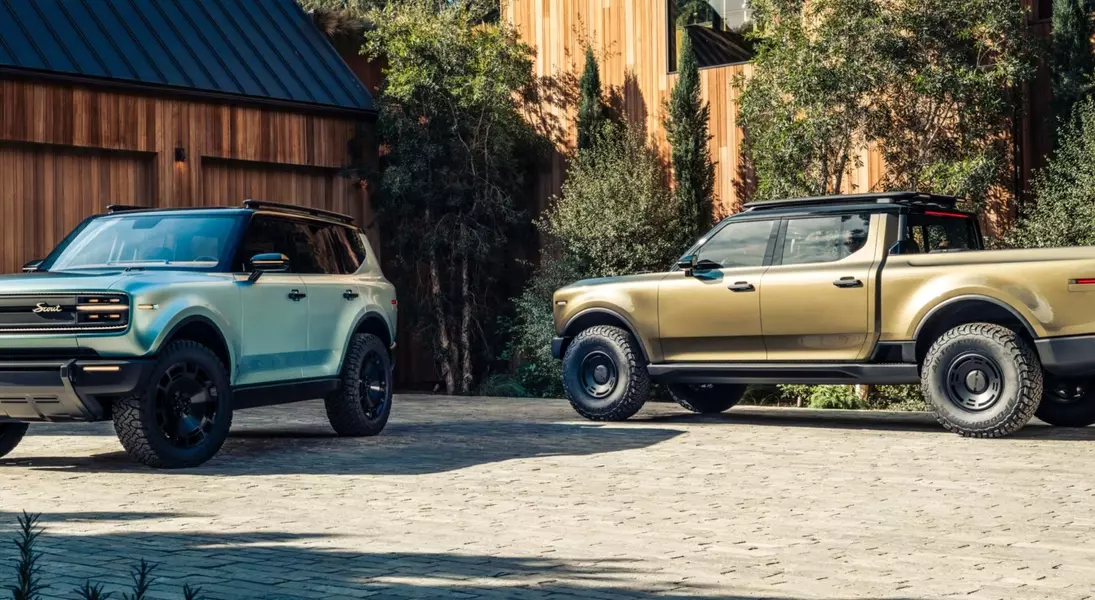
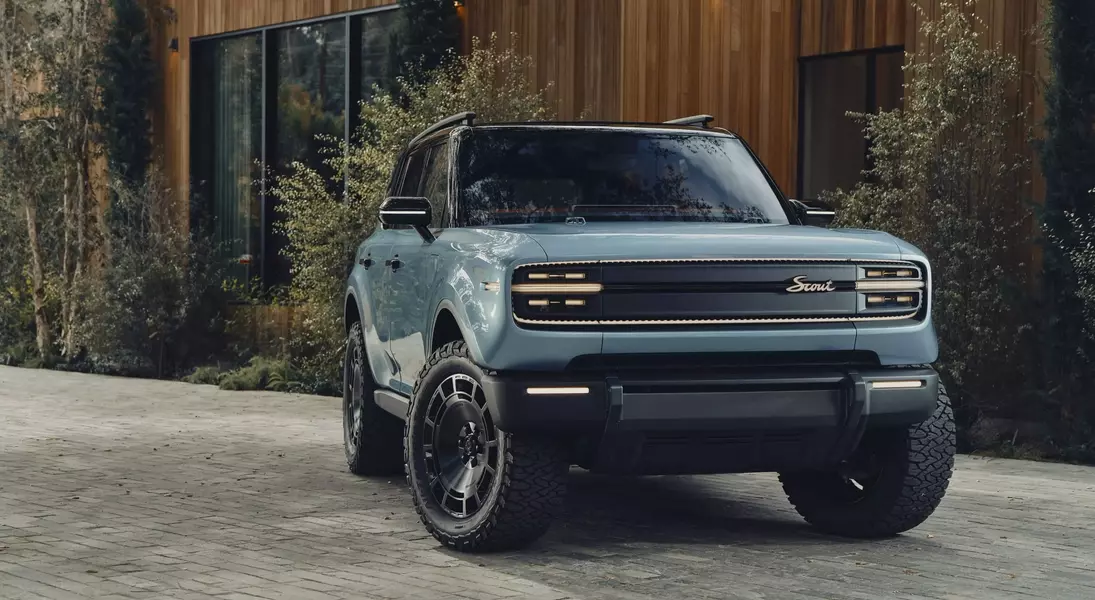
Scout Motors, a new venture under the Volkswagen Group, has garnered significant attention with over 160,000 reservations for its forthcoming Traveler SUV and Terra pickup. However, the unexpected twist lies in the overwhelming preference for its gas-powered extended-range hybrid (EREV) models, which account for a staggering 87% of all pre-orders. This development highlights a notable divergence from the company's original intention to exclusively produce battery electric vehicles, signaling a potential recalibration in the face of evolving market dynamics and a cooling interest in pure EVs in the U.S.
Scout Motors' Hybrid Strategy Gains Traction Amid EV Market Shifts
In a recent announcement, Scout Motors, the U.S.-based EV startup and independent arm of Volkswagen Group, revealed it has amassed over 160,000 reservations for its robust, ladder-frame Traveler SUV and Terra pickup. This impressive figure reflects a substantial increase of 30,000 reservations since October 2025, averaging about 7,500 new pre-orders each month. Each reservation, secured with a refundable $100 deposit, provides a snapshot of consumer interest rather than guaranteed sales.
A critical insight from these reservation numbers is the pronounced shift towards the gas-powered extended-range hybrid (EREV) models. Initially conceived as a pure-play EV manufacturer in 2022, Scout Motors introduced a gas-powered range-extender option in October 2024, responding to a deceleration in the growth of battery electric vehicle sales in the United States. The impact of this strategic pivot is clear: 87% of current reservation holders, totaling 139,200 prospective buyers, have opted for the EREV variant. This marks a significant jump from 80% last October, dramatically surpassing CEO Scott Keogh's earlier projection of a 60/40 split in favor of hybrids.
The current landscape of the U.S. electric vehicle market, characterized by the expiration of certain federal tax credits, relaxed fuel economy standards, and a dip in demand, appears to corroborate this strong preference for hybrid powertrains. Scout Motors plans to prioritize the launch of its EREV versions, which is unsurprising given their higher demand. Both the Traveler SUV and Terra pickup are anticipated to launch with price tags under $60,000, though the cost differential between the all-electric and hybrid powertrains remains undisclosed.
Construction is underway for Scout Motors' new manufacturing facility in Blythewood, South Carolina, where prototype models are slated for production this year. While initial plans aimed for volume production in 2027, Scout CEO Scott Keogh recently indicated at an Automotive Press Association event in Detroit on March 4, that first customer deliveries are now expected in 2028. This adjustment aligns with recent media reports citing technical hurdles as the reason for the revised timeline.
Volkswagen's ambition to bolster its market presence in the SUV and truck-dominated U.S. landscape hinges significantly on Scout Motors. However, the brand faces challenges from its U.S. retail network, with some dealers filing lawsuits over Scout Motors' direct-to-consumer sales model. Dealers contend that this approach violates existing contracts and contradicts the brand's original all-electric promise. Despite these legal battles, Keogh remains resolute, asserting that the direct-to-consumer model is unequivocally the most sensible strategy for the U.S. market.
The evolving preference for hybrid vehicles over pure EVs, as evidenced by Scout Motors' reservations, suggests a more nuanced consumer demand in the current automotive landscape. This trend challenges the prevailing narrative of an immediate and universal shift to electric vehicles, highlighting the ongoing importance of transitional technologies like extended-range hybrids. For automakers, it underscores the necessity of flexibility and responsiveness to market signals, especially when navigating a rapidly changing regulatory and consumer environment. Scout Motors' journey will undoubtedly serve as a crucial case study in understanding the complex path to electrification and market adaptation.
