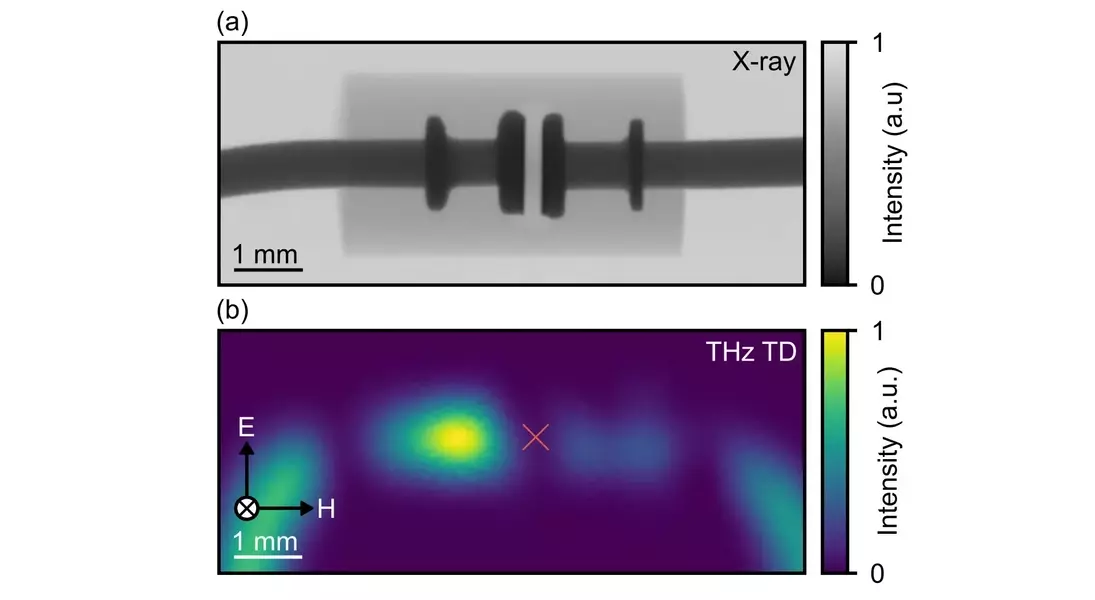

Researchers have made significant strides in employing terahertz waves to observe the internal workings of transistors during their operation. This marks an exciting advancement in science, leveraging these unique waves to probe the inner structures of various objects without the potential health risks associated with conventional X-rays. The multinational team, comprising engineers from Australia, Germany, and the United States, has specifically focused on understanding the real-time behavior of packaged semiconductor devices.
The study utilized the low/sub-terahertz range of the electromagnetic spectrum, a region where microwaves and infrared waves intersect. By employing a sophisticated method known as homodyne detection, the researchers successfully captured the expected behaviors of electronic components, such as a 1N4007 diode and a BC548B transistor, as they functioned. This capability to monitor components in use could prove invaluable for industries where continuous operation is critical, such as in power delivery systems, ensuring functionality without interruptions.
While the potential for using this technology to access encrypted data in chips has been raised, there are inherent limitations. Terahertz waves can only penetrate non-metallic materials, meaning that processors or chips protected by metallic heat spreaders or heatsinks remain secure. Furthermore, the complex, multi-layered architecture of modern chips, densely packed with copper interconnects, presents a natural barrier to terahertz scrutiny. Nevertheless, the continuous drive of researchers suggests that innovative solutions to these challenges may yet emerge, pushing the boundaries of what is currently possible.
This pioneering work highlights humanity's relentless quest for knowledge and understanding, pushing the boundaries of scientific exploration. It underscores a commitment to innovation that not only solves current problems but also anticipates future challenges, ensuring that technological advancements contribute positively to society's well-being and progress.
