Charles M. Schulz's timeless comic strip, "Peanuts," while largely devoid of traditional villains, prominently featured Lucy Van Pelt as its most consistent antagonistic force. Her character served as a comedic engine, frequently seen tormenting her younger brother Linus, persistently bothering the musically inclined Schroeder, and consistently undermining Charlie Brown's fragile self-esteem. While she occasionally displayed moments of vulnerability or experienced minor defeats, Lucy's dominant and often abrasive personality was a defining element of the series' humor. This dynamic often left young readers, including this author, feeling frustrated by her seemingly unchecked influence over the other children.
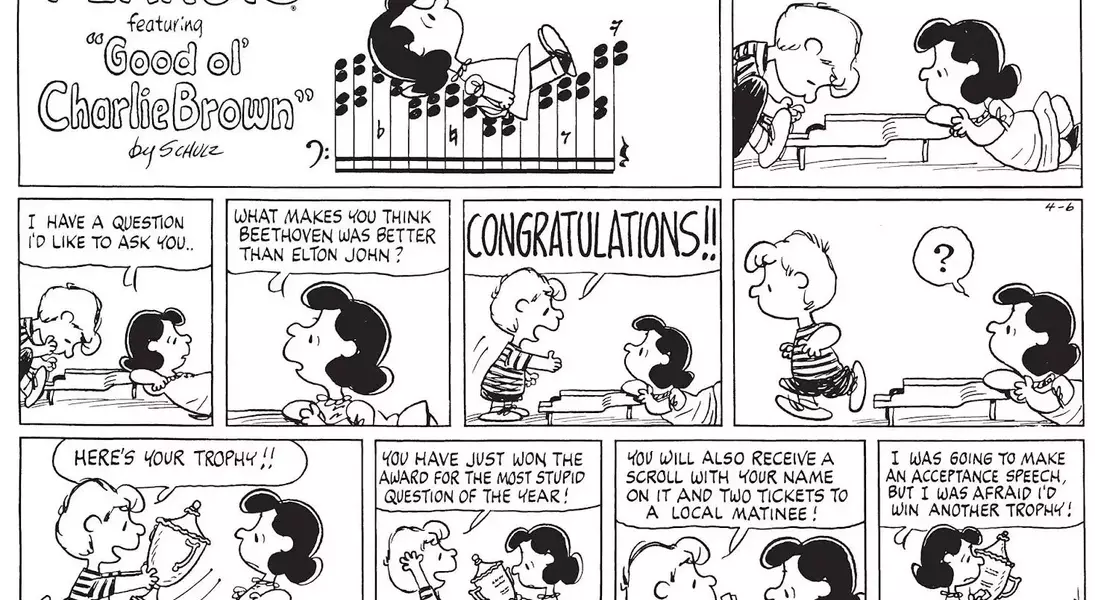
Schulz himself once noted his lack of personal affection for Lucy, yet he recognized her essential role in generating compelling conflicts within the strip. He believed there was an inherent comedic value in depicting a young girl exerting such control over her male counterparts, finding it more amusing than the reverse. However, a thorough review of the complete "Peanuts" archive reveals that Lucy was not always triumphant. Instances where she found herself in a silly predicament or was outmaneuvered by others occurred with greater frequency than commonly remembered. A particularly memorable example unfolded on April 6, 1975, when Schroeder, usually the quiet target of her incessant critiques, delivered an unparalleled display of calculated sarcasm.
The Day Schroeder Unleashed His Sarcastic Masterpiece
In a truly iconic moment from the "Peanuts" comic strip, a pivotal exchange between Lucy Van Pelt and Schroeder unfolded on April 6, 1975. Lucy, known for her superficial interest in Schroeder's passion for classical music and her general indifference to Beethoven, approached him with a provocatively dismissive question. She challenged his devotion to the classical composer, asking, "What makes you think that Beethoven was better than Elton John?" This query, seemingly innocuous yet deeply offensive to Schroeder's artistic sensibilities, triggered an extraordinary reaction. Rather than his usual stoic endurance or mild protest, Schroeder seized the opportunity he had clearly been anticipating.
With remarkable preparedness, Schroeder immediately congratulated Lucy, offering a firm handshake. What followed was a meticulously orchestrated sarcastic performance: he presented her with a trophy, declaring, "Here's your trophy! You have just won the award for the most stupid question of the year!" His elaborate retort continued, promising her a scroll inscribed with her name and even two tickets to a local matinee, all delivered with an air of mock ceremony. Lucy, thoroughly disarmed and embarrassed by this unexpected and grand display of derision, could only retreat, musing that a hypothetical acceptance speech might have earned her a second trophy from the well-prepared Schroeder. This incident stands out as one of the most brilliant and sustained acts of sarcasm in the entire "Peanuts" run, a testament to Schroeder's quiet intelligence and providing a rare, satisfying moment where Lucy's dominance was undeniably, if temporarily, overthrown.
This particular comic strip serves as a powerful reminder of the enduring brilliance of Charles Schulz's storytelling. It highlights how even secondary characters can deliver profoundly impactful moments that resonate with readers long after their initial publication. Schroeder's meticulous, budget-inclusive sarcasm transcends typical comic strip humor, elevating it to an art form. It's a testament to the idea that patience and wit can ultimately prevail against overbearing arrogance, offering a cathartic vicarious victory for anyone who has ever felt overwhelmed by a dominant personality. Such instances remind us that the "Peanuts" gang, despite their childlike appearance, navigated complex human emotions and relationships with profound insight, making their stories timeless and universally relatable.
