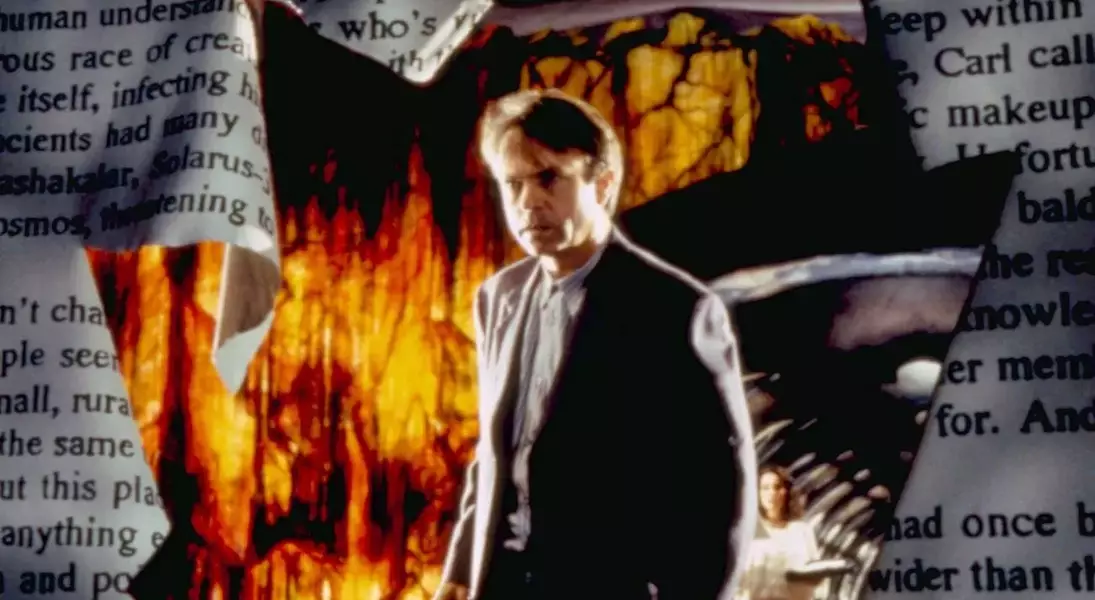
This article examines the distinctive acting prowess of Sam Neill, specifically focusing on his ability to communicate complex emotions through his facial expressions and gaze. It highlights two pivotal film roles that exemplify this talent: his iconic portrayal of Dr. Alan Grant encountering dinosaurs for the first time in "Jurassic Park" and his descent into existential horror as John Trent in John Carpenter's "In the Mouth of Madness." The discussion explores how these moments not only define his career but also profoundly influence audience perception and engagement.
The Power of a Gaze: Sam Neill's Unforgettable Cinematic Moments
The Genesis of Wonder: Dr. Alan Grant's First Encounter with Dinosaurs
In the cinematic landscape, few scenes evoke as much collective awe as Sam Neill's portrayal of Dr. Alan Grant witnessing living dinosaurs in "Jurassic Park." The scene is a masterclass in non-verbal storytelling, with Grant's stunned silence, widening eyes, and the deliberate removal of his hat and sunglasses perfectly illustrating a man grappling with the impossible. This moment skillfully bridges the gap between the character's astonishment and the audience's, forging a shared sense of wonder and disbelief.
Descent into Chaos: John Trent's Unraveling in "In the Mouth of Madness"
A stark contrast to the awe of "Jurassic Park" is Neill's performance a year later in John Carpenter's horror masterpiece, "In the Mouth of Madness." Here, Neill's character, John Trent, an insurance investigator, stares into an abyss of cosmic horror. His initial skepticism crumbles as he confronts realities that defy comprehension, depicted through a gaze that reflects a terrifying shift from arrogance to utter despair. This sequence is celebrated for capturing the essence of a mind succumbing to the unspeakable.
The Art of Audience Connection: Spielberg's Vision and Neill's Expression
Steven Spielberg's directorial genius in "Jurassic Park" is evident in how he builds anticipation, showing Neill's reaction before revealing the dinosaurs themselves. This technique, often dubbed the "Spielberg Face," leverages Neill's expressive capabilities to guide the audience's emotional journey. By mirroring Grant's initial shock and subsequent wonder, viewers are seamlessly drawn into the film's fantastical world, experiencing the marvel as if it were their own.
Confronting the Unseen: Carpenter's Horror and Neill's Resistance
In "In the Mouth of Madness," John Carpenter challenges conventional horror by presenting unseen terrors, allowing Neill's performance to carry the weight of the unknown. Trent's journey from cynical investigator to a man on the brink of madness is central to the film's narrative. Neill skillfully navigates this complex role, portraying a character who, despite facing escalating horrors, resists the truth, making his eventual breakdown all the more impactful and chilling for the audience.
Behind the Scenes: Crafting the Madness with De Luca and Carpenter
The creation of "In the Mouth of Madness" was influenced by literary giants like Stephen King and H.P. Lovecraft, focusing on the fragile line between sanity and insanity. Michael De Luca, who brought the script to Carpenter, envisioned a horror that was deeply subjective. Carpenter's distinctive, often blunt, directorial style, combined with Neill's nuanced performance, created a unique synergy. The film's crisp editing and disorienting shifts between realities amplify its Lynchian quality, pulling both character and audience into a vortex of fictional chaos.
The Ultimate Punchline: Trent's Final Laughter
The climactic scene of "In the Mouth of Madness" stands as one of cinema's most memorable mic drops. Here, the now-insane Trent comprehends the apocalyptic cycle he and humanity are trapped in, leading to an eruption of manic laughter. Neill delivers a performance that is both unhinged and profoundly amused, embodying a dark, bitter joke that forces the audience to confront the absurdity and horror of their shared reality. This final moment solidifies Neill's legacy as an actor capable of conveying the deepest, most unsettling human emotions.
