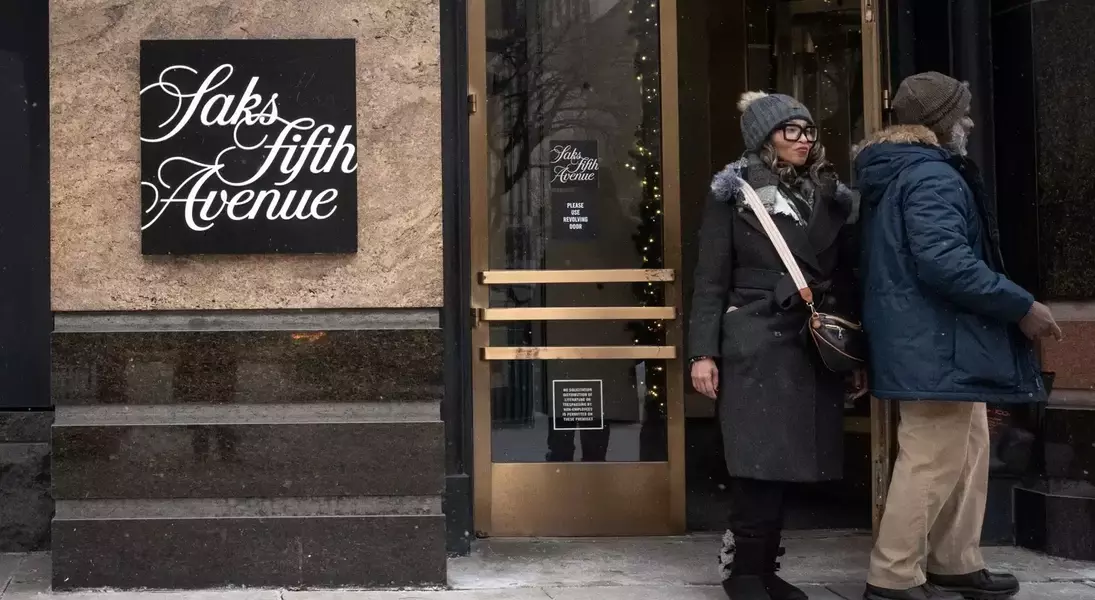
Saks Global Enterprises, a prominent player in the luxury retail sector, has filed for Chapter 11 bankruptcy. This strategic decision is aimed at overhauling its business model and ensuring its long-term viability in an evolving market landscape. The company, which includes renowned brands such as Saks Fifth Avenue and Neiman Marcus, intends to maintain its retail operations throughout the restructuring process.
Navigating a New Era: Saks Global Enterprises Embraces Chapter 11 for Strategic Transformation
Key Steps Toward Revitalization: Saks Global Enterprises Initiates Bankruptcy Proceedings to Realign its Business Strategy
Saks Global Enterprises, a conglomerate that owns high-end retailers like Saks Fifth Avenue, the upscale home goods retailer Horchow, and the discount chains Saks Off 5th and Neiman Marcus Last Call, commenced Chapter 11 bankruptcy proceedings. Alongside this significant financial step, the company announced the appointment of a new chief executive tasked with guiding the organization through its planned revitalization.
Overcoming Market Headwinds: Saks's Efforts to Adapt Amidst a Challenging Luxury Retail Climate
This bankruptcy filing follows numerous unsuccessful attempts to rejuvenate the luxury retail giant. The company's struggles were exacerbated by a cooling luxury market, leading to a reported $77 million loss and a 13% year-over-year decline in sales by the second quarter of 2025, as per Bloomberg. Despite acquiring other luxury merchants such as Neiman Marcus and Bergman Goodman and liquidating assets from a Canadian bankruptcy case, the company faced persistent challenges in stabilizing its financial performance.
What This Means for Investors: The Broader Implications of Saks Global Enterprises' Bankruptcy on the Luxury Market
The decision to file for bankruptcy reflects a broader trend within the luxury brand sector. Discretionary spending among "aspirational customers," those who intermittently indulge in high-end purchases, has notably decreased. This shift underscores the increasing pressure on luxury retailers to adapt their strategies to maintain relevance and profitability in a more cautious consumer environment.
A Legacy of Luxury: A Century of Evolution for Saks Global Enterprises
The history of Saks Global Enterprises spans over a century, originating from a department store established in Manhattan in 1924. The brand became a symbol of luxury, expanding significantly through the 1970s and 1980s, and went public under the ticker "SKS" in 1996.
Strategic Acquisitions and Leadership Changes: The Path Leading to the Current Restructuring
In 2013, Toronto-based Hudson's Bay Co. acquired Saks for approximately $2.9 billion, merging it with Lord & Taylor. Richard Baker privatized the company in 2020. Further expansion occurred in 2024 with the acquisition of Neiman Marcus and Bergdorf Goodman for $2.7 billion, backed by investments from Salesforce and Amazon. However, the online luxury platform "Luxury Stores at Amazon" failed to gain significant traction, and HBC filed for bankruptcy in Canada in 2025, leading to store liquidations. Geoffroy van Raemdonck, former CEO of Neiman Marcus, has now taken the helm, succeeding Richard Baker, to lead Saks Global through its transformation.
A Renewed Vision for the Future: New Leadership and Financial Commitments Drive Saks's Strategic Path
Geoffroy van Raemdonck expressed his commitment to steering Saks Global Enterprises into a new era of luxury retail. He emphasized a continued focus on customer service and collaboration with luxury brands during this pivotal period of transformation. The company has secured $1.75 billion in financing, which will be instrumental in strengthening its financial foundation and ensuring the continuity of its retail operations, both in physical stores and online platforms, as it seeks to redefine its role in the future of luxury commerce.
