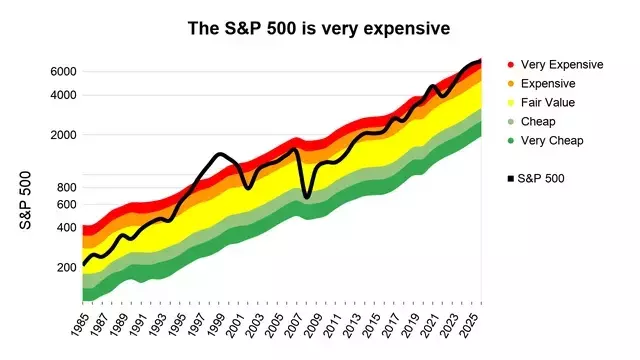

Over the past decade, the S&P 500 has demonstrated remarkable growth, far outperforming its international counterparts like the FTSE 100 and FTSE 250. This surge has led many investors to view U.S. equities, especially the S&P 500, as an indispensable component of their portfolios. Historically, the S&P 500's price appreciation has consistently exceeded its underlying earnings and dividends, indicating a strong market premium. However, this growth trajectory is often marked by fluctuating investor sentiment, leading to cycles of excessive optimism and pessimism that influence the index's valuation.
Since approximately 2013, the investment landscape has been dominated by a perception that there are limited alternatives to investing in U.S. stocks, with the S&P 500 standing out as a prime example. This sentiment has fueled substantial capital inflows into the U.S. market, contributing to its impressive performance metrics. The allure of the S&P 500 lies not only in its past returns but also in the belief that it continues to offer superior opportunities compared to other global markets.
Looking back, the S&P 500 has seen its value increase by roughly 250% over the last ten years. This compares starkly to the FTSE 100, which managed a 70% gain, and the FTSE 250, which saw a modest 35% increase during the same period. This significant disparity underscores the strong appeal of the U.S. market. Furthermore, an examination of the S&P 500's performance over the past four decades reveals an average annual price increase of 9%, consistently surpassing the growth rates of its earnings and dividends by 2-3% per year. This sustained outperformance suggests a robust and resilient market, albeit one that is subject to the emotional ebb and flow of investor confidence.
The valuation of the S&P 500, much like other major equity indices, experiences considerable swings. These fluctuations are largely driven by shifts in investor sentiment, moving between periods of heightened optimism and profound pessimism. Understanding these cycles is crucial for investors seeking to navigate the market effectively. While the recent performance has been overwhelmingly positive, recognizing the cyclical nature of market valuations helps temper expectations and prepare for potential shifts.
In conclusion, the S&P 500's impressive track record and its perceived lack of viable alternatives have cemented its position as a favored investment vehicle. Despite its current high valuation, the historical data suggests a pattern of strong, consistent growth that has rewarded investors over the long term. However, remaining aware of the dynamic interplay between market fundamentals and investor psychology is essential for making informed investment decisions.
