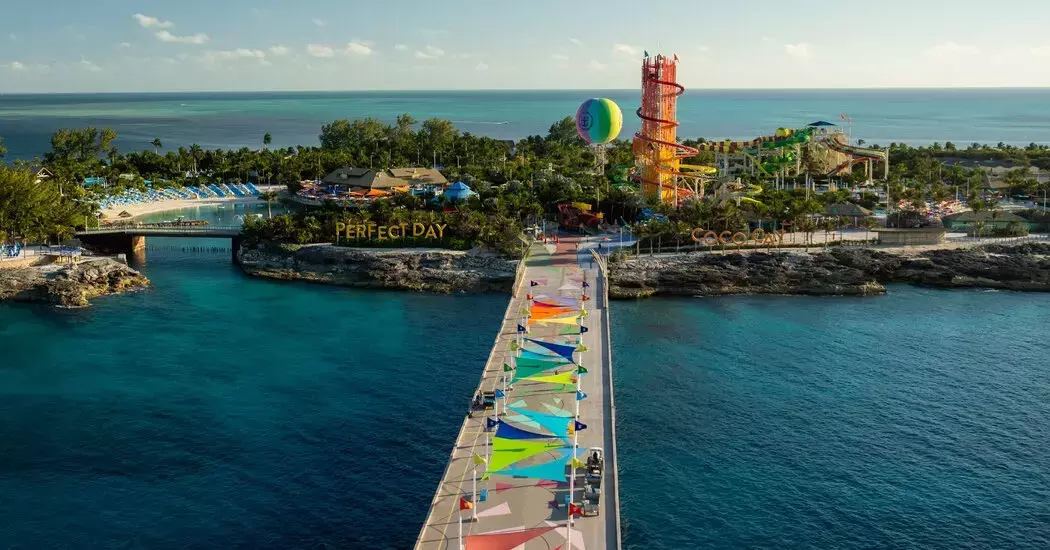
On the western end of Paradise Island in the Bahamas, a transformation is underway. Once an area known for its luxurious mansions, this 17-acre expanse is now being developed into a vibrant beach club by Royal Caribbean cruise line. This ambitious project aims to enhance land-based offerings for cruise passengers and visitors alike. With an estimated investment of $165 million, the new beach club will feature three swimming pools, the world’s largest swim-up bar, and various themed beach zones. The development comes on the heels of the success of CocoCay, Royal Caribbean’s private island renowned for its thrilling waterpark with 14 slides.
A Glimpse Into Royal Caribbean's Latest Venture
In a stunning location opposite the lively Nassau Bahamas Cruise Terminal, where multiple ships often dock simultaneously, lies a tranquil paradise boasting miles of pristine white-sand beaches and shimmering turquoise waters. Royal Caribbean has acquired this prime real estate to create an unforgettable beach experience set to open in December. Under the vision of Jay Schneider, the company’s chief product innovation officer, the beach club will evoke the charm of traditional Bahamian culture through local art, music, and cuisine, while still offering familiar American comforts.
This initiative aligns with a growing trend among cruise lines responding to record-breaking demand and the continuous introduction of megaships. Other companies like Carnival are also investing in similar projects, such as Celebration Key on Grand Bahama Island, which is scheduled to open in July. Meanwhile, Royal Caribbean plans to expand further with two additional beach destinations in Mexico, slated for openings in 2026 and 2027.
Through meticulous planning and attention to detail, Royal Caribbean aims to provide guests with an authentic taste of Bahamian life combined with modern amenities, making it a must-visit destination for travelers seeking both relaxation and adventure.
From a journalistic perspective, this development highlights the evolving landscape of cruise tourism. By integrating cultural elements with state-of-the-art facilities, Royal Caribbean sets a benchmark for others in the industry. It underscores how businesses can successfully blend tradition with innovation, enhancing customer experiences without compromising authenticity. For readers, it serves as a reminder of the importance of preserving local heritage even as globalization continues to shape travel trends worldwide.
