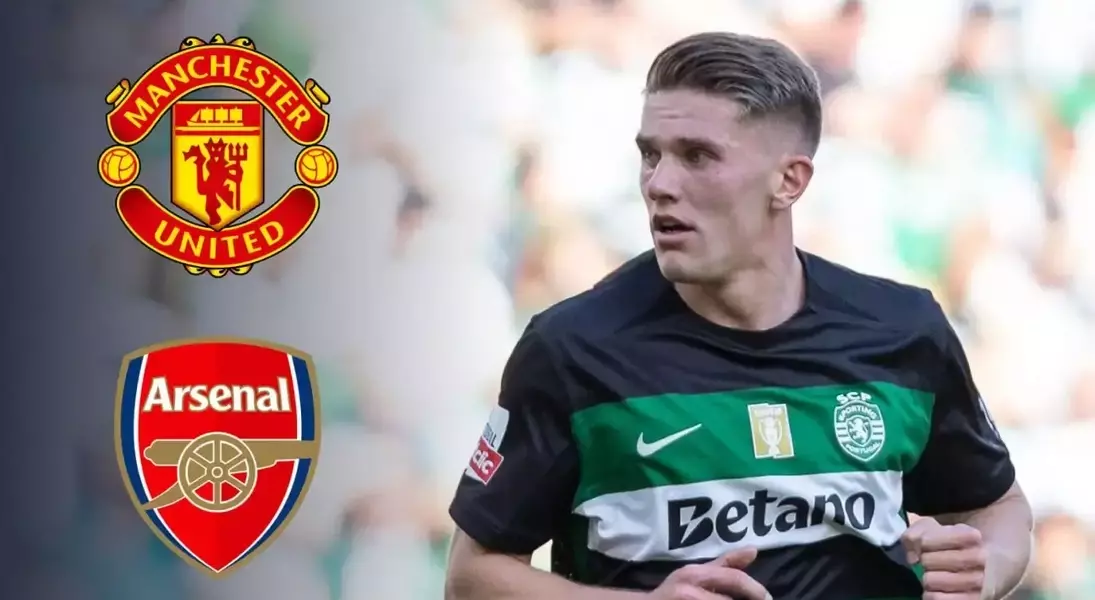
Fabrizio Romano, a respected voice in the football transfer market, has shed light on the ongoing speculation surrounding Viktor Gyokeres' future. Contradicting recent reports, Romano asserts that Manchester United's involvement in the pursuit of the Sporting CP forward is not as advanced as some have suggested. Meanwhile, Gyokeres himself appears to favor a move to Arsenal, having already reached a personal agreement with the London club. This development comes as Manchester United continues to strengthen its attacking options, having recently acquired Bryan Mbeumo and Matheus Cunha, and with other prominent strikers still under consideration.
Gyokeres' Preferred Destination and United's Stance
Fabrizio Romano has addressed the swirling rumors regarding Viktor Gyokeres' potential transfer, clarifying that despite media speculation, there is no official offer or direct negotiations between Manchester United and Sporting CP for the player. This contrasts sharply with recent assertions from some Portuguese sources that placed United at the forefront of the race. Romano's insight indicates that while intermediaries may have floated the idea of United's interest, the club has not formally engaged in talks. He unequivocally states that Gyokeres' clear preference is a move to Arsenal, a sentiment reinforced by the fact that the player has already reached a personal agreement with the Gunners, indicating a strong desire to join their project.
This revelation from Romano is significant, as it dispels the notion of Manchester United being the leading contender for Gyokeres' signature. While United has been active in the transfer market, securing Bryan Mbeumo from Brentford and Matheus Cunha from Wolves, their focus for a top-tier striker remains. The club is actively exploring options, with names like Chelsea's Nicolas Jackson and Benjamin Sesko reportedly on their radar. However, as Romano points out, any concrete moves for these players depend on internal club decisions, particularly regarding potential player departures such as Marcus Rashford, Jadon Sancho, and Antony. The transfer landscape is dynamic, and while United seeks to bolster their attack, Gyokeres' allegiance seemingly lies with Arsenal.
United's Broader Striker Search
Manchester United's pursuit of a new striker is a multifaceted endeavor, extending beyond the Viktor Gyokeres saga. The club, having already secured key attacking talents like Bryan Mbeumo and Matheus Cunha, is still actively seeking to add another significant forward to their ranks. This sustained interest in offensive reinforcements highlights United's strategic intent to fortify their squad, ensuring a robust and versatile attacking force for the upcoming season. The club's transfer strategists are meticulously evaluating various profiles, recognizing the critical role a prolific goal-scorer plays in achieving their ambitions. This proactive approach underscores their commitment to a comprehensive squad overhaul, aiming to address any remaining gaps in their attacking arsenal.
In their ongoing search for a premier striker, Manchester United has reportedly considered several prominent names in the market. Beyond the widely discussed interest in Gyokeres, the club has been linked with Chelsea's Nicolas Jackson, whose situation at Stamford Bridge suggests a potential availability. Additionally, Benjamin Sesko is another forward who has garnered attention from the Old Trafford hierarchy. These considerations indicate a broad and thorough scouting process, as United aims to identify the ideal candidate to complement their existing attacking talent. The ultimate decision on which striker to pursue will likely be influenced by various factors, including player availability, financial considerations, and the alignment with the club's evolving tactical vision. Furthermore, potential outgoing transfers, particularly involving players like Marcus Rashford, Jadon Sancho, and Antony, could significantly impact United's transfer budget and strategic direction for incoming forwards, making their overall transfer activity a complex and interconnected process.
