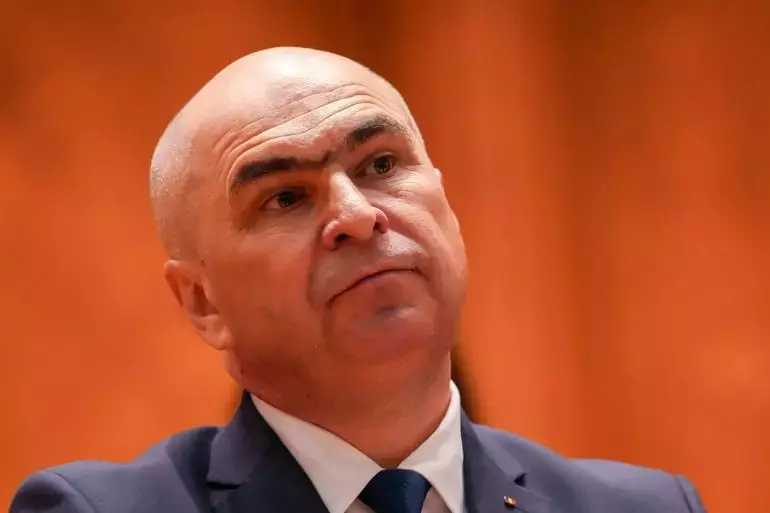
The political landscape of Romania recently experienced a significant shift with the collapse of its pro-European coalition government, led by Prime Minister Ilie Bolojan. This event, triggered by a vote of no-confidence, has sent ripples through the country's financial markets and raised questions about its economic stability and future political direction. The underlying tensions between coalition partners, compounded by austerity measures and the rising influence of far-right factions, ultimately led to this dramatic outcome.
Romania's Political Earthquake: Coalition Crumbles, Fiscal Future Uncertain
The Fall of the Pro-European Coalition: A Vote of No Confidence
The pro-European government in Romania recently faced a critical challenge, culminating in a vote of no-confidence that led to the ousting of Prime Minister Ilie Bolojan's administration. This pivotal parliamentary decision has cast a shadow of uncertainty over the nation's financial future, with widespread apprehension regarding a potential fiscal crisis. The political upheaval reflects deep-seated disagreements and shifting alliances within the Romanian political spectrum.
The Architects of Change: Opposition Forces Unite
The motion that ultimately brought down the government was a joint initiative spearheaded by the left-wing Social Democratic Party (PSD), which had previously exited the ruling coalition, and the far-right Alliance for the Unity of Romanians (AUR). This unlikely alliance demonstrated a shared determination to challenge the existing government, despite their divergent ideologies. Notably, members from Bolojan’s center-right National Liberal Party (PNL) and their coalition allies chose not to participate in the decisive vote, highlighting the deep divisions within the political establishment.
Economic Repercussions: Markets on Edge
The political instability has triggered significant concern within financial circles. While immediate snap elections appear improbable, market observers fear that the ongoing turbulence could undermine Bucharest's resolve to address the European Union's largest budget deficit. The national currency, the Leu, experienced a notable decline against the euro, plummeting to unprecedented lows just before the no-confidence vote, underscoring the immediate economic fallout.
A Brief Stint in Power: Ten Months of Governance
The former coalition government had been in office for merely ten months, formed with the explicit aim of countering the growing influence of far-right movements in the aftermath of a series of contentious elections. During its tenure, the administration had made strides in reducing the national deficit, successfully averting a downgrade in the country’s credit rating. However, continuous friction with the Social Democrats, largely due to the impact of austerity measures on their voter base and patronage networks, ultimately contributed to the coalition's demise.
A Call for Clarity: Bolojan's Plea for a Forward Plan
Before the vote, Prime Minister Bolojan condemned the no-confidence motion as "cynical and manufactured," questioning the opposition's vision for the country's governance. He emphasized his commitment to making difficult, yet necessary, decisions for Romania, despite the public backlash. He challenged his adversaries to present a viable plan for the country's direction post-vote, highlighting the critical need for a clear strategy in uncertain times.
The Path Forward: Presidential Role and Coalition Rebuilding
Following the government's collapse, centrist President Nicusor Dan is expected to initiate discussions with various political parties to explore options for forming a new government. This could involve reconstituting the pro-EU coalition under a different leader from Bolojan’s Liberal party or appointing a technocrat to lead. The Social Democrats have indicated their willingness to rejoin a pro-EU coalition, provided Bolojan is not at the helm. However, Bolojan’s party has, thus far, resisted renewed collaboration with the Social Democrats, though internal discussions about reconciliation are ongoing.
Political Maneuvering: Accusations of "Political Theatre"
Dan Motreanu, the Secretary-General of the PNL, openly criticized the PSD and AUR for what he termed "political theatre," arguing that the parties responsible for overthrowing the government now bear the responsibility of presenting a credible alternative. He warned of the real economic costs associated with political chaos. Despite this, some Liberal members acknowledge the necessity of maintaining flexibility in their political options. Bolojan will continue in an interim capacity with restricted authority until a new government receives parliamentary approval, with the next parliamentary elections not scheduled until 2028.
Fiscal Imperatives: EU Funds and Deficit Reduction
Romania faces a pressing need to continue its fiscal consolidation efforts and implement essential reforms to access approximately 10 billion euros ($11.7 billion) in EU recovery and resilience funds, with a crucial deadline approaching in August. The nation aims to significantly reduce its budget deficit from over 9 percent in 2024 to an anticipated 6.2 percent of economic output this year, a critical endeavor for long-term stability and growth.
