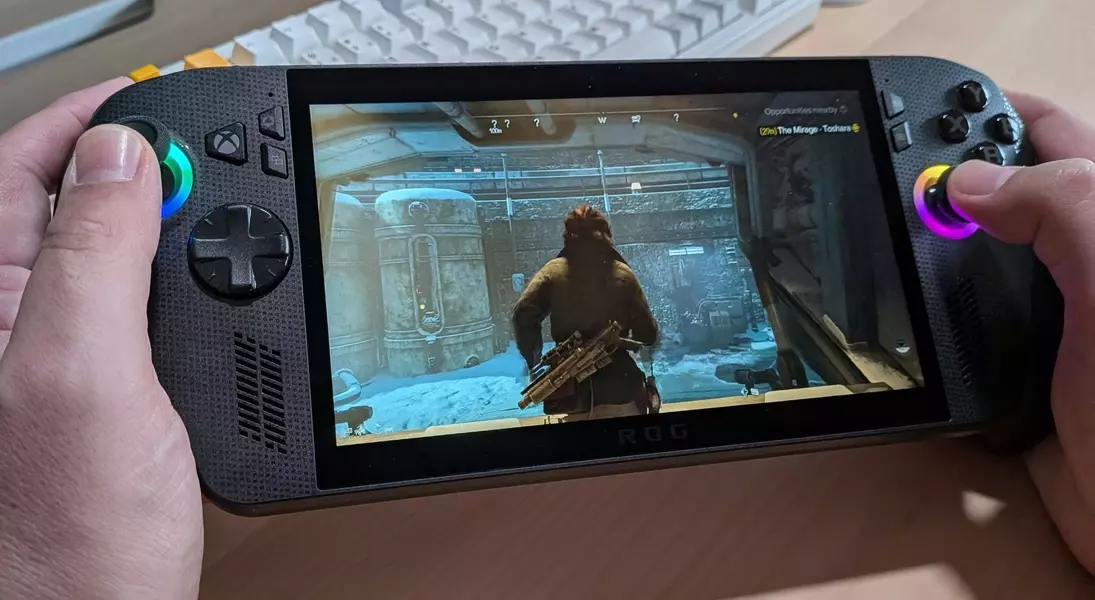
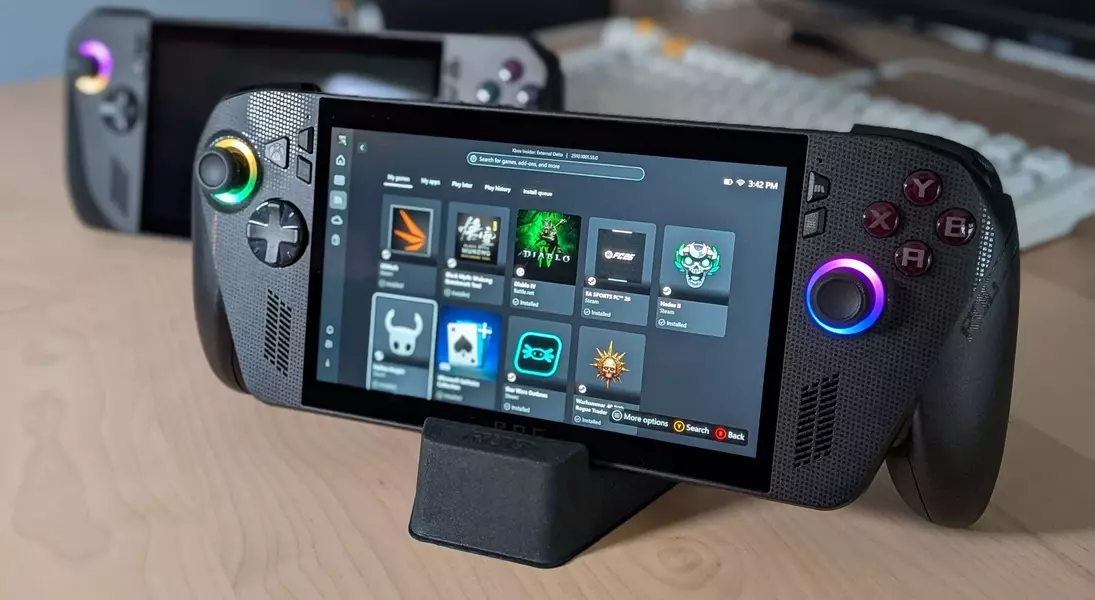
Handheld gaming PCs predominantly rely on AMD processors for graphics. These devices usually utilize FSR upscaling to enhance frame rates. However, a recent system update introduces Microsoft's innovative Auto SR technology for the Asus ROG Ally X, which leverages the processor's neural processing unit (NPU) for upscaling. This marks a significant development as NPUs, often underutilized, find a practical application in boosting gaming performance.
ROG Ally X Embraces NPU for Enhanced Visuals in Docked Mode
In a groundbreaking move, the Asus ROG Ally X, following its latest software update from Microsoft, now provides users with the option to engage Auto SR Preview. This cutting-edge upscaling solution differentiates itself by operating on the integrated NPU of the AMD Ryzen Z2 Extreme processor, rather than the GPU. This strategic offloading of super-resolution processing to the NPU effectively minimizes the performance overhead typically associated with GPU-based upscaling methods.
Microsoft's technical explanation highlights the benefit of NPU utilization: traditional GPU-based super-resolution techniques are constrained by tight frame time budgets, often limiting their complexity and visual fidelity to maintain acceptable frame rates. In contrast, Auto SR, running on the NPU, benefits from an extended processing window, allowing for more sophisticated models without impeding frame per second (FPS) delivery. This capability is particularly advantageous for devices like the ROG Ally X, where maintaining high FPS alongside superior visual quality is paramount.
While Auto SR represents a significant advancement, Microsoft clarifies that game-integrated super-resolution remains the preferred choice when available, as it leverages detailed texture data provided by the game engine for optimal results. Auto SR is positioned as a powerful alternative for scenarios where native game support for upscaling is absent or when hardware limitations prevent simultaneous high quality and frame rates.
It is important to note that the current iteration of Auto SR functions exclusively when the ROG Ally X is connected to a docking station and an external display. This restriction suggests that the NPU's processing demands, when combined with the CPU and GPU, may exceed the power budget suitable for untethered, portable gameplay. The implementation also requires users to participate in the Xbox Insider program, undertake a series of Windows updates, and install specific Auto SR packages, indicating a somewhat involved setup process for early adopters.
Looking ahead, it is anticipated that Auto SR will eventually be streamlined for easier access and broader compatibility across various devices, including future laptops and desktop PCs equipped with Intel Core Ultra chips. This expansion could unlock the full potential of NPUs, offering a dedicated resource for demanding upscaling tasks and freeing up graphics cards to focus on core rendering responsibilities.
The integration of NPU-powered Auto SR into the ROG Ally X underscores an evolving landscape in handheld gaming and PC hardware. It showcases the potential of dedicated AI accelerators to enhance performance in ways that conventional GPU-centric approaches cannot. While currently limited to docked use, this technology hints at a future where more efficient and visually stunning gaming experiences are achievable across a wider range of devices, particularly as NPUs become more prevalent and their software ecosystems mature. The shift towards leveraging specialized hardware for specific computational tasks promises a new era of optimized performance for PC gaming.
