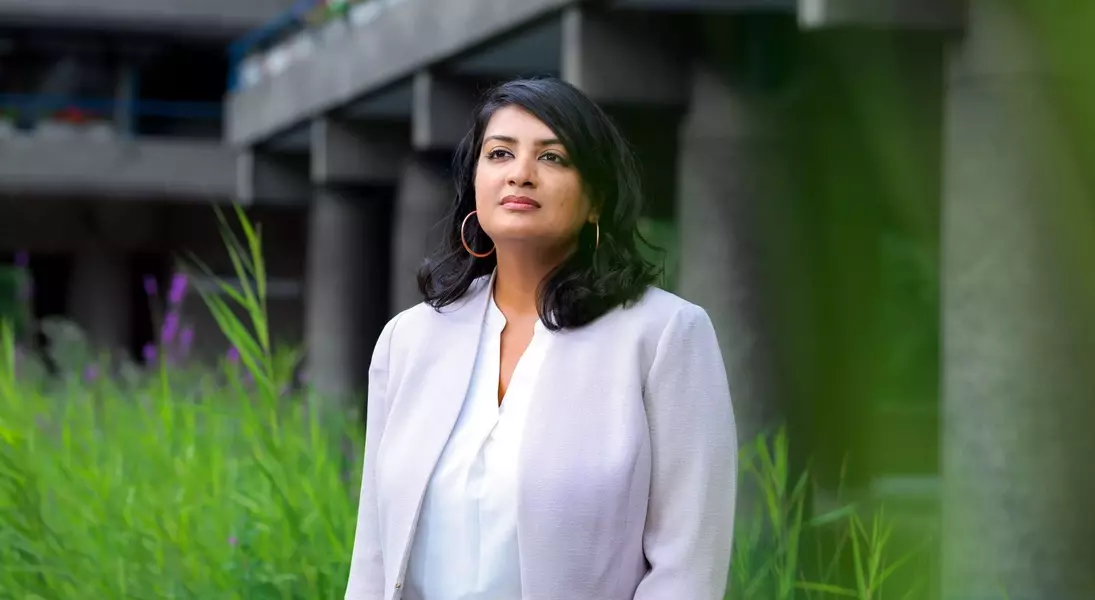
Dr. Sneha Goenka has developed a revolutionary system for rapid genetic diagnosis, dramatically cutting down the time it takes to identify genetic conditions in critically ill patients, particularly children. Her innovative approach, which can provide a diagnosis in less than eight hours, is a significant leap forward from the typical seven-week waiting period. This expedited process is vital for timely and effective treatment, potentially saving countless lives. Goenka's work integrates cutting-edge software computations and hardware architectures, making genome sequencing not just a research tool but an immediate and impactful clinical application. Her efforts are now focused on making this life-saving technology accessible to patients globally through a new venture, demonstrating her commitment to real-world healthcare solutions.
Goenka's pioneering work in rapid genome sequencing began five years ago with her colleagues. Their objective was to create a streamlined pipeline for swift genetic diagnoses. Her contributions to the software and hardware components were instrumental in accelerating every phase of the process. As Jeroen de Ridder, a professor at UMC Utrecht and developer of an ultrafast sequencing tool for cancer, notes, Goenka's advancements have underscored the immediate practical implications of genome sequencing for patient care, moving it beyond the realm of future research.
Hailing from Mumbai, India, Goenka’s academic journey was marked by determination. Despite societal expectations and familial challenges concerning women's education, she pursued her studies rigorously, securing admission to the highly competitive Indian Institute of Technology Bombay. There, she excelled in developing computer architecture systems designed to enhance computational speed. Her motivation to apply these skills to medicine stemmed from a deep desire for tangible impact, influenced by her family's struggle with uncertainty following her brother's premature birth.
During her PhD in electrical engineering at Stanford, Goenka concentrated on evolutionary and clinical genomics. A pivotal moment arrived when a senior colleague, Euan Ashley, posed a challenge: determine the fastest possible genetic diagnosis given unlimited resources. This inquiry led her to conceptualize a real-time system for streaming sequencing data, analyzing it concurrently with its generation—similar to streaming a movie rather than downloading it. This concept was born from the realization that while extracting DNA and reading it were relatively quick processes, the subsequent data processing to identify mutations consumed a substantial amount of time, often extending the entire diagnostic process to weeks.
To achieve real-time analysis, Goenka devised a cloud computing architecture designed to harness greater processing power. Her initial hurdle involved accelerating the upload speed of raw data by optimizing communication between the sequencer and the cloud, thereby eliminating redundant data exchange. She precisely calculated the necessary communication channels and developed algorithms for their efficient reuse. The subsequent challenge was "base calling," converting raw signals into the nucleotide bases (A, C, T, G) that form DNA. Instead of relying on a centralized, inefficient node for orchestration, Goenka programmed software to automatically distribute data streams directly from the sequencer to dedicated cloud nodes. For mutation identification, sequences were aligned against a reference genome. She wrote a custom program to initiate alignment immediately after base calling for one batch, concurrently starting base calling for the next, ensuring maximal computational resource utilization. These collective enhancements reduced the total genome analysis time from approximately 20 hours to a mere 1.5 hours. The final stages, involving genetic counselors and physicians in filtering critical mutations and specialist curation, add up to three hours. This refined technology was nearly ready when its first critical test emerged.
In 2021, Matthew, a 13-year-old patient, arrived at Stanford's children's hospital in critical condition, suffering from breathing difficulties and heart failure. Doctors urgently needed to ascertain whether his heart inflammation was viral or genetic, the latter potentially necessitating a transplant. With the transplant committee making decisions on Fridays, time was of the essence. Goenka, monitoring the sequencing computations from Mumbai through the night, vividly recalls how the project transformed from a pursuit of speed into a race to save a life. The results pinpointed a genetic mutation as the cause of Matthew's condition, leading to his placement on the transplant list the following day. Three weeks later, he received a new heart and is now thriving. This case underscores the profound impact of Goenka's technology, which has since been successfully applied to 26 patients, directly influencing medical care in Stanford's intensive care units.
Presently, Goenka is aiming for an even broader reach, establishing a startup to commercialize her technology and ensure its widespread availability. She has continued to refine the computational pipeline, reducing the diagnosis time to roughly six hours. The urgent demand for this platform is evident, with laboratory directors and neonatologists expressing an immediate need. Furthermore, Goenka is developing software to enhance the technology’s inclusivity. Recognizing that the current reference genome is predominantly based on individuals of European descent, she plans to integrate data from the Human Pangenome Project—an international initiative to create more diverse reference genomes. This will enable her team to personalize filters and identify mutations more prevalent in specific patient populations, thereby ensuring equitable and effective healthcare globally. Her family, witnessing the tangible impact of her work, now takes immense pride in her educational and career achievements.
