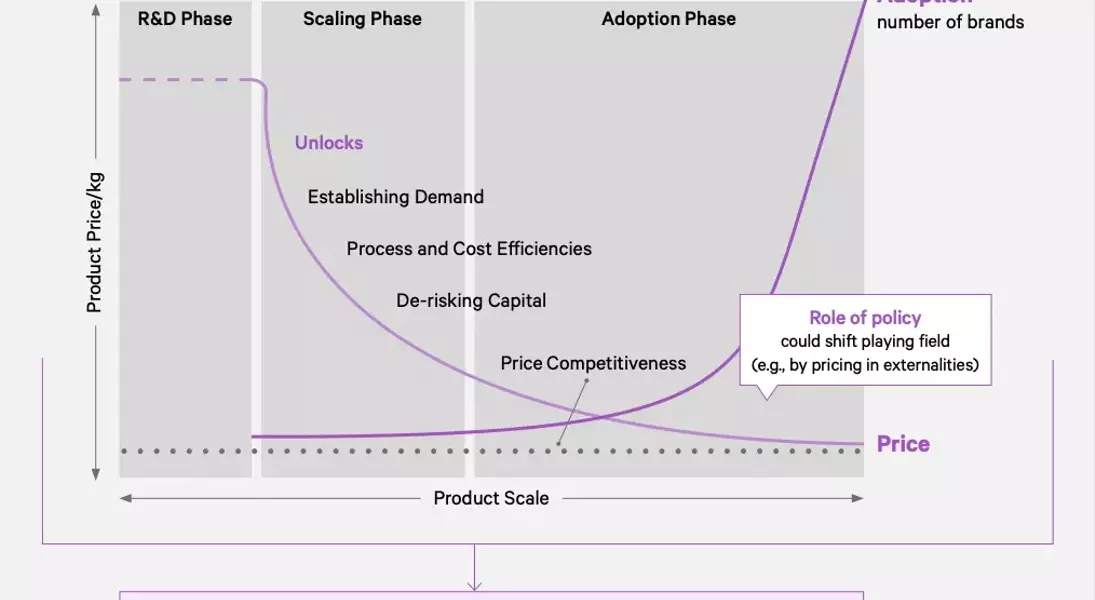

A recent report from Boston Consulting Group (BCG), in collaboration with Fashion for Good, highlights the pressing need for luxury and mass-market fashion brands to accelerate the adoption of next-generation materials. By 2030, these innovative fibers are projected to constitute only 8% of the total fiber market unless significant investment is made. The report underscores the importance of scaling sustainable alternatives to meet growing demand while addressing challenges such as supply chain resilience, regulatory pressures, and evolving consumer expectations.
The fashion industry faces a critical juncture where transitioning to next-generation materials is not just an opportunity but a business necessity. These materials, defined as novel fibers with improved environmental and social outcomes compared to conventional options, could drive both profitability and sustainability. They offer solutions to challenges like climate-induced raw material shortages and geopolitical disruptions that negatively impact brand supplies.
Despite the potential benefits, most brands remain unprepared for this transition. According to BCG, over 80% lack comprehensive targets for sourcing key materials such as cotton, polyester, nylon, man-made cellulosic fibers (MMCFs), leather, and wool. This lack of readiness highlights the urgent need for action. Experts suggest that securing supply through strategic planning, investing in research and development, and implementing financing mechanisms can help offset cost premiums.
Externally, collaboration across the industry can play a pivotal role in driving scale. Shared supply chains, pooled procurement, and joint investments in innovators of next-gen materials can foster widespread adoption. Brands embracing these materials early can enhance their competitive positioning in an increasingly sustainability-focused market. Policies such as France's Extended Producer Responsibility (EPR) scheme and the EU's push for greater recycled content in textiles further emphasize the necessity of transitioning to sustainable inputs.
As the fashion industry moves forward, it must recognize that adopting next-generation materials is both a challenge and an opportunity. Brands that integrate these materials into their core strategies now will lead the next era of fashion, ensuring relevance in a changing market while contributing to environmental and social well-being. Without swift action, brands risk higher costs and compliance burdens in the future, underscoring the urgency of this pivotal moment for material transitions.
