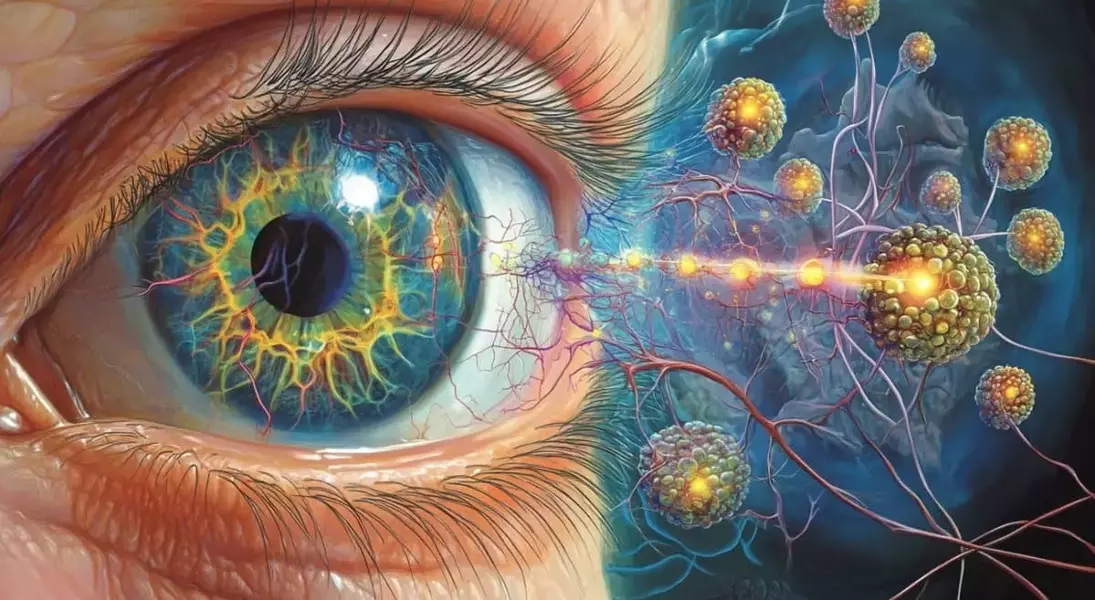
In a groundbreaking study, scientists at the University of Oklahoma are unraveling the complexities of age-related macular degeneration (AMD), a condition that affects nearly half of individuals over 80. The research focuses on understanding how retinal cells utilize microRNA and extracellular vesicles to communicate, with the aim of developing innovative treatments to slow AMD's progression. By examining the role of microRNA-204 in regulating lipid metabolism within retinal immune cells, researchers hope to engineer extracellular vesicles capable of delivering therapeutic agents to rejuvenate aging cells.
Investigating the Role of MicroRNA-204 in Retinal Health
At the heart of this investigation lies microRNA-204, a molecule crucial for maintaining lipid balance in retinal microglia. In the vibrant landscape of scientific discovery, Dr. Jiyang Cai and his team have identified that when microRNA-204 loses its regulatory function, it triggers inflammation that accelerates AMD. This breakthrough was achieved through meticulous mapping of cellular interactions in laboratory mice. During their experiments, the researchers observed that weakened retinal pigment epithelium cells (RPEs) send signals via extracellular vesicles containing microRNA to microglia, which play a pivotal role in immune response. These vesicles, akin to microscopic delivery systems, carry essential information that could potentially be engineered to combat AMD. Through this cutting-edge research, the team aims to understand how these vesicles can be programmed to rejuvenate aging retinal microglia, offering a promising alternative to current treatments that are only effective in 10-15% of patients.
From a journalistic perspective, this research not only sheds light on the intricate mechanisms of AMD but also highlights the potential for personalized medicine. By focusing on the interaction between microRNAs and extracellular vesicles, scientists may soon provide tailored therapies that significantly improve outcomes for those affected by AMD. This study underscores the importance of exploring novel biological pathways to address unmet medical needs, reminding us that innovation often arises from understanding nature's smallest processes. While complete prevention of AMD remains elusive, slowing its progression could transform it from a debilitating condition into a manageable inconvenience, offering hope to millions worldwide.
