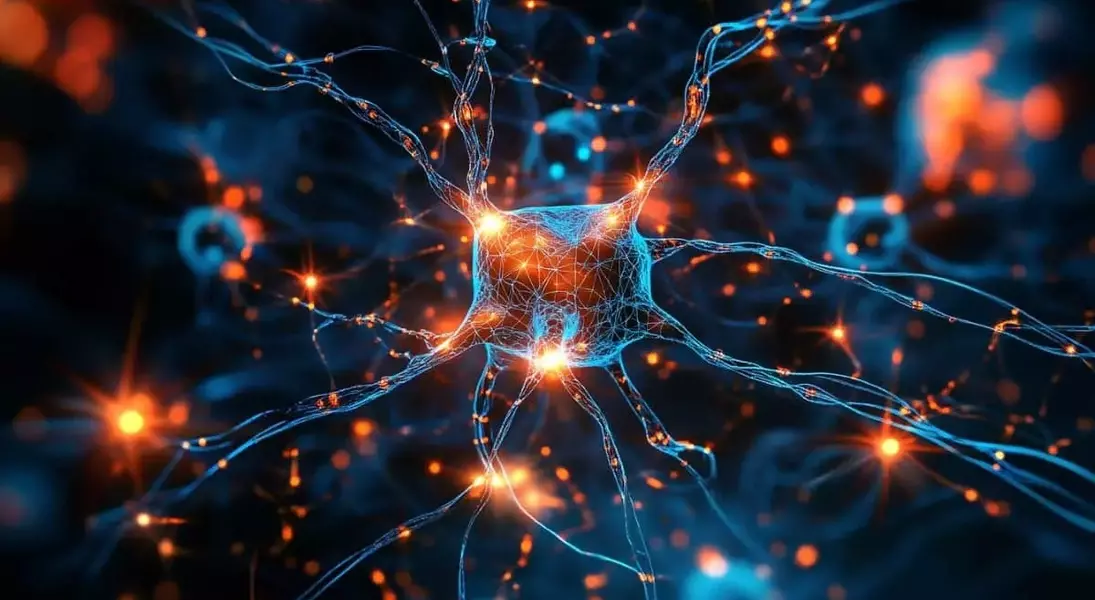
A groundbreaking advancement in artificial intelligence has emerged with the development of infomorphic neurons, a novel type of artificial neuron capable of self-organizing and independent learning. Unlike traditional artificial neural networks that rely on centralized control for learning, these new units draw inspiration from the decentralized nature of biological brains. Modeled after pyramidal cells found in the cerebral cortex, infomorphic neurons adapt by processing local signals and determining their role within the network based on an innovative information-theoretic framework. This approach not only improves machine learning efficiency but also provides deeper insights into biological neural processes.
Inspired by the structure and function of pyramidal cells in the brain's cortex, researchers have created artificial neurons that mimic biological mechanisms for learning and adaptation. These infomorphic neurons operate without external guidance, making decisions about collaboration or specialization based on interactions with neighboring units. The system relies on a unique theoretical measure to assess whether a neuron should focus on redundancy, synergy with neighbors, or individual specialization. This capability allows the neurons to autonomously determine their contribution to the overall network task, enhancing both flexibility and transparency in machine learning models.
The creation of these advanced artificial neurons marks a significant leap forward in understanding how learning occurs at both biological and artificial levels. Each neuron independently evaluates incoming stimuli and adjusts its behavior accordingly, fostering a more dynamic and efficient network structure. By applying principles derived from Partial Information Decomposition (PID), scientists have crafted a parametric learning rule that enables infomorphic neurons to excel in various tasks, including supervised, unsupervised, and memory-based learning scenarios.
This research not only paves the way for more interpretable and adaptable machine learning frameworks but also sheds light on the complexities of learning in biological systems. Marcel Graetz and Valentin Neuhaus, key figures in this project, emphasize the clarity and adaptability of the newly developed neurons. As infomorphic networks continue to evolve, they promise to bridge the gap between artificial and natural intelligence, offering solutions that are both powerful and comprehensible.
Through the introduction of infomorphic neurons, researchers have achieved a milestone in creating artificial systems that mirror the decentralized learning strategies of biological brains. By enabling each unit to independently decide its role within the network, these innovations enhance the overall performance and interpretability of machine learning models. This development not only propels the field of artificial intelligence forward but also deepens our understanding of how complex neural structures process information and learn over time.
