In a groundbreaking development, researchers from Cornell University have introduced RHyME, an advanced artificial intelligence framework designed to enable robots to learn intricate tasks by observing just one human demonstration video. Traditional robotic systems often struggle with unpredictable scenarios and require extensive training data, but RHyME allows robots to adapt effectively by leveraging prior video knowledge. This innovation bridges the gap between human and robotic motion, facilitating more flexible and efficient learning through imitation. With only 30 minutes of robot data, RHyME-equipped robots have demonstrated over 50% higher task success rates compared to previous approaches.
A New Era in Robotic Learning: The Story Behind RHyME
In the vibrant world of robotics research, a team at Cornell University has unveiled a revolutionary system called RHyME (Retrieval for Hybrid Imitation under Mismatched Execution). This sophisticated framework empowers robots to learn complex tasks by watching a single instructional video. Historically, robots have required meticulous, step-by-step guidance to perform basic tasks and tend to falter when faced with unexpected situations. However, RHyME addresses this limitation by enabling robots to draw on their memory banks and connect the dots during task execution, even if they've only viewed the task once.
According to Kushal Kedia, a doctoral student involved in the project, collecting vast amounts of data on robots performing various tasks has been a major hurdle. Humans, on the other hand, excel at learning by observing others. To emulate this capability, the team developed RHyME, which significantly reduces the time, energy, and resources needed for robotic training. At its core, RHyME functions like a translator, converting human actions into robotic equivalents. This process involves overcoming significant challenges, such as the fluidity of human movements and the need for extensive video demonstrations performed slowly and flawlessly.
RHyME achieves its remarkable results by automatically pairing human and robot trajectories using sequence-level optimal transport cost functions. It synthesizes semantically equivalent human videos by retrieving and composing short-horizon clips, thus eliminating the need for paired data. In laboratory settings, robots trained with RHyME have shown impressive improvements in task success, marking a substantial leap forward in the development of smarter, more capable robotic assistants.
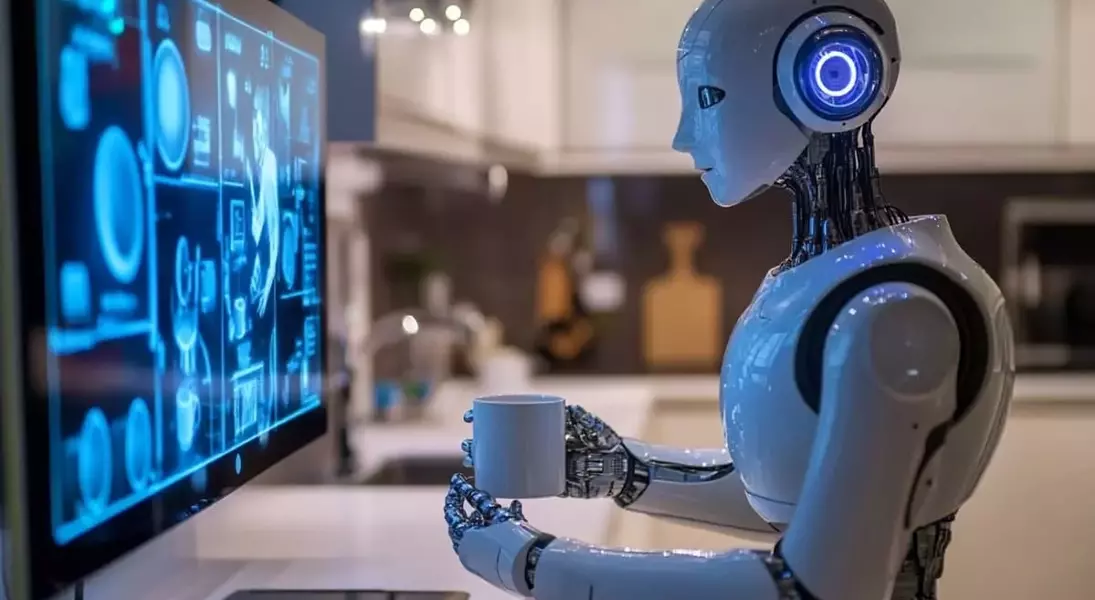
For instance, a RHyME-equipped robot shown a video of a human fetching a mug and placing it in a sink will analyze its video database to identify similar actions, such as grasping a cup or lowering a utensil. This capability allows robots to learn multi-step sequences while drastically reducing the amount of training data required.
From a broader perspective, RHyME represents a pivotal advancement in bridging the gap between human and robotic capabilities. By enhancing robots' ability to learn from human demonstrations, it paves the way for more adaptable and versatile robotic systems in the future.
As we reflect on this remarkable achievement, it becomes evident that RHyME not only simplifies the process of robotic training but also opens up new possibilities for real-world applications. The ability of robots to learn efficiently from minimal data heralds a new era in robotics, where machines can seamlessly integrate into our daily lives, assisting with a wide range of tasks. This innovation underscores the importance of interdisciplinary research and highlights the potential of artificial intelligence to transform industries and improve quality of life.
