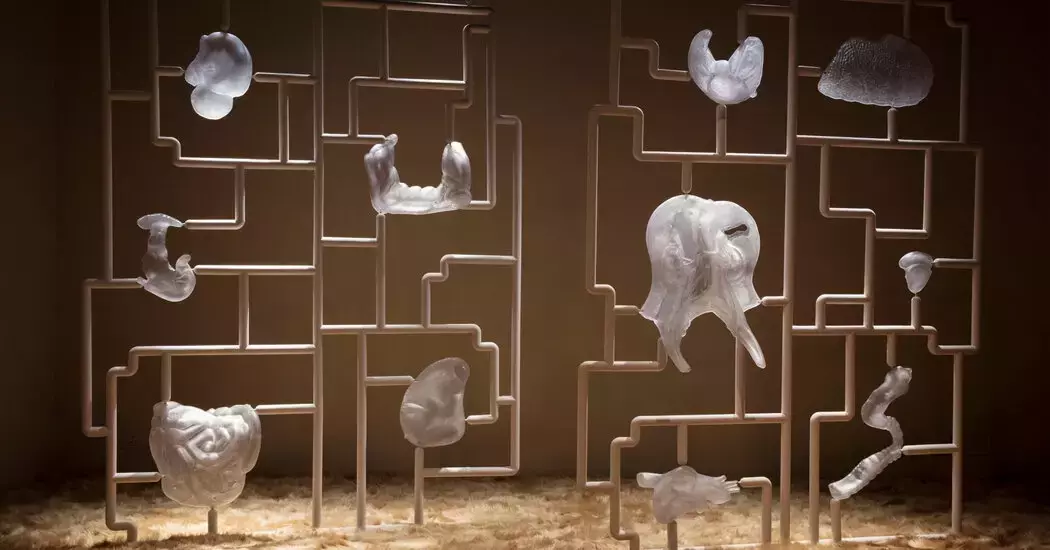
In an era where physicality faces unprecedented scrutiny, artists are reimagining the human form through innovative sculptural expressions. The modern world offers more tools than ever to modify and enhance the body, yet this very abundance has led to heightened vulnerability. Advances in medical technology allow us to regulate internal functions and reconstruct external features, but these achievements coexist with a growing sense of fragility. Social media distortions and global health crises have further complicated our relationship with our bodies, making them seem less controllable and more exposed.
Artists are responding to this paradox by exploring new ways to depict the human form. Curator Lanka Tattersall highlights how contemporary artists view the body not as a fixed entity but as malleable material. “The body is being treated as something that can be shaped and transformed,” she notes, emphasizing the fluidity and adaptability in current artistic practices. This approach challenges traditional notions of bodily coherence and opens up new possibilities for representation. One such artist, Jes Fan, uses unconventional materials like soy-based substances to create sculptures that embody both literal and metaphorical fluidity. His work reflects a philosophy where everything is in transition, nothing remains static.
The evolving perception of the human body is influencing not only art but also broader societal attitudes. As artists like Kayode Ojo incorporate synthetic materials into their creations, they challenge conventional norms and push boundaries. This shift towards viewing the body as a dynamic, ever-changing entity aligns with a growing recognition of diversity and flexibility in human identity. By embracing this perspective, we can foster greater acceptance and appreciation of all forms of existence, promoting a more inclusive and compassionate world.
