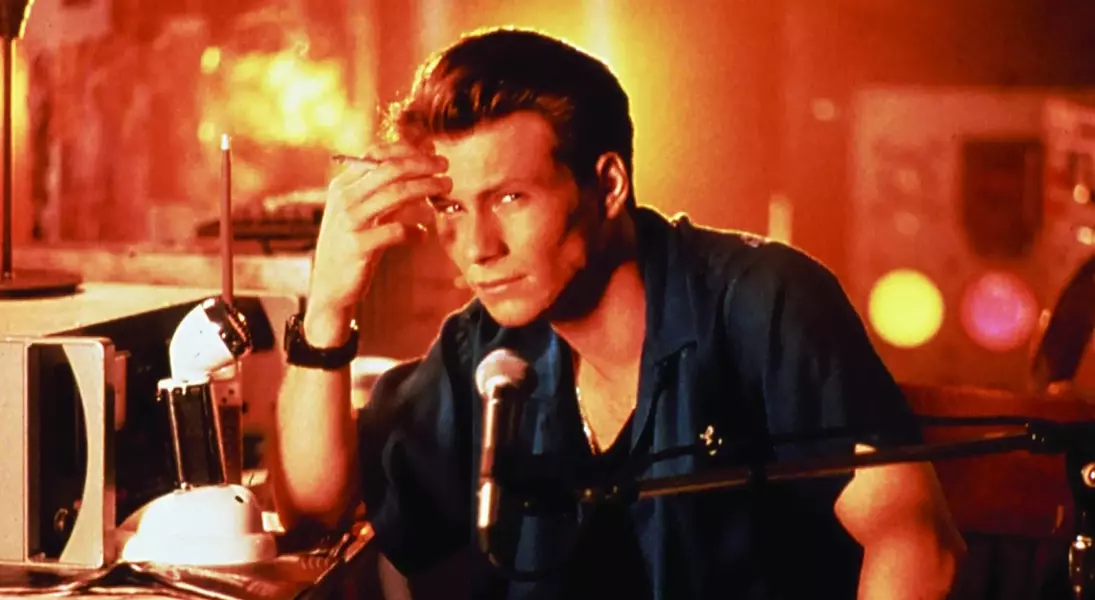
Decades before the digital age ushered in a plethora of podcasts, a cinematic creation dared to explore the raw power of an unfiltered voice reaching out to disaffected youth. The 1990 film, 'Pump Up the Volume,' featuring Christian Slater in a standout role, captured the essence of adolescent rebellion and the search for connection through the unconventional medium of pirate radio. It depicted a quiet high school student's nocturnal transformation into 'Hard Harry,' an enigmatic disc jockey broadcasting candid commentary and alternative music, thereby striking a chord with a generation feeling unheard.
This thought-provoking movie emerged from the creative vision of writer-director Allan Moyle, who adapted it from his own unpublished literary work. Interestingly, the lead role, eventually masterfully embodied by Christian Slater, was initially considered for John Cusack. Slater's performance as the unassuming daytime student who becomes a defiant nighttime provocateur garnered significant praise, solidifying his reputation following his appearance in the cult classic, 'Heathers.' The film's narrative was ahead of its time, presciently highlighting themes of media influence and the desire for authentic self-expression that would later become central to the podcasting phenomenon.
Producer Rupert Harvey, reflecting on the film's genesis, expressed his surprise at its initial greenlight, suggesting that such a project might face greater hurdles in today's landscape. He recalled the extensive post-production efforts required to secure the rights for its impactful soundtrack, which featured prominent artists like the Beastie Boys, Pixies, Ice-T, and Soundgarden. Harvey also noted the necessity of toning down some of the film's more explicit content to achieve an R-rating, particularly referencing a controversial scene where Hard Harry simulates a provocative act on air, which drew considerable attention.
Upon its release on August 22, 1990, 'Pump Up the Volume' received favorable reviews from critics. However, its box office performance was modest, accumulating approximately $11 million, which translates to around $28 million in contemporary value. Despite these financial figures, the film's cultural impact far exceeded its commercial returns. More than a decade later, as podcasting began its ascent, discussions for a potential television series adaptation of 'Pump Up the Volume' took place, complete with a pilot script, though the project ultimately did not materialize.
The enduring resonance of 'Pump Up the Volume' lies in its potent message: providing a platform for the voices of those who feel marginalized. As Harvey aptly articulated, the film spoke to the core experience of adolescence – a period often characterized by a sense of voicelessness and a longing to be understood. This narrative continues to resonate, underscoring the timeless need for individuals to find and amplify their authentic selves, regardless of the technological era.
