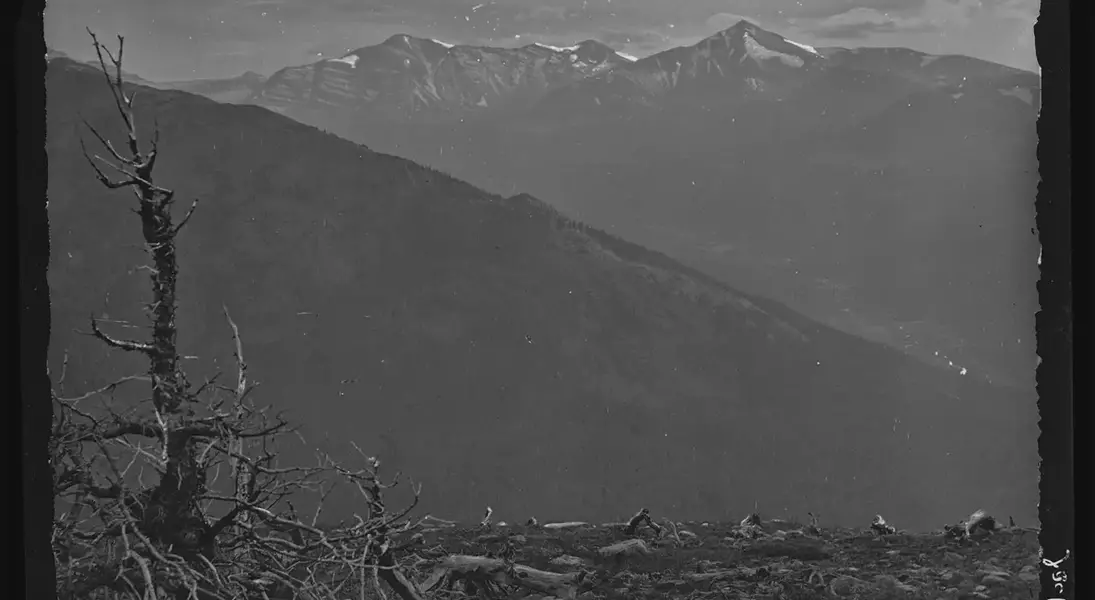
In the heart of Utah’s Uinta Mountains, a group of modern-day explorers embarks on an ambitious journey to retrace the steps of historical photographers. This expedition aims to capture the evolution of the region's ecosystems over more than a century. By recreating photographs taken by William Henry Jackson in 1870, these scientists seek to document and analyze significant environmental transformations. The project involves navigating challenging terrain and unpredictable weather conditions while adhering to the traditional methods used by early photographers. Through this meticulous process, they uncover striking changes in vegetation patterns, tree lines, and glacial retreat, highlighting the profound impact of climate change on high-altitude landscapes.
Early September marks the beginning of a critical mission for Jeff Munroe, a geology professor from Vermont. Alongside a team of adventurers and researchers, he ventures into the Uinta Mountains to replicate a series of photographs captured by William Henry Jackson nearly 150 years ago. Jackson, working under the U.S. Geological Survey, documented the pristine wilderness of Wyoming Territory to support American expansion. Today, Munroe and his team aim to compare these historic images with contemporary ones, revealing how much the environment has altered.
The technique of re-photography is both an art and a science. It requires pinpointing exact locations from vague historical descriptions and overcoming challenges such as changing place names and shifting landscapes. Identifying the precise coordinates of the original camera placements can be particularly tricky, especially in areas prone to rockslides or erosion. Moreover, variations in photographic equipment over time add another layer of complexity. Despite these hurdles, the team remains committed to their goal, following in Jackson’s footsteps without the aid of modern technology like drones.
Munroe first embarked on this re-photography project in 2001, and what he discovered was nothing short of remarkable. Elements once thought to be permanent, such as perpetual snowfields and stable tree lines, had undergone significant changes. Over 131 years, the warming climate had led to visible ecological shifts. Trees now filled open meadows, and lower-altitude species had migrated higher up the mountain slopes. These changes have put immense pressure on unique high alpine areas and the species adapted to them, leaving little room for survival. The stark contrast between past and present images underscores the urgent need for environmental conservation efforts.
This expedition not only highlights the dramatic changes in the Uinta Mountains but also serves as a reminder of the long-term impacts of climate change. By comparing historical and current photographs, scientists gain valuable insights into the pace and extent of environmental alterations. The findings underscore the importance of preserving fragile ecosystems and adapting to the inevitable changes that lie ahead. Through this lens, we can better understand the future challenges facing our natural world.
