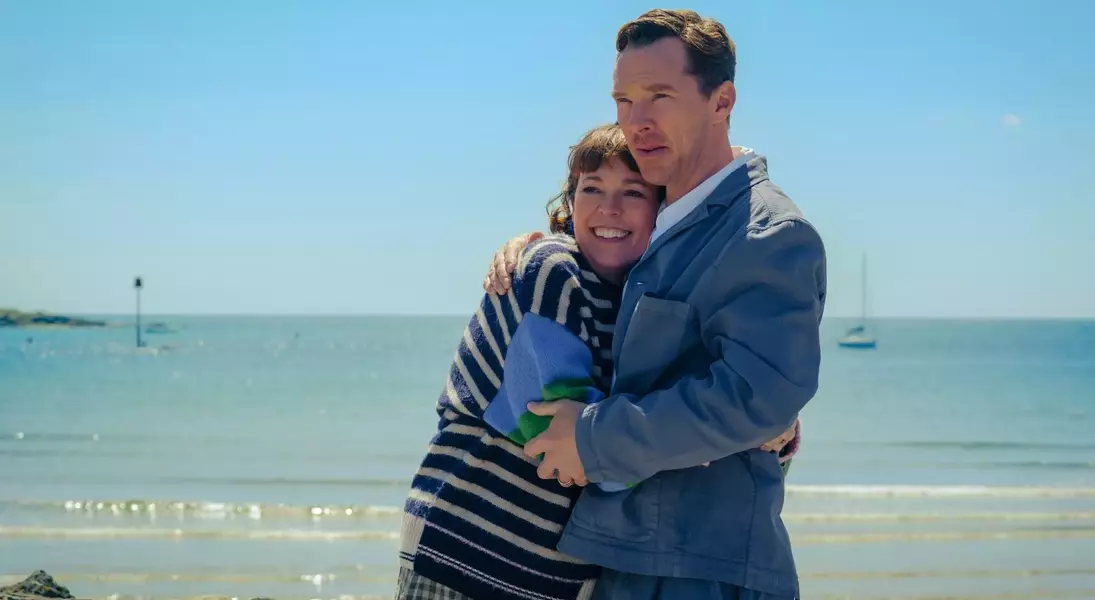
\"The Roses,\" directed by Jay Roach, delivers a contemporary reinterpretation of the enduring saga of marital discord, focusing on a couple's journey from romantic bliss to mutual destruction. While critics note that it doesn't always hit the comedic highs of its 1989 predecessor, the film is uplifted by the brilliantly sharp performances of Benedict Cumberbatch and Olivia Colman. Their on-screen chemistry transforms even the most savage exchanges into captivating moments, making the narrative's occasional missteps forgivable.
Detailing the Cinematic Journey of Matrimonial Mayhem
The cinematic journey of \"The Roses\" commences with a hilariously tense couples therapy session, where Theo and Ivy Rose, portrayed with exquisite acerbity by Benedict Cumberbatch and Olivia Colman, lay bare the poisoned depths of their animosity. This initial scene, marked by the American therapist's overwhelmed reaction and the couple's shared amusement at her surrender, shrewdly highlights the cultural chasm between British wit and American directness. It also subtly reveals the unique, albeit destructive, bond forged by their shared sense of humor. The narrative then gracefully transitions back in time to London, illustrating the nascent stages of Theo, a talented architect, and Ivy, an aspiring chef, discovering their profound connection. Their impulsive decision to relocate to Mendocino, California, years later, underscores a relationship that, despite its deep-seated issues, was once built on an undeniable rapport. In their new Californian life, Ivy's culinary dreams stall while Theo's career soars. However, a sudden, calamitous coastal storm obliterates Theo's latest architectural triumph and his professional standing, just as Ivy's new seafood restaurant, \"We've Got Crabs,\" finds unexpected success. This reversal of fortunes ignites a simmering resentment, as Theo, his self-worth shattered, grapples with a domestic role while Ivy's star ascends. Their once-harmonious partnership begins to fray, exacerbated by an overabundance of underutilized supporting characters. Despite a talented ensemble, including Andy Samberg and Kate McKinnon, these peripheral figures often dilute the film's focus on the central duo. The construction of their new dream home in the picturesque South Devon town of Salcombe, standing in for California, becomes a backdrop for escalating tensions, culminating in a revealing dinner party where the cracks in their marriage become glaringly apparent. Allison Janney's standout performance as Ivy's formidable divorce attorney injects a much-needed jolt of energy, particularly in her interactions with Samberg's character. Ultimately, \"The Roses\" thrives when it zeroes in on the escalating conflict between Theo and Ivy. Their divorce negotiations devolve into a bitter battle for personal and professional possessions, culminating in considerable sabotage and destruction, echoing the destructive spirit of its cinematic predecessor.
\"The Roses\" serves as a potent reminder of the intricate dance between love and animosity within a long-term relationship. It prompts reflection on how external pressures and shifting personal ambitions can erode even the most profound bonds, transforming shared history into a weapon. The film cleverly dissects the gender dynamics at play when traditional roles are upended, challenging viewers to consider the impact of professional success and failure on individual identity and marital harmony. Furthermore, the movie subtly comments on the cultural nuances of communication, particularly the sharp, often brutal, humor that can both bind and break a partnership. It is a compelling exploration of how, even amidst destructive conflict, a couple's deep-seated compatibility can remain disturbingly evident, offering a nuanced perspective on the complexities of human connection.
