

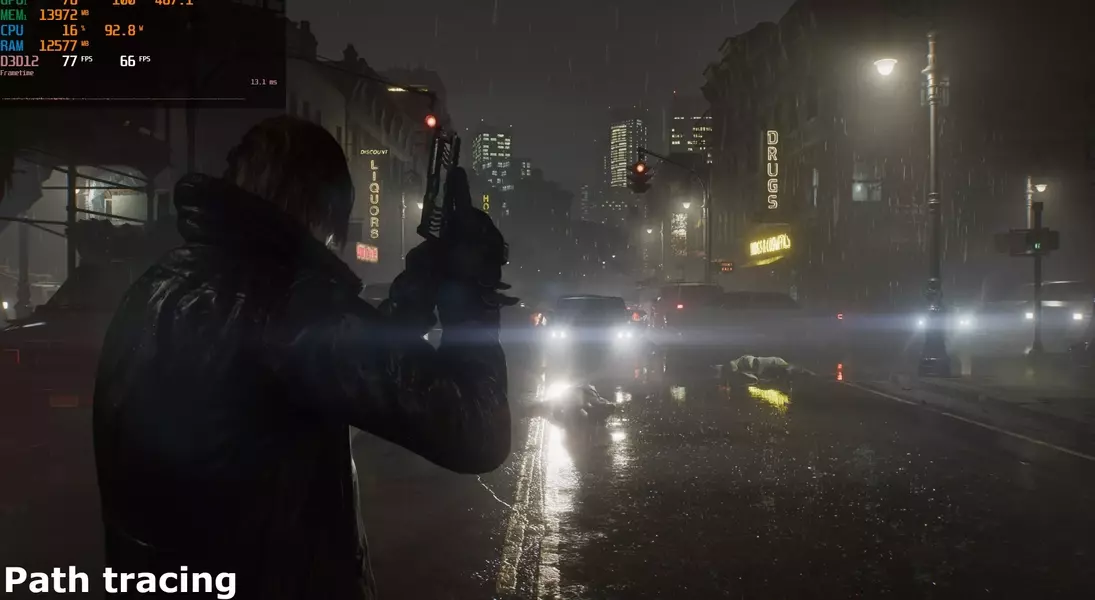
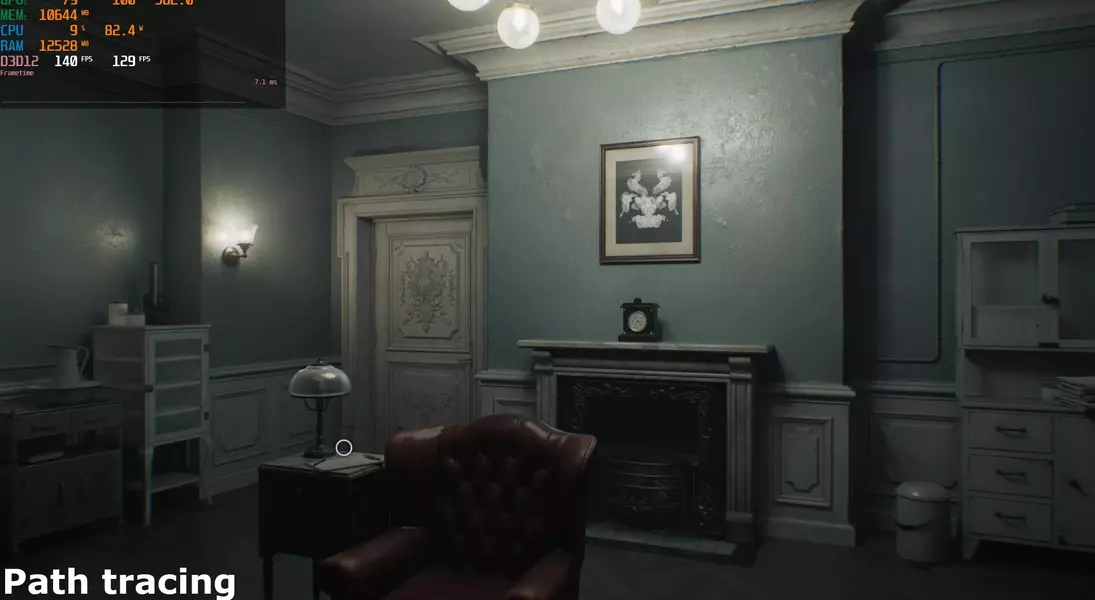
Resident Evil Requiem showcases remarkable visual fidelity and stable performance across a spectrum of PC configurations, leveraging Capcom's robust RE Engine. While the game generally delivers excellent frame rates, the advanced path tracing option, though visually spectacular, imposes a substantial performance cost, especially on less powerful hardware. This comprehensive evaluation explores how the game performs on diverse systems, from compact handheld devices to cutting-edge desktop setups, scrutinizing the impact of various graphical settings, upscaling technologies like FSR and DLSS, and different ray tracing modes. The analysis aims to provide gamers with crucial insights into achieving an optimal balance between visual quality and smooth gameplay, ensuring an immersive experience in the survival horror title.
Capcom’s RE Engine, which debuted with Resident Evil 7: Biohazard, continues to impress with its capabilities in Resident Evil Requiem. Despite some performance issues noted in other RE Engine titles like Dragon's Dogma 2 and Monster Hunter Wilds, Requiem largely maintains the engine's reputation for delivering high-quality graphics and solid performance within the structured environments of the Resident Evil series. The game runs exceptionally well on systems that meet or exceed its modest minimum requirements, offering players a visually rich experience without demanding top-tier hardware for basic play. However, achieving the pinnacle of visual fidelity, particularly with path tracing enabled, necessitates significantly more powerful components, underscoring the trade-offs between graphical grandeur and raw performance. The developers have meticulously crafted the game to ensure a broad accessibility while still providing advanced options for enthusiasts.
Analyzing Performance Across Diverse Hardware
This section provides a detailed breakdown of Resident Evil Requiem's performance on various PC setups, ranging from handheld gaming devices to high-end desktop systems. The assessment covers frame rates, graphical settings, and the efficacy of upscaling technologies like FSR and DLSS. Initial findings reveal that while the game is generally well-optimized, certain configurations present unique challenges and opportunities for enhancement. The goal is to offer a clear picture of what players can expect from their hardware and how to fine-tune settings for the best possible gaming experience, considering both visual quality and smooth operation across different price points and component capabilities.
On handheld gaming PCs, such as the Asus ROG Ally, Resident Evil Requiem struggles to maintain playable frame rates even at the lowest settings and with FSR Balanced upscaling. This limitation stems from the integrated GPU's shader count rather than VRAM, suggesting that while the visuals remain detailed, the raw processing power is insufficient for demanding scenes. Moving to entry-level gaming laptops with discrete GPUs like the GeForce RTX 4050, performance significantly improves. These laptops can handle 1080p with low presets and even normal ray tracing, though VRAM constraints may limit higher quality settings. Frame time inconsistencies, particularly during asset loading, are observed but do not severely detract from the overall experience. Mainstream gaming PCs, equipped with components like a Ryzen 7 5700X3D and RTX 3060 Ti, deliver robust performance at 1440p with DLSS Quality upscaling. These systems comfortably manage ray tracing, offering a balance of visual quality and smooth frame rates, though frame time spikes can still occur during specific in-game events. For high-end gaming PCs featuring powerful GPUs like the Radeon RX 7900 XT, 4K resolutions with high presets and FSR Performance upscaling yield excellent results. While High RT impacts performance more on AMD architectures, reducing it to Normal RT provides a notable frame rate boost. The game's FSR implementation is praised for its quality, showing no noticeable smearing or ghosting even with aggressive upscaling. The ultra high-end segment, represented by systems with an RTX 5090, can fully leverage all graphical enhancements, including path tracing. However, this comes at a significant performance cost, often requiring heavy upscaling and frame generation to maintain high frame rates, highlighting path tracing as a feature primarily for those with top-tier hardware.
The Visual Impact of Ray Tracing and Frame Generation
This section explores the visual enhancements offered by Resident Evil Requiem's ray tracing options and the performance benefits derived from frame generation technologies. The article analyzes the differences between various ray tracing modes—Normal, High, and Path Tracing—and their respective effects on lighting, shadows, and reflections. It also delves into the implementation of FSR 3.1 and DLSS 4 frame generation, discussing how these technologies contribute to a smoother gameplay experience, their potential drawbacks like increased input latency, and their suitability for different hardware tiers. The discussion aims to help players decide which visual settings to prioritize for an optimal balance of fidelity and performance.
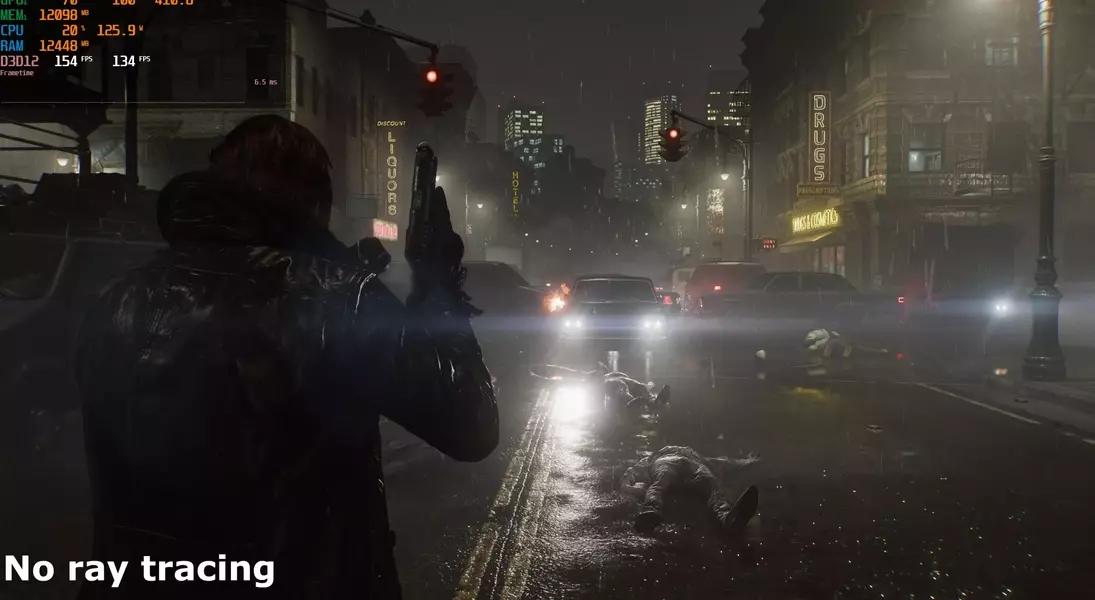
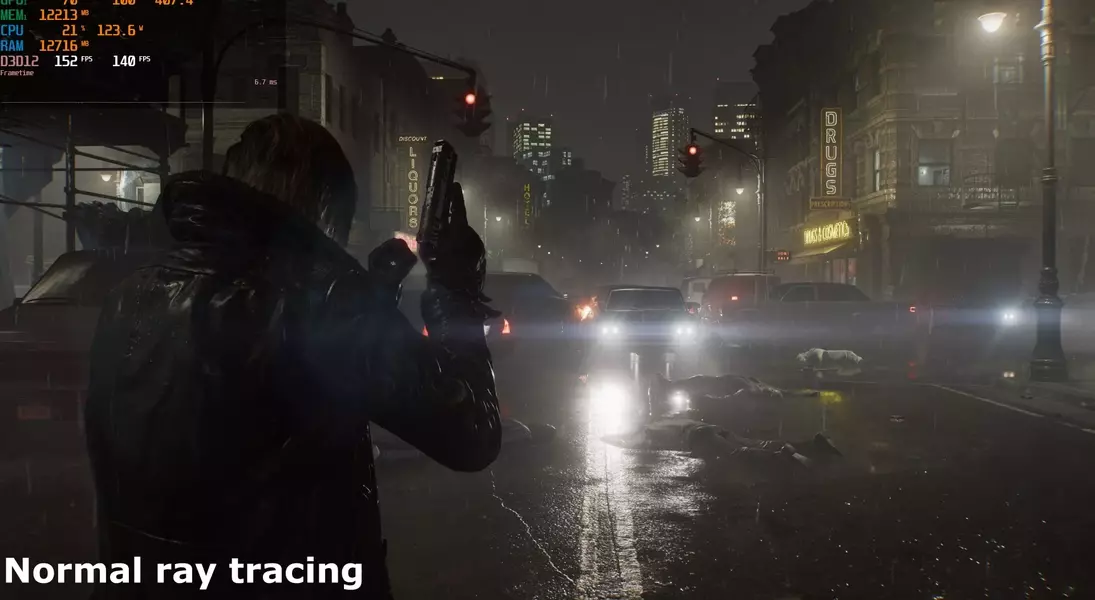
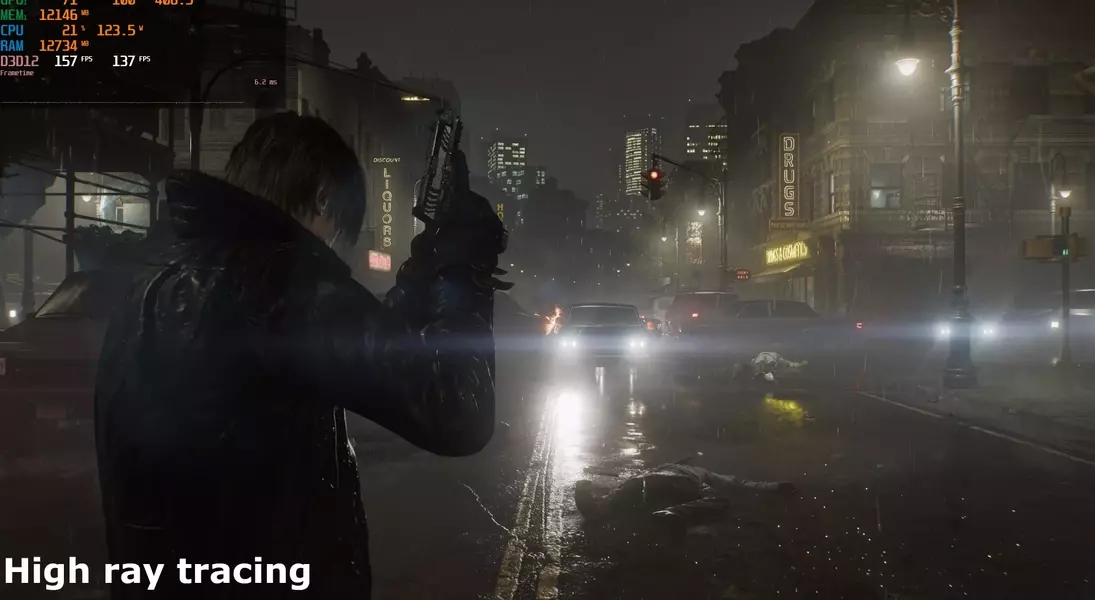
Resident Evil Requiem features three distinct ray tracing modes: Normal, High, and Path Tracing, each progressively enhancing the realism of lighting, shadows, and reflections. On an ultra high-end system like one equipped with an RTX 5090, the performance difference between no ray tracing and Normal or High RT is minimal, allowing players to enjoy improved visuals without significant frame rate drops. Normal RT introduces subtle but noticeable improvements, making reflections in surfaces like puddles more detailed and shadows more accurate, contributing to a darker, more atmospheric environment. High RT further refines these effects, creating a more dynamic and immersive visual landscape. However, Path Tracing stands out as the most visually striking option, transforming the game's lighting and shadow interactions to an almost photorealistic degree. This mode, while visually stunning, incurs a massive performance penalty, dropping frame rates by nearly half on even the most powerful GPUs. This makes it a feature primarily accessible to a niche of gamers with top-tier hardware, raising questions about the broader utility of such a demanding graphical option in a game where fast-paced action might overshadow its intricate details. Despite the high performance cost of path tracing, the general implementation of ray tracing in indoor environments significantly elevates the game's atmosphere, drawing players deeper into its grim world by enhancing environmental depth and realism.
Frame generation technologies, including FSR 3.1 and DLSS 4, play a crucial role in enhancing the fluidity of Resident Evil Requiem, especially when engaging higher graphical settings or ray tracing. While these technologies do not double frame rates, they provide a substantial boost to perceived smoothness and responsiveness. The article strongly recommends using frame generation, particularly with AMD's shader-based FSR 3.1 or Nvidia's DLSS FG, to mitigate performance dips. However, it notes that a decent baseline performance is essential before enabling frame generation to avoid excessive input latency, which can be detrimental in close-quarters combat scenarios. For example, while FSR works on mid-range systems like those with an RX 7900 XT, the input latency might be noticeable. Nvidia's DLSS FG, especially with an RTX 5090, demonstrates minimal input latency, making it a highly effective solution for achieving high frame rates without compromise. The advanced DLSS Multi-Frame Generation on RTX 50-series cards further improves performance, offering a smooth experience even in demanding scenarios, with negligible visual artifacts like blurring or ghosting. The absence of Intel's XeSS upscaling is highlighted as a missed opportunity, as it could have provided a robust alternative for a wider range of hardware configurations. Overall, frame generation proves to be a valuable tool for optimizing Resident Evil Requiem, allowing a broader audience to enjoy improved visuals and smoother gameplay, provided their systems meet the necessary performance thresholds to leverage these technologies effectively.
